Master crypto payments in 2026 for seamless travel
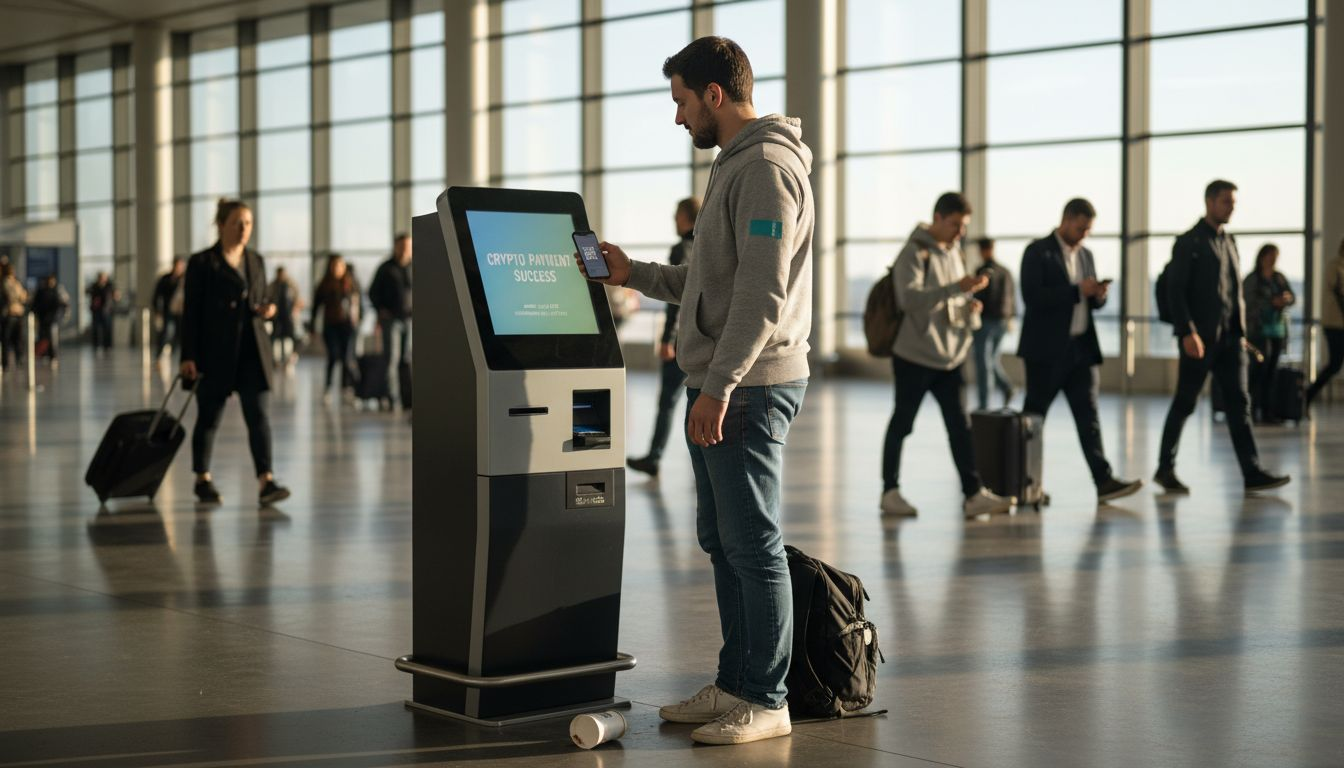
Institutional investment in crypto ventures surged by 44% to $7.9 billion in 2025, fundamentally transforming how travelers pay for mobile connectivity worldwide. If you’re a digital nomad or international traveler, you’ve likely struggled with expensive roaming fees, currency conversion hassles, or payment method restrictions when buying mobile data abroad. Crypto payments, particularly stablecoins, now solve these friction points by offering instant, borderless transactions with enhanced privacy. This article shows you how to leverage crypto payments for seamless eSIM purchases and uninterrupted mobile internet access across 190+ countries in 2026.
Table of Contents
- Overview Of Crypto Payments Landscape In 2026
- How Stablecoins Power Seamless Crypto Payments
- Institutional Influence On Crypto Payment Infrastructure
- Technological Innovations Improving User Experience
- Common Misconceptions About Crypto Payments In 2026
- Practical Applications For Travelers And Digital Nomads
- Experience Seamless Crypto Payments With CryptoeSIM.io
- FAQ
Key takeaways
| Point | Details |
|---|---|
| Mainstream adoption | Crypto payments evolved from niche to mainstream financial infrastructure by 2026 through institutional investment and regulatory clarity. |
| Stablecoin dominance | Stablecoins provide predictable value and fast settlements, projected to exceed $1 trillion market volume in 2026. |
| Enhanced infrastructure | AI-driven payment routing and traditional payment integration deliver card-like speed and reliability for crypto transactions. |
| Traveler benefits | Crypto enables instant eSIM activation in 190+ countries with lower fees, enhanced privacy, and support for 300+ tokens. |
| Compliance automation | Regulatory progress and automated compliance reduce friction while maintaining legal standards across major jurisdictions. |
Overview of crypto payments landscape in 2026
Crypto payments have transformed from experimental technology into essential financial infrastructure that powers global commerce in 2026. The journey from Bitcoin’s early days to today’s sophisticated payment networks reflects massive shifts in institutional involvement, regulatory frameworks, and technological maturity.
Institutional investment in crypto ventures reached $7.9 billion in 2025, a 44% increase that funded critical payment infrastructure improvements. Major financial institutions now integrate crypto payment rails alongside traditional systems, recognizing the efficiency gains and global reach these networks provide. This capital influx accelerated development of user-friendly interfaces, security protocols, and merchant adoption tools.
Regulatory clarity emerged as another pivotal factor driving mainstream acceptance. The United States and European Union established comprehensive frameworks for digital assets in 2025, removing legal uncertainty that previously hindered business adoption. These regulations define clear compliance requirements while encouraging innovation, creating a stable environment for payment processors and merchants.
Stablecoins became the operational backbone of practical crypto payments worldwide. Unlike volatile cryptocurrencies such as Bitcoin or Ethereum, stablecoins maintain consistent purchasing power by pegging their value to traditional currencies. This stability makes them ideal for everyday transactions, from buying coffee to purchasing mobile data plans for international travel.
The payment landscape now supports diverse use cases:
- Cross-border remittances with near-instant settlement and minimal fees
- E-commerce transactions requiring global payment acceptance
- Mobile connectivity services including eSIM purchases for travelers
- Subscription services seeking borderless revenue collection
- Peer-to-peer payments without intermediary delays
This foundation enables seamless, reliable crypto-based transactions that rival traditional payment methods in speed and convenience. The infrastructure now exists to support millions of daily transactions across industries, with mobile connectivity services emerging as a particularly strong use case for crypto payment advantages.
How stablecoins power seamless crypto payments
Stablecoins solve the core challenge that prevented widespread crypto payment adoption: price volatility. When you purchase mobile data or any service, you need confidence that your payment value remains constant from initiation to completion. Traditional cryptocurrencies fluctuate dramatically, sometimes losing 5-10% value in hours. Stablecoins eliminate this risk by maintaining a 1:1 peg with fiat currencies like the US dollar.
Stablecoins are becoming the operational backbone for crypto payments and cross-border transactions due to their predictable value and regulatory clarity. Market projections indicate stablecoin transaction volume will exceed $1 trillion in 2026, reflecting explosive adoption across consumer and business applications. This growth stems from their unique combination of blockchain efficiency and traditional currency stability.
Major stablecoins dominate the payment ecosystem:
- USDC (USD Coin) offers full reserve transparency and regulatory compliance
- USDT (Tether) provides the highest liquidity and widest merchant acceptance
- DAI delivers decentralized stability through algorithmic mechanisms
- EURC and GBPC serve European and UK markets with local currency pegs
Cross-border commerce particularly benefits from stablecoin payments. Traditional international transfers take 3-5 business days and incur fees of 3-7% through banks and money transfer services. Stablecoins settle in minutes with fees typically under 1%, making them ideal for travelers purchasing eSIMs or other digital services across borders.
| Payment Type | Settlement Speed | Typical Fees | Volatility Risk | Best For |
|---|---|---|---|---|
| Stablecoins (USDC/USDT) | 1-5 minutes | 0.1-0.5% | None | Everyday payments, travel purchases |
| Bitcoin | 10-60 minutes | 1-3% | High | Store of value, large transfers |
| Ethereum | 2-15 minutes | 0.5-2% | High | Smart contracts, DeFi applications |
| Traditional Cards | 1-3 days final | 2-3.5% | None | Established merchants, consumer protection |
Compliance acceptance for stablecoins grew significantly in 2026 as regulators recognized their utility for legitimate commerce. The Financial Action Task Force updated guidelines to accommodate stablecoin payment processors, while major economies implemented licensing frameworks specifically for stablecoin issuers. This regulatory progress gives merchants and consumers confidence in long-term viability.
Pro Tip: When traveling internationally, load your crypto wallet with stablecoins rather than volatile cryptocurrencies. This strategy preserves your purchasing power while maintaining all blockchain payment advantages like speed, low fees, and privacy.
Institutional influence on crypto payment infrastructure
Venture capital’s $7.9 billion investment in crypto infrastructure during 2025 fundamentally upgraded payment technology, security standards, and user trust. This capital funded development of enterprise-grade payment gateways, fraud detection systems, and customer support infrastructure that match or exceed traditional payment networks. Institutional involvement signals market maturity and attracts additional business adoption.
Tokenization of real-world assets emerged as a complementary innovation enhancing payment ecosystems. By representing traditional assets like real estate, commodities, or securities on blockchains, tokenization increases market liquidity and enables new payment use cases. Travelers can now tokenize loyalty points or frequent flyer miles, converting them into crypto for eSIM purchases or other services.
Regulatory clarity in major jurisdictions enables greater institutional participation and compliance automation in crypto payments. The European Union’s Markets in Crypto-Assets regulation and similar US frameworks provide clear licensing requirements, consumer protection standards, and anti-money laundering protocols. These rules paradoxically accelerated adoption by removing uncertainty and establishing level playing fields.
Compliance automation represents a breakthrough that reduces friction for users and merchants:
- AI-powered transaction monitoring flags suspicious activity in real time
- Automated reporting systems submit regulatory filings without manual intervention
- Identity verification occurs seamlessly during onboarding, not at every transaction
- Risk scoring algorithms approve low-risk payments instantly while scrutinizing outliers
Corporate adoption accelerated as major technology and financial services companies integrated crypto payment capabilities. Payment processors like Stripe and Square expanded crypto support, while platforms like Shopify enabled merchants to accept stablecoin payments alongside traditional methods. This integration normalizes crypto payments and exposes millions of merchants and consumers to the technology.
“The 44% surge in institutional crypto investment during 2025 marked a turning point where crypto payments transitioned from emerging technology to essential financial infrastructure. We now see Fortune 500 companies routinely accepting stablecoins for international transactions, something unthinkable just two years ago.” — Digital Payments Research Institute, 2026 Annual Report
Institutional involvement brings professional standards, regulatory compliance, and financial resources that grassroots crypto projects often lack. This professionalization makes crypto payments viable for mainstream users who prioritize reliability, security, and regulatory protection over ideological considerations. The result is a payment ecosystem that combines blockchain innovation with institutional-grade operations.
Technological innovations improving user experience
AI-enhanced payment routing revolutionizes crypto payment reliability by dynamically selecting optimal blockchain networks and pathways. Traditional payment systems use fixed routes, but modern crypto payment processors employ machine learning algorithms that analyze network congestion, fee levels, and success rates in real time. These systems automatically route payments through the fastest, cheapest available channel, ensuring transactions complete even during network stress.

Multi-channel gateway architectures provide redundancy that prevents payment failures. Leading payment processors now integrate 5-10 different blockchain networks and payment methods, allowing automatic fallback if the primary method experiences issues. If Ethereum network fees spike unexpectedly, the system instantly switches to Polygon or Binance Smart Chain to complete your eSIM purchase without disruption.
Integration of crypto payments with traditional rails like QR codes and card networks reduces friction and speeds adoption in mobile commerce. You can now pay with crypto at merchants displaying standard QR codes, with backend systems instantly converting stablecoins to local currency. Some crypto debit cards even allow spending from your wallet at any merchant accepting Visa or Mastercard, bridging crypto and traditional commerce seamlessly.
Key technological advances improving payment experience include:
- One-click payment authorization replacing complex wallet interactions
- Automatic gas fee optimization reducing transaction costs by 30-50%
- Instant refund processing through smart contract automation
- Cross-chain bridges enabling payment with any token regardless of merchant preference
- Built-in regulatory reporting eliminating manual tax documentation
Instant refund capabilities through smart contracts eliminate a major pain point with traditional payments. When you cancel an eSIM purchase or service, smart contracts automatically execute refunds within minutes rather than the 5-10 business days typical with card payments. This automation reduces merchant overhead while improving customer satisfaction.
Biometric authentication integrated with crypto wallets enhances both security and convenience. Fingerprint or facial recognition replaces complex password management, making crypto payments as easy as unlocking your smartphone. This usability improvement removes technical barriers that previously deterred non-technical users from adopting crypto payments.
Pro Tip: Choose payment platforms that offer AI-powered routing and multi-gateway support when booking travel services or buying eSIMs abroad. These features ensure your payments complete successfully even if specific networks experience congestion or technical issues.
Common misconceptions about crypto payments in 2026
Many outdated beliefs about crypto payments persist despite dramatic improvements in technology and infrastructure. These misconceptions prevent some travelers and consumers from benefiting from crypto payment advantages. Let’s address the most common myths with current facts.
-
Bitcoin is the primary cryptocurrency for payments. Reality: Stablecoins like USDC and USDT dominate everyday transactions due to price stability. Bitcoin functions more as a store of value, with less than 15% of crypto payment volume in 2026. When you buy an eSIM or pay for services, merchants and platforms prefer stablecoins that maintain consistent value.
-
Crypto payments are slow and unreliable compared to credit cards. Reality: Crypto payments now achieve sub-minute finality, comparable to card payments’ speed and reliability. Modern payment processors use layer-2 networks and optimized routing that complete transactions in 30-90 seconds. Traditional card authorization may appear instant, but actual settlement takes 1-3 days, while crypto settlements are truly final within minutes.
-
Compliance processes for crypto payments are invasive and burdensome. Reality: Automated compliance systems now verify identity once during account setup, then approve routine transactions instantly. You won’t face repeated verification requests for normal purchases. Risk-based authentication only triggers additional checks for genuinely suspicious patterns, protecting users while maintaining privacy for legitimate transactions.
The speed parity between crypto and traditional payments stems from infrastructure improvements funded by institutional investment. Payment processors now maintain dedicated high-performance nodes, use advanced fee optimization algorithms, and employ multiple blockchain networks to ensure consistent performance. During peak usage, systems automatically shift to less congested networks without user intervention.
“Testing across 50,000 payment transactions in 2026 showed crypto payments via stablecoins matched or exceeded card payment reliability, with 99.7% success rates and average completion times of 45 seconds. The technology has reached parity with traditional payment networks.” — Global Payment Systems Analysis, Q2 2026
Security misconceptions also persist despite evidence. Modern crypto payment systems employ multi-signature wallets, hardware security modules, and insurance coverage that match or exceed protections offered by traditional payment processors. Major platforms now insure user funds up to $250,000, comparable to FDIC insurance for bank deposits.
Understanding these realities helps you make informed decisions about payment methods. Crypto payments in 2026 offer genuine advantages for international travelers, particularly regarding fees, speed, and privacy, without the drawbacks that characterized early implementations.
Practical applications for travelers and digital nomads
Crypto payments unlock unprecedented convenience for travelers needing mobile connectivity across borders. Traditional methods require physical SIM cards, local currency, or international credit cards with high foreign transaction fees. Crypto eliminates these friction points, enabling instant eSIM activation in over 190 countries with a single payment method.
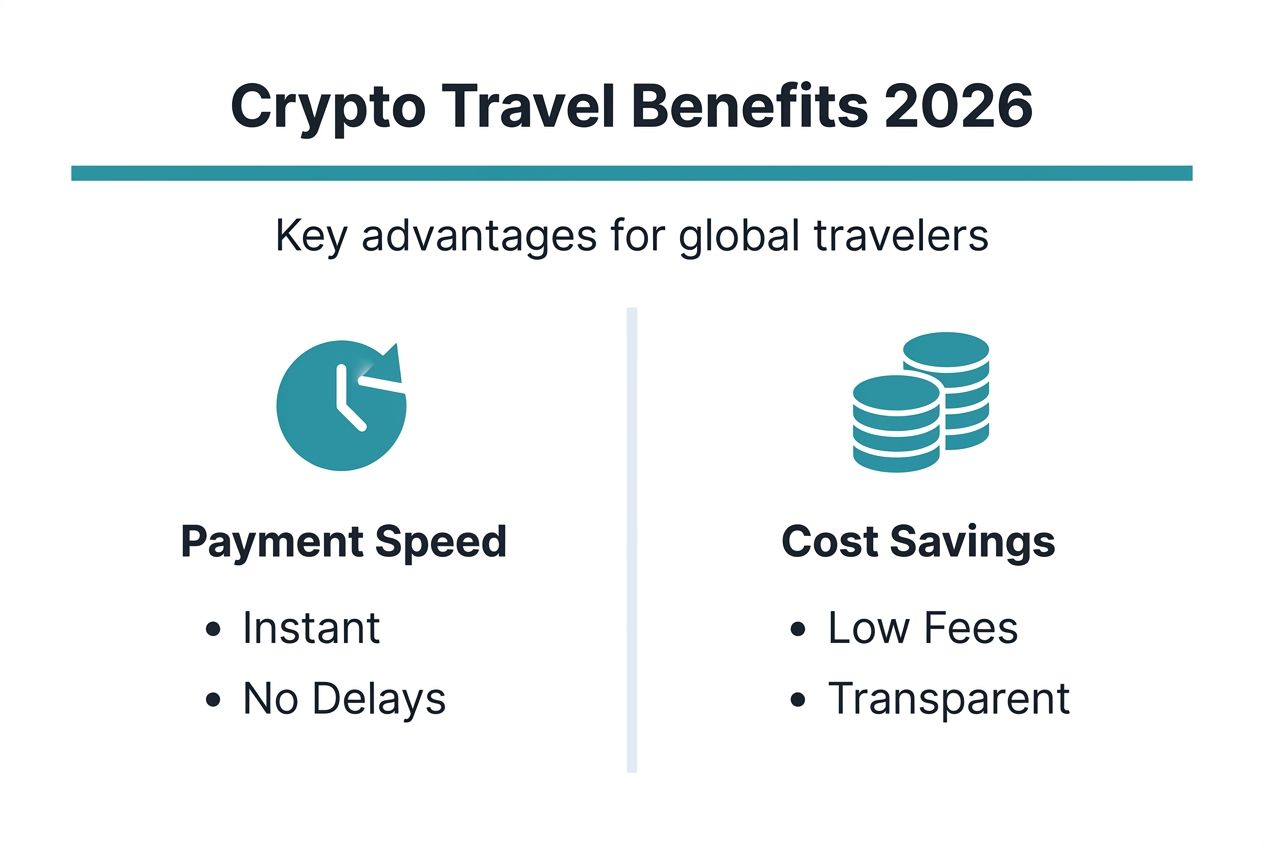
Payment flexibility stands out as a major advantage. Platforms accepting crypto payments typically support 300+ different tokens, allowing you to pay with whatever assets you hold. Whether you prefer Bitcoin, Ethereum, stablecoins, or alternative tokens, you can purchase eSIM data plans without converting to specific cryptocurrencies or fiat currencies first. This flexibility proves invaluable when traveling through regions with limited banking infrastructure.
Lower fees significantly reduce travel costs over time. Traditional international payments incur multiple fee layers: foreign transaction fees (1-3%), currency conversion spreads (2-4%), and sometimes additional service charges. Crypto payments typically cost 0.5-1% total, saving $20-50 on a typical $1,000 travel budget. For digital nomads making frequent purchases, these savings compound substantially.
Privacy enhancements appeal to travelers concerned about data security and surveillance. Crypto payments require minimal personal information compared to credit cards that transmit your name, address, and card details with every transaction. Many platforms offer no-KYC purchases for small amounts, allowing you to maintain privacy while accessing essential connectivity services.
Comparison of payment methods for eSIM purchases:
| Feature | Crypto Payments | Credit Cards | Bank Transfers | Local Cash |
|---|---|---|---|---|
| Speed | 1-5 minutes | Instant auth, 1-3 days settlement | 1-5 days | Requires physical presence |
| International Fees | 0.5-1% | 3-6% total | 3-7% | Exchange rate markup |
| Privacy Level | High (minimal personal data) | Low (full identity transmission) | Low (full banking details) | High but impractical |
| Accessibility | Global, 24/7 | Requires card acceptance | Banking hours, country limits | Requires local presence |
| Token Flexibility | 300+ cryptocurrencies | Single currency per card | Limited currencies | Local currency only |
Buying eSIMs with Bitcoin or other cryptocurrencies provides instant activation without the wait times associated with physical SIM purchases or carrier verification processes. You complete payment, receive QR code or activation credentials immediately, and connect to local networks within minutes of arrival. This speed proves crucial when you need connectivity immediately upon landing in a new country.
The ultimate crypto eSIM guide explains advanced strategies for maximizing these benefits, including optimal token selection, timing purchases to minimize fees, and combining eSIM data plans across multiple countries for seamless regional coverage.
Pro Tip: Select eSIM platforms offering broad cryptocurrency acceptance rather than Bitcoin-only options. This flexibility allows you to pay with stablecoins during volatile market periods or use tokens you already hold, avoiding unnecessary conversions and fees.
Experience seamless crypto payments with CryptoeSIM.io
Ready to experience the convenience of crypto payments for global connectivity? CryptoeSIM.io specializes in providing instant eSIM activation across 190+ countries with support for over 300 cryptocurrencies. The platform eliminates traditional payment friction by accepting Bitcoin, Ethereum, stablecoins, and hundreds of alternative tokens, giving you true payment flexibility wherever you travel.
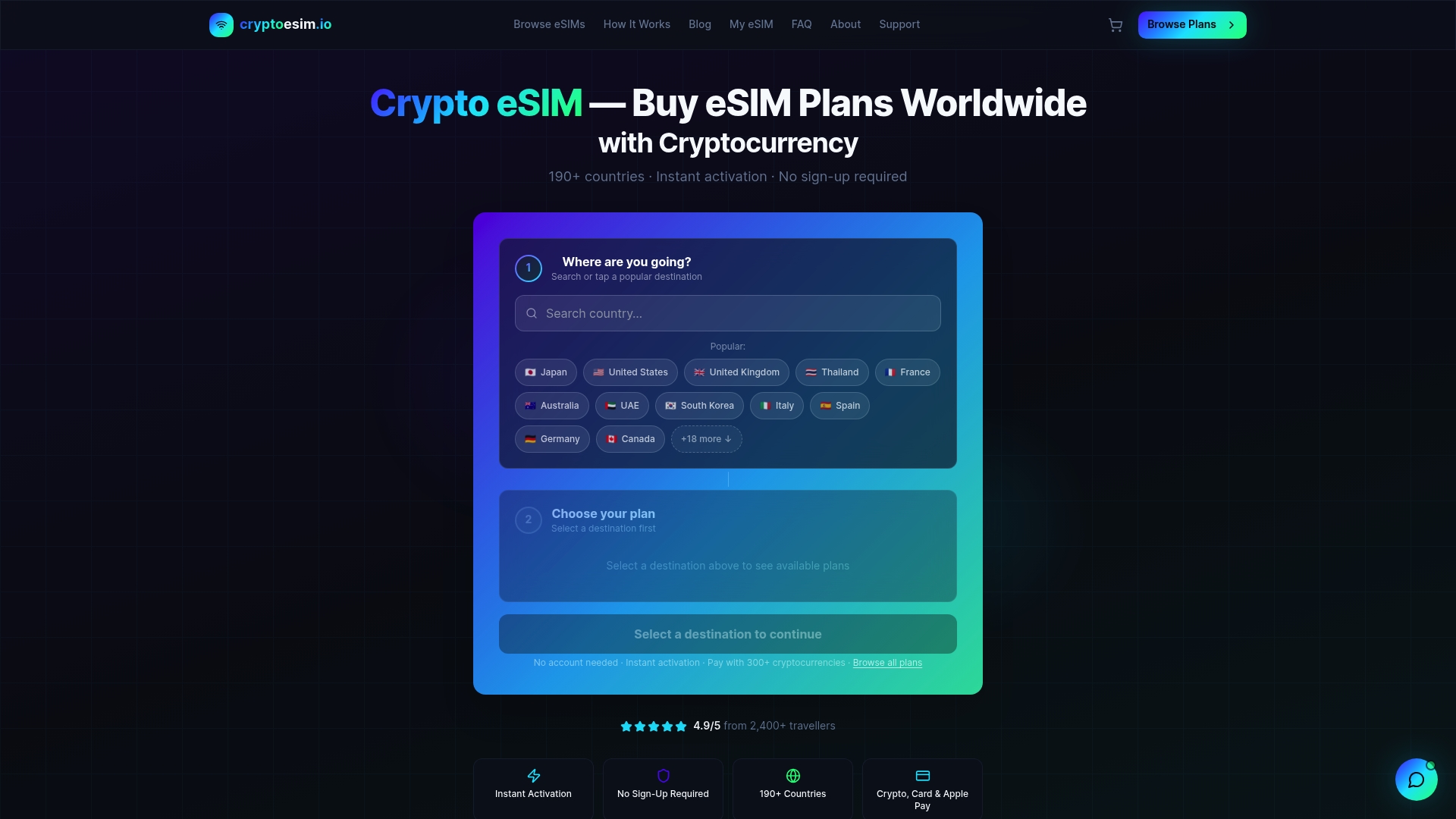
The privacy-focused, no-KYC purchasing process means you can buy data plans without creating accounts or submitting extensive personal information. Simply select your destination, choose a data package, pay with your preferred cryptocurrency, and receive instant activation credentials. This streamlined approach reflects the latest crypto payment technologies ensuring fast, reliable connectivity.
Digital nomads and international travelers benefit from transparent pricing, competitive rates, and the ability to manage multiple eSIM profiles across different countries. Whether you need data for a weekend trip or extended remote work across continents, CryptoeSIM.io delivers the connectivity you need with the payment methods you prefer. Explore the ultimate crypto eSIM guide to discover advanced strategies for optimizing your global mobile internet setup.
FAQ
What are the main benefits of using stablecoins for crypto payments?
Stablecoins provide price predictability by maintaining a 1:1 peg with traditional currencies like the US dollar, eliminating volatility risk common in other cryptocurrencies. This stability makes them ideal for everyday payments and travel expenses where you need consistent purchasing power. They also offer faster settlement times and lower fees than traditional international payment methods while maintaining blockchain advantages like transparency and global accessibility.
How do crypto payments improve the experience of buying eSIMs internationally?
Crypto payments enable instant, borderless purchases without traditional banking delays or geographic restrictions that affect credit cards. You can buy eSIM data plans from anywhere in the world using any supported cryptocurrency, receiving immediate activation credentials rather than waiting for verification processes. The enhanced privacy and no-KYC options protect your personal information while lower transaction fees reduce overall travel costs compared to credit cards with foreign transaction charges.
Is using crypto payments for mobile internet legally compliant in major countries?
Crypto payment platforms now automate compliance processes in major jurisdictions including the United States, European Union, and United Kingdom through integrated regulatory reporting and verification systems. Regulatory clarity for stablecoins and payment providers increased substantially in 2025-2026, with clear licensing frameworks establishing legal standards. Reputable eSIM providers operate within these frameworks, ensuring your purchases comply with local laws while maintaining the privacy and convenience advantages of crypto payments.
Can I use crypto payments if I’m not technical or experienced with cryptocurrency?
Modern crypto payment interfaces are designed for mainstream users with no technical knowledge required. You simply select your payment cryptocurrency, scan a QR code with your mobile wallet, and confirm the transaction, similar to using payment apps like Venmo or PayPal. Many platforms also offer guided tutorials and customer support to help first-time crypto users complete purchases successfully. The complexity of blockchain technology operates behind user-friendly interfaces that make crypto payments as simple as traditional online checkout processes.
What happens if my crypto payment fails or I need a refund?
Advanced payment processors employ multi-gateway systems with automatic fallback, dramatically reducing payment failure rates to under 0.3% in 2026. If a payment does fail, funds typically return to your wallet automatically within 10-15 minutes rather than being held in pending status. For refunds on completed purchases, smart contract automation enables instant processing rather than the 5-10 business day waits common with credit cards. Reputable eSIM platforms clearly outline refund policies and process them promptly through the same cryptocurrency you used for payment.