Crypto payment checklist for travelers: secure tips

Using cryptocurrency for international travel opens up financial freedom, but it also introduces unique challenges around security, compliance, and usability. Whether you’re booking flights, paying for accommodation, or buying a coffee in Tokyo, you need a solid strategy to protect your assets and ensure seamless transactions. This checklist walks you through the essential security measures, legal considerations, fee optimization tactics, and payment method comparisons to help you confidently spend crypto abroad while staying connected with reliable mobile data solutions.
Table of Contents
- Key takeaways
- Essential security criteria for crypto payments on the road
- Navigating local regulations and compliance when paying with crypto abroad
- Managing fees and payment methods to optimize crypto spending abroad
- Comparing crypto payment options: wallets, cards, and stablecoins for travelers
- Explore crypto-friendly travel eSIMs for seamless connectivity
- Frequently asked questions
Key Takeaways
| Point | Details |
|---|---|
| Hardware wallets and multisig | Use hardware wallets like Trezor or Ledger and enable multisignature wallets to protect funds while abroad. |
| Verify addresses and test transfers | Always verify wallet addresses before sending and perform a small test transfer before large transactions. |
| Regulations and reporting | Research each destination’s crypto laws and reporting thresholds before travel. |
| Diversify payment options | Diversify payment options by keeping fiat backups and confirming crypto card acceptance at each destination. |
Essential security criteria for crypto payments on the road
Protecting your crypto assets while traveling requires layered security measures that go beyond what you might use at home. The mobile nature of travel exposes you to theft, device loss, and unsecured networks, making robust protection non-negotiable.
Prioritize hardware wallets like Trezor or Ledger for storing the bulk of your funds. These devices keep your private keys offline, dramatically reducing the risk of remote hacking. Set up multisignature wallets for added safety, requiring multiple approvals before funds can move. This creates a fail-safe if one device is compromised or lost.
Keep only minimal amounts in hot wallets for daily spending. Think of your hot wallet as the cash in your physical wallet, enough for immediate needs but not your life savings. Always verify wallet addresses before sending any transaction, double-checking every character to avoid costly mistakes. Scammers often use address poisoning attacks that display similar-looking addresses in your transaction history.

Send small test transactions when using new wallets or networks for the first time. A $5 test transfer can save you from losing thousands if you’ve configured something incorrectly. Maintain a fiat backup through traditional banking or prepaid cards, because crypto acceptance remains inconsistent globally and technical issues can arise at the worst moments.
Use a VPN whenever accessing public WiFi for crypto transactions. Airport lounges, hotel lobbies, and cafes often have poorly secured networks where attackers can intercept your data. A VPN encrypts your connection, making it nearly impossible for others to monitor your activity. For crypto payments and mobile secure global data access, combining secure payment practices with reliable connectivity is essential.
Pro Tip: Carry a hardware wallet with a backup seed phrase stored separately offline, such as on metal plates designed for seed storage. If your device is lost or stolen, you can recover your funds using the seed on a new device without exposing it to digital risks.
Additional payment security best practices include enabling two-factor authentication on all crypto accounts, using biometric locks on mobile devices, and regularly updating wallet software to patch vulnerabilities.
Navigating local regulations and compliance when paying with crypto abroad
Cryptocurrency regulations vary dramatically between countries, and ignorance of local laws can result in fines, asset seizures, or worse. Before you travel, research the specific crypto reporting requirements and legal status in each destination country.
Report transfers typically above $1,000 in most jurisdictions, with the US requiring reporting for amounts exceeding $3,000. These thresholds apply to cross-border movements of value, whether you’re sending crypto to an exchange, making a large purchase, or transferring funds between your own wallets across borders. Failure to report can trigger money laundering investigations.
Use VPNs on public WiFi not just for security but also to maintain privacy when accessing crypto services. Some countries monitor internet traffic for crypto activity, and a VPN helps protect your transaction data from surveillance. However, be aware that VPN use itself is restricted or illegal in certain countries, so research this as part of your compliance preparation.
Keep detailed transaction records for tax purposes, including timestamps, amounts, exchange rates, and the purpose of each transaction. Many countries tax crypto transactions as capital gains or income, and you’ll need documentation to file correctly when you return home. Mobile apps can help track this automatically, syncing with your wallets to generate reports.
Legal frameworks differ significantly. Some nations embrace crypto with clear regulations, others ban it outright, and many exist in a gray area with ambiguous or evolving rules. Countries like El Salvador treat Bitcoin as legal tender, while China prohibits most crypto activities. Understanding where your destination falls on this spectrum helps you avoid legal trouble and plan alternative payment methods if needed.
For deeper insights into regulatory compliance, Swiss banking for crypto offers a model of how regulated financial systems can integrate digital assets legally. Travelers can learn from these frameworks about proper reporting and institutional best practices. To understand the fundamentals better, review our crypto payment guide for travelers for comprehensive coverage of payment basics and legal considerations.
Managing fees and payment methods to optimize crypto spending abroad
Transaction fees can quickly erode the value of your crypto, especially when you’re making frequent small purchases or using congested networks. Strategic choices about networks, timing, and payment methods make a substantial difference in your overall costs.
Choose low-fee networks like Layer 2 solutions (Polygon, Arbitrum, Optimism) or Solana for transfers and payments. Ethereum mainnet gas fees can exceed $20 during peak times, while Layer 2 transactions often cost pennies. If you’re moving funds between wallets or exchanges before travel, doing so on these networks saves significantly.
Batch ATM withdrawals to reduce cumulative fees. If you’re converting crypto to local cash, withdraw larger amounts less frequently rather than making multiple small withdrawals. Each ATM transaction typically carries a flat fee plus a percentage, so consolidating reduces the fee-to-value ratio.
Spend crypto directly at merchants accepting it whenever possible to avoid conversion fees. Converting crypto to fiat through an exchange or card processor adds 1-3% in fees, while direct crypto payments eliminate this middleman cost. Apps like CoinMap help you locate crypto-accepting businesses in your destination city.
Use crypto debit cards like BitPay, Crypto.com, or WhiteBIT Nova for seamless spending where Visa or Mastercard are accepted, but test them for declines before relying on them for critical bookings. Some merchants, particularly hotels and car rental companies, block certain crypto cards or place large authorization holds that can exceed your available balance.
Physical cards outperform virtual in terms of acceptance and reliability. Virtual cards often face more restrictions and declines, especially for in-person transactions or those requiring physical card insertion. Carry a physical crypto card as your primary option.
Be aware that volatility affects booking costs and crypto payments offer no refunds or chargebacks. If you book a flight with Bitcoin and its value drops before your trip, you’ve effectively overpaid. Conversely, if the value rises, you got a discount. This volatility risk is inherent to crypto spending, and unlike credit cards, you can’t dispute charges or reverse transactions.
Pro Tip: Time transactions during off-peak network hours, typically late night or early morning UTC, to minimize gas fees. Network congestion drives up costs, and strategic timing can cut fees by 50% or more on busy chains like Ethereum.
| Payment Method | Average Fees | Best Use Case | Key Limitation |
|---|---|---|---|
| Direct Crypto | 0.1-2% network fees | Merchants accepting crypto | Limited acceptance |
| Crypto Debit Card | 1-3% conversion + card fees | Everyday purchases | Some merchant blocks |
| Crypto ATM | 7-15% total fees | Emergency cash needs | Very high fees |
| Exchange Transfer | 0.5-1% + withdrawal fee | Large transfers | Requires exchange account |
For mobile connectivity that complements your crypto payment strategy, consider options that bridge digital payments with global data access, such as comparing crypto eSIM vs regular eSIM to understand how crypto-friendly mobile solutions work.
Comparing crypto payment options: wallets, cards, and stablecoins for travelers
Different crypto payment tools serve distinct purposes, and understanding their trade-offs helps you build a balanced payment strategy for international travel. No single option works perfectly in all situations, so diversification is key.
Hardware wallets offer maximum security but aren’t practical for frequent spending. You wouldn’t pull out a Ledger to pay for coffee. They’re ideal for storing travel funds securely and making occasional large transfers, like paying for accommodation or moving funds between exchanges. Their offline nature protects against remote attacks but requires careful physical security.
Crypto debit cards provide everyday usability, converting your crypto to fiat automatically at the point of sale. They work anywhere traditional cards are accepted, making them your most versatile travel companion. However, watch for provider-specific restrictions on hotels, car rentals, and large deposits. Fees vary by provider, typically including a small conversion fee plus standard card processing fees. Test your card with small purchases in different contexts before depending on it for major expenses.
Stablecoins enable seamless cross-border payments with speed and lower fees, while maintaining stable value pegged to fiat currencies like USD. USDC, USDT, and DAI eliminate volatility risk, making them ideal for budgeting and predictable spending. They transfer quickly across borders without traditional banking delays or high wire fees. However, they still require conversion to local currency for most purchases, and you should maintain fiat backups since stablecoin acceptance remains limited compared to traditional payment methods.
Physical crypto cards outperform virtual cards in real-world acceptance, particularly for chip-and-PIN transactions, hotel check-ins, and situations requiring a physical card. Virtual cards work well for online bookings but face higher decline rates in person.
Diversify payment methods by carrying crypto in multiple forms plus traditional fiat backups. A recommended travel setup includes a hardware wallet with the majority of funds, a crypto debit card with moderate balance for daily spending, some stablecoins for quick transfers, and a traditional credit or debit card as ultimate backup. This layered approach ensures you can always pay, regardless of technical issues or acceptance limitations.
| Payment Option | Security Level | Convenience | Cost Efficiency | Acceptance |
|---|---|---|---|---|
| Hardware Wallet | Highest | Low for spending | High (low fees) | Requires crypto acceptance |
| Crypto Debit Card | Medium | Highest | Medium (conversion fees) | Very high (Visa/Mastercard) |
| Stablecoins | Medium-High | Medium | High (low volatility) | Requires crypto acceptance |
| Hot Wallet | Low-Medium | High | High (direct payments) | Requires crypto acceptance |
| Fiat Backup | Varies | Highest | Medium (standard banking) | Universal |
For travelers looking to integrate crypto payments with mobile connectivity solutions, explore how seamless crypto payments in telecoms are evolving to support digital nomads and international travelers in 2026.
Explore crypto-friendly travel eSIMs for seamless connectivity
Staying connected while traveling internationally is just as critical as having secure payment methods. You need reliable mobile data to access your crypto wallets, verify transactions, check exchange rates, and navigate unfamiliar destinations. Traditional roaming charges can be exorbitant, and buying local SIM cards is inconvenient and time-consuming.
Crypto-friendly travel eSIMs solve this problem by offering instant mobile data activation in over 190 countries, purchasable with cryptocurrency. No physical SIM cards to swap, no waiting in line at airport kiosks, and no creating accounts with personal information. You buy data with Bitcoin, Ethereum, or 300+ other tokens, activate your eSIM digitally, and you’re online within minutes.
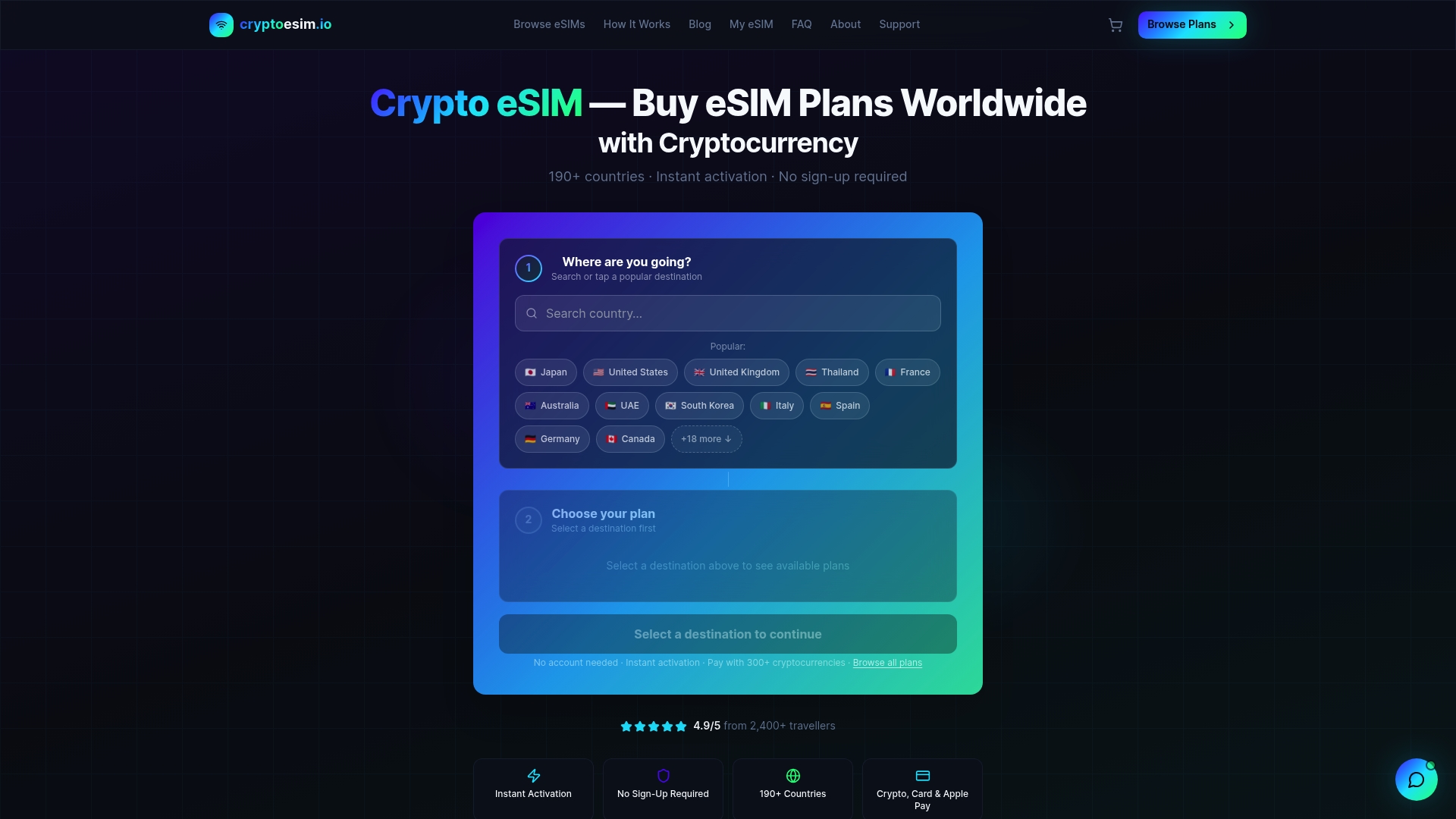
This approach perfectly complements your crypto payment strategy by eliminating the hassle of managing physical connectivity while maintaining the privacy and flexibility of digital payments. Digital nomads and crypto enthusiasts can manage their entire travel infrastructure through decentralized, crypto-native solutions. Compare crypto eSIM vs regular eSIM options to see how crypto payments enhance the mobile connectivity experience, or review our comprehensive crypto payment guide for travelers to understand the full ecosystem of crypto-enabled travel services.
Frequently asked questions
What’s the safest way to store crypto while traveling internationally?
Use a hardware wallet for the bulk of your funds, keeping only small amounts in a hot wallet for daily spending. Set up multisignature protection requiring multiple approvals for transactions, and store backup seed phrases separately from your devices in secure, offline locations like metal plates.
Do I need to report crypto transactions when crossing borders?
Yes, most countries require reporting for transfers above certain thresholds, typically $1,000 internationally and $3,000 in the US. Research specific requirements for each destination country before travel, and maintain detailed transaction records for tax compliance when you return home.
How can I minimize fees when using crypto abroad?
Choose low-fee networks like Layer 2 solutions or Solana, batch ATM withdrawals to reduce per-transaction costs, spend directly at crypto-accepting merchants to avoid conversion fees, and time transactions during off-peak hours when network congestion is lower. These strategies can cut your total fees by 50-70%.
What should I do if my crypto card gets declined?
Always carry a fiat backup payment method like a traditional credit or debit card. Test your crypto card with small purchases before relying on it for major expenses, and contact your card provider immediately if you experience declines to understand any merchant category blocks or regional restrictions.
Are stablecoins better than volatile cryptocurrencies for travel spending?
Stablecoins eliminate price volatility risk, making budgeting more predictable and preventing you from overpaying if crypto prices drop. They’re ideal for planned expenses and cross-border transfers. However, they still require conversion to local currency for most purchases, so combine them with crypto debit cards and fiat backups for complete coverage. For more guidance, visit our crypto payment guide for travelers.