Seamless crypto payments for telecoms in 2026

Crypto payments are no longer a fringe option for telecommunications. In 2026, over 190 countries now support eSIM providers accepting Bitcoin, Ethereum, and hundreds of other digital currencies, transforming how international travelers and remote workers stay connected. You can purchase mobile data plans instantly without currency conversion fees, lengthy verification processes, or geographic restrictions. This guide walks you through how crypto payments work in telecom, compares the best options, and shows you how to leverage these technologies for borderless connectivity that respects your privacy and saves you money.
Table of Contents
- How Crypto Payments Transform Telecommunications For Travelers
- Understanding Esim Technology And Its Synergy With Crypto Payments
- Comparing Crypto Payment Methods And Telecom Service Options
- Security, Privacy, And Practical Tips When Using Crypto For Telecom Payments
- Explore Seamless Crypto Telecom Connectivity With Cryptoesim.io
- Frequently Asked Questions About Crypto Payments In Telecommunications
Key takeaways
| Point | Details |
|---|---|
| Borderless transactions | Crypto payments offer borderless transactions with reduced fees, eliminating currency conversion hassles for travelers. |
| eSIM flexibility | eSIMs provide instant activation and easier management for international mobile connectivity without physical cards. |
| Privacy advantage | Using crypto payments for telecom can enhance privacy by reducing traditional KYC requirements compared to credit cards. |
| Multiple crypto options | Bitcoin and stablecoins are the most widely accepted cryptos for telecom purchases, each offering different speed and fee profiles. |
| Global coverage | Crypto-based eSIM providers now support over 190 countries, making worldwide connectivity accessible from a single platform. |
How crypto payments transform telecommunications for travelers
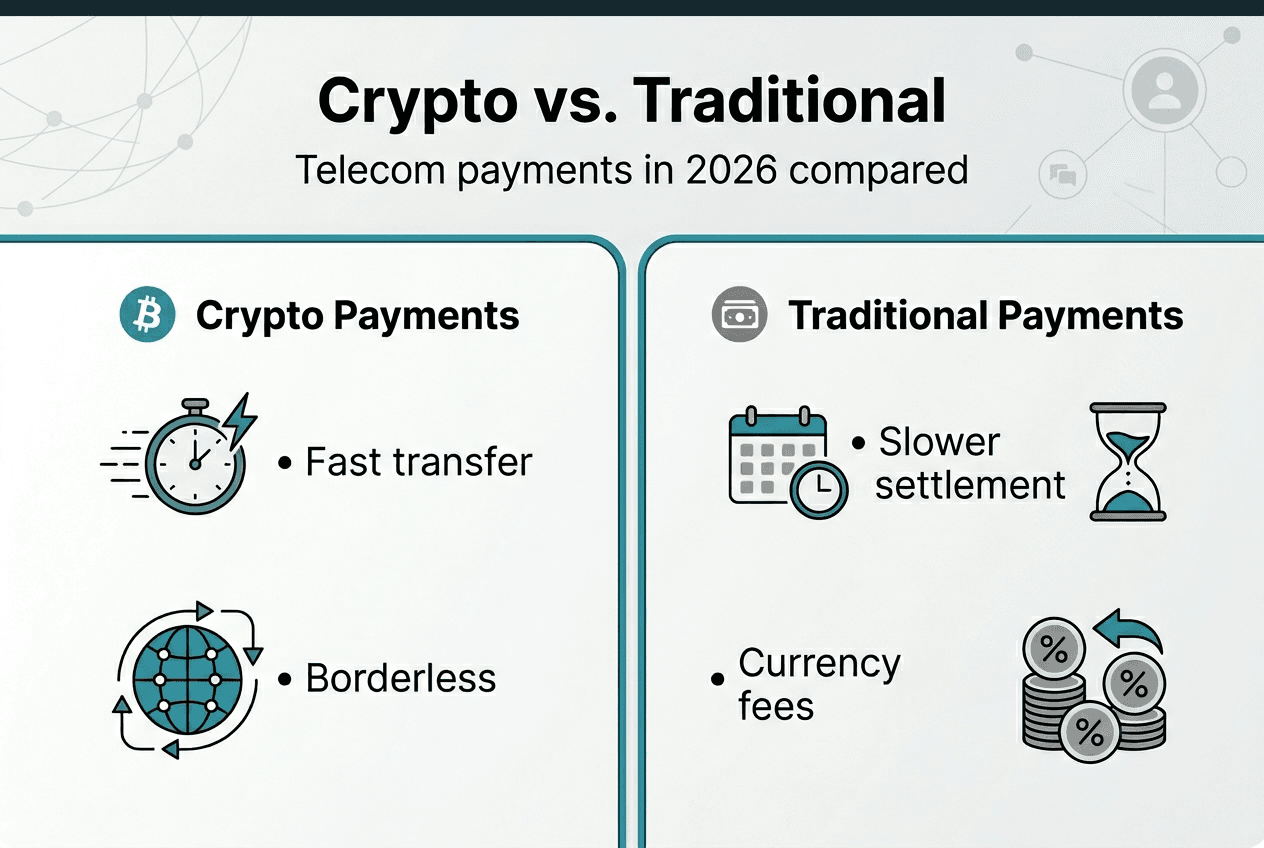
Traditional payment methods for international telecom services create frustrating barriers. You face currency conversion fees ranging from 2% to 5% per transaction, geographic payment restrictions that block certain cards, and verification processes that can take hours or days. Banks often flag international telecom purchases as suspicious, freezing your card at the worst possible moment.
Crypto payments eliminate these borders entirely. When you use cryptocurrency for telecom services, your transaction processes in minutes regardless of where you are or where the provider operates. Transaction fees typically run below 1%, and many providers accept payments without requiring personal information beyond an email address. You maintain control over your funds without intermediaries who can reject or delay your purchase.
Speed matters when you land in a new country needing immediate connectivity. Crypto transactions confirm faster than traditional international wire transfers, with many networks processing payments in under 10 minutes. This means you can purchase an eSIM plan while waiting for your luggage and have active data before leaving the airport.
Security improves through blockchain verification that creates transparent, immutable transaction records. Unlike credit cards vulnerable to skimming or data breaches, crypto wallets use cryptographic keys that you control. Your payment information never sits in a merchant database waiting to be compromised.
Pro Tip: Use wallets with multi-currency support like MetaMask or Trust Wallet to hold Bitcoin, Ethereum, and stablecoins in one place, giving you flexibility to choose the cheapest or fastest payment option for each telecom purchase.
Privacy represents another major advantage. Traditional telecom purchases link your identity, payment method, location, and usage patterns in provider databases. Crypto payments separate your financial identity from your connectivity needs, letting you maintain anonymity while accessing essential services.
Common use cases include:
- Purchasing regional eSIM data plans when traveling across multiple countries in a single trip
- Activating backup connectivity options without exposing primary payment methods
- Accessing telecom services in countries where your credit cards face restrictions
- Maintaining privacy when working remotely from sensitive locations
- Avoiding foreign transaction fees that traditional cards impose on international purchases
Understanding eSIM technology and its synergy with crypto payments
An eSIM (embedded SIM) is a digital SIM card built directly into your device’s hardware. Unlike physical SIM cards requiring manual insertion and swapping, eSIMs activate through software, letting you download and switch between multiple carrier profiles without touching your phone’s internals. This technology pairs perfectly with crypto payments because both prioritize digital convenience and instant access.
Physical SIM cards require you to visit stores, wait for shipping, or swap cards when changing carriers. Each swap risks losing the tiny card or damaging your device’s SIM tray. eSIMs eliminate this friction entirely, downloading carrier profiles in seconds through QR codes or activation apps.
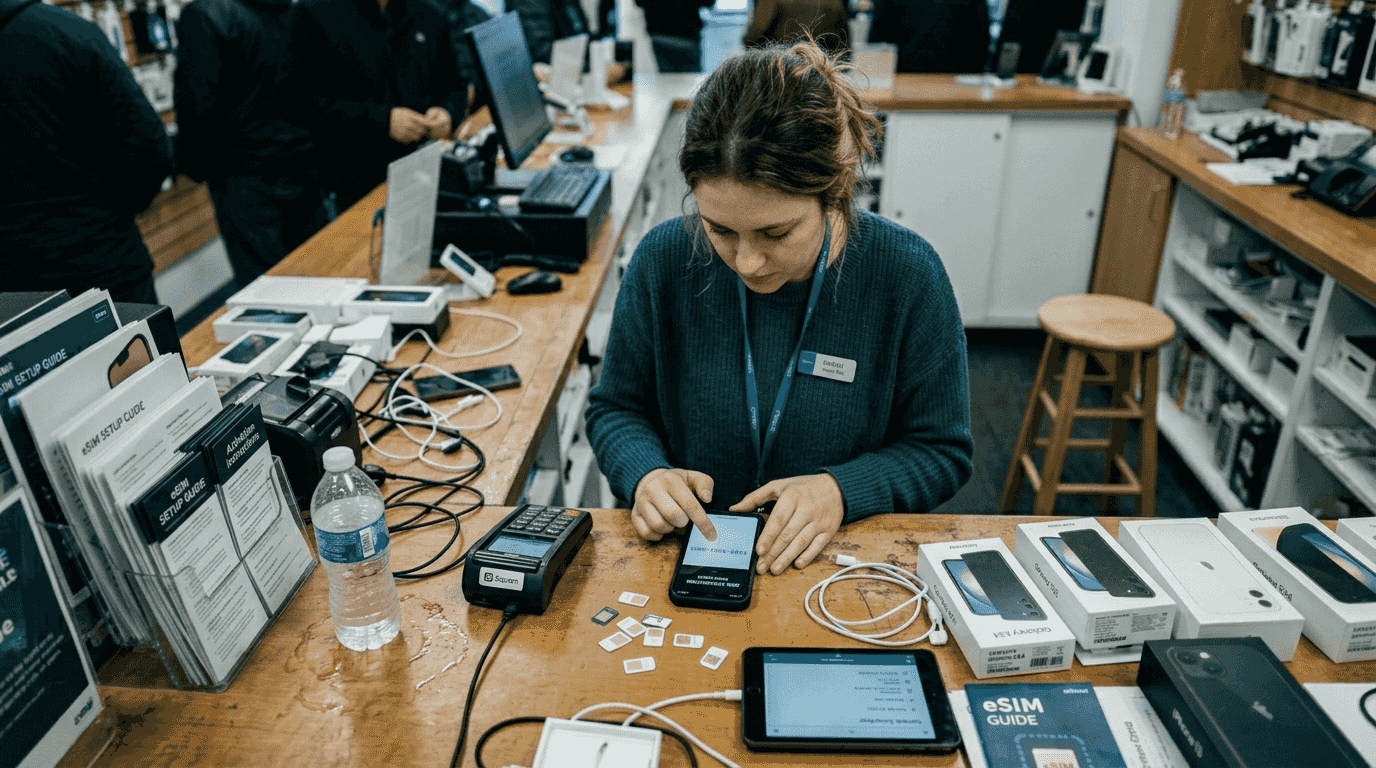
The process of activating an eSIM via crypto payments follows a streamlined path. You select your destination and data plan, pay with your preferred cryptocurrency, and receive a QR code or activation link via email. Scan the code with your device camera, confirm the installation, and your eSIM profile activates immediately. Most providers complete this entire flow in under 5 minutes.
Managing multiple eSIM profiles transforms how you handle global travel:
- Purchase regional eSIM plans for each destination before departure or upon arrival
- Store multiple carrier profiles on your device simultaneously (most phones support 5 to 10 profiles)
- Switch between profiles through your device settings based on which country you’re in
- Maintain your home carrier profile for receiving calls and messages while using local data plans
- Delete old profiles when you no longer need them, freeing space for new destinations
Privacy benefits multiply when combining eSIMs with crypto’s anonymity. Traditional SIM cards require government-issued ID and link your identity to every call, text, and data session. Many crypto-friendly eSIM providers operate with minimal verification, letting you purchase connectivity with just an email address. Your browsing activity, location data, and usage patterns remain separate from your legal identity.
Pro Tip: Always check device compatibility before purchasing eSIMs with crypto by verifying your phone model supports eSIM technology and is carrier-unlocked, as locked devices may reject third-party eSIM profiles even after successful payment.
eSIM technology also supports better backup strategies. You can maintain multiple active profiles for different purposes: one for general browsing, another for secure communications, and a third for high-bandwidth activities. If one profile experiences network issues, you switch to an alternative without losing connectivity.
Comparing crypto payment methods and telecom service options
Different cryptocurrencies offer distinct advantages for telecom purchases. Bitcoin provides the widest acceptance but carries higher transaction fees during network congestion, sometimes reaching $5 to $15 per transaction. Ethereum offers faster confirmation times but gas fees fluctuate wildly based on network activity. Stablecoins like USDT or USDC combine crypto’s borderless nature with predictable pricing, making them ideal for budgeting travel expenses.
Litecoin and Bitcoin Cash deliver faster, cheaper transactions than Bitcoin, with fees typically below $0.50 and confirmation times under 5 minutes. These options work well for smaller telecom purchases where Bitcoin’s fees would consume a significant percentage of the transaction value. Some providers also accept privacy-focused coins like Monero, though these remain less common due to regulatory concerns.
Wallet compatibility matters significantly. Hardware wallets like Ledger or Trezor offer maximum security but require extra steps for each transaction. Mobile wallets provide convenience for quick purchases but store private keys on internet-connected devices. Web wallets through exchanges offer the easiest access but give you the least control over your funds.
Key criteria when selecting crypto payment methods:
- Transaction speed matching your urgency (instant access vs. planning ahead)
- Fee structure relative to your purchase amount (avoid $10 fees on $20 plans)
- Provider acceptance (verify your preferred crypto is supported before purchasing)
- Privacy level (transparent blockchains vs. privacy coins)
- Wallet availability (ensure you can access your chosen crypto easily)
| Cryptocurrency | Avg. Transaction Fee | Confirmation Time | Privacy Level | Telecom Acceptance |
|---|---|---|---|---|
| Bitcoin | $3 to $12 | 10 to 60 min | Medium | Very High |
| Ethereum | $1 to $8 | 1 to 5 min | Medium | High |
| USDT/USDC | $0.50 to $3 | 1 to 10 min | Low | High |
| Litecoin | $0.10 to $0.50 | 2 to 5 min | Medium | Medium |
| Bitcoin Cash | $0.05 to $0.30 | 10 to 30 min | Medium | Medium |
Telecom service options supporting crypto payments vary in coverage regions, data allowances, and validity periods. Regional plans focus on specific continents or country groups, offering better rates for concentrated travel. Global plans cover 100+ countries but typically cost more per gigabyte. Single-country plans provide the cheapest rates if you’re staying in one location.
Data allowances range from 1GB starter packs for basic navigation and messaging to 50GB+ packages for remote workers needing video calls and cloud access. Validity periods span from 7-day tourist plans to 90-day extended stay options. Match your purchase to actual usage patterns rather than overbuying, since unused data typically expires.
Security, privacy, and practical tips when using crypto for telecom payments
Security starts with proper wallet management. Never store large amounts of crypto in hot wallets connected to the internet. Keep the majority of your funds in cold storage and transfer only what you need for immediate purchases to your mobile wallet. Enable two-factor authentication on all wallet apps and exchange accounts, using authenticator apps rather than SMS codes that can be intercepted.
Transaction verification prevents costly mistakes. Always double-check recipient addresses before confirming payments, as crypto transactions are irreversible. Copy addresses directly from provider websites rather than typing them manually. Verify the payment amount matches the displayed price, watching for last-minute price changes during checkout that could indicate a compromised website.
Privacy advantages of crypto-based telecom payments extend beyond anonymous purchases. Traditional payment methods create permanent records linking your identity to specific locations, times, and usage patterns. Credit card companies, banks, and telecom providers all collect and share this data. Crypto payments break these connection points, letting you access services without building a surveillance profile.
Common pitfalls to avoid:
- Clicking email links claiming to be from eSIM providers (always navigate directly to official websites)
- Using public WiFi for crypto transactions without a VPN protecting your connection
- Storing wallet recovery phrases digitally where malware can access them
- Trusting providers with no verifiable reputation or customer reviews
- Ignoring network fees that can exceed your actual purchase amount during congestion
- Sending crypto to wrong address types (like Bitcoin to an Ethereum address)
“The growing acceptance of no-KYC telecom crypto payments represents a fundamental shift toward user sovereignty, letting individuals access essential connectivity services without surrendering personal information to corporations or governments.”
Provider reputability requires research before purchasing. Check for established online presence, customer reviews on independent platforms, and clear terms of service. Legitimate providers display their supported countries, refund policies, and customer support channels prominently. Be wary of providers offering unrealistic data allowances or prices far below market rates, as these often indicate scams.
Read terms carefully regarding data rollover, speed throttling, and network partnerships. Some providers cap speeds after you consume a certain amount of data. Others restrict specific activities like torrenting or VPN usage. Understanding these limitations before purchase prevents disappointment and wasted funds.
Test small purchases first when trying new providers. Buy a minimal data plan to verify the activation process works smoothly and the service meets your needs before committing to larger, longer-term plans. This approach limits your risk while letting you evaluate quality and reliability.
Explore seamless crypto telecom connectivity with CryptoeSIM.io
CryptoeSIM.io simplifies the entire process of purchasing eSIMs with cryptocurrency. The platform accepts Bitcoin, Ethereum, and over 300 other digital currencies, giving you flexibility to pay with whatever crypto you already hold. No account creation required, just select your plan, pay, and receive instant activation.
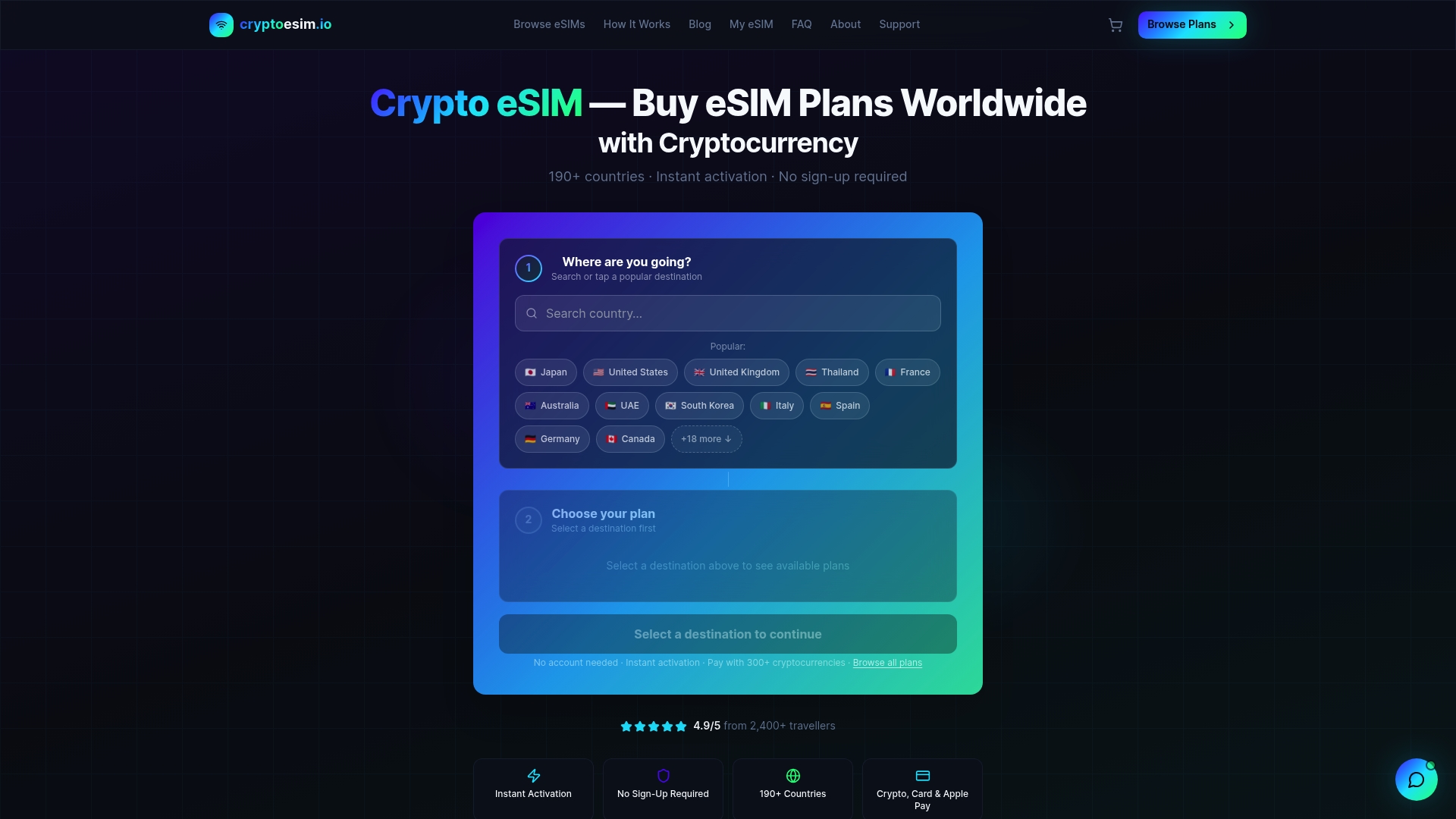
Coverage spans over 190 countries across every continent, from major cities to remote destinations. Whether you’re island hopping in Southeast Asia or conducting business across European capitals, CryptoeSIM.io provides reliable connectivity without the hassle of physical SIM cards or local carrier stores.
Key features that set the platform apart:
- Instant digital delivery of eSIM profiles within minutes of payment confirmation
- Multiple device support letting you activate plans across phones, tablets, and laptops
- Privacy-friendly purchasing requiring only an email address for delivery
- Transparent pricing with no hidden fees or surprise charges
- 24/7 customer support helping you troubleshoot activation or connectivity issues
Visit CryptoeSIM.io to browse plans for your next destination. The ultimate crypto eSIM guide walks you through every step of selecting, purchasing, and activating your first crypto-paid eSIM. For specific destination recommendations, check out the best eSIM plans for travel covering popular regions in Europe and Asia.
Frequently asked questions about crypto payments in telecommunications
What cryptocurrencies are commonly accepted for telecom payments?
Bitcoin and Ethereum lead in acceptance, with most crypto-friendly eSIM providers supporting both. Stablecoins like USDT and USDC are increasingly popular due to price stability. Some platforms also accept Litecoin, Bitcoin Cash, and other major cryptocurrencies. Check the crypto eSIM glossary for detailed explanations of payment options and technical terms.
Can I use crypto payments for telecom plans in multiple countries?
Yes, crypto payments work globally since blockchain networks operate without geographic restrictions. You can purchase regional or global eSIM plans covering multiple countries in a single transaction. This eliminates the need to buy separate plans or switch payment methods when crossing borders, making crypto ideal for multi-country travel itineraries.
How do crypto payments improve privacy compared to credit cards?
Crypto payments don’t require you to share your name, address, or financial account details with telecom providers. Credit cards create permanent records linking your identity to every purchase, location, and usage pattern. Crypto transactions can be pseudonymous, separating your legal identity from your connectivity needs and reducing the data trail you leave behind.
What devices support eSIM technology for crypto-based purchase?
Most smartphones released after 2018 include eSIM capability, including iPhone XS and newer, Google Pixel 3 and newer, and Samsung Galaxy S20 and newer models. Many tablets and laptops also support eSIM. Compare eSIM vs physical SIM for travel to understand compatibility requirements and verify your specific device model before purchasing.
Is it safe to use crypto wallets to pay for telecom services?
Crypto payments are safe when you follow proper security practices like using reputable wallets, verifying recipient addresses, and protecting your private keys. The blockchain provides transparent transaction records and eliminates intermediaries who could compromise your payment information. Choose established eSIM providers with verified reputations and always enable two-factor authentication on your wallet apps for maximum security.