eSIM security for travelers: 5 risks you need to know

Many travelers assume eSIMs eliminate security risks entirely, but recent exploits reveal a more nuanced reality. While eSIM technology offers robust cryptographic protections superior to physical SIM cards, vulnerabilities discovered in 2025 demonstrate that no system is completely immune to attack. For digital nomads and crypto enthusiasts seeking secure global connectivity, understanding both the strengths and weaknesses of eSIM architecture is essential. This guide examines how eSIMs work, evaluates real-world security incidents, compares protection levels against traditional SIMs, and provides actionable strategies to maximize your mobile security while traveling internationally.
Table of Contents
- Key takeaways
- How eSIM technology works to enhance mobile security
- Understanding eSIM security risks: Insights from the 2025 Kigen exploit
- Comparing eSIM and physical SIM security for global travelers
- Privacy and practical security considerations for travel eSIM users
- Secure your global mobile data with CryptoeSIM
- Frequently asked questions
Key Takeaways
| Point | Details |
|---|---|
| Hardware security foundation | eSIMs use a secure element inside the device that stores multiple profiles and handles cryptographic operations independently from the main processor, creating a hardware based security boundary. |
| Exploits prove persistent risk | The 2025 Kigen exploit showed that even certified secure elements have weaknesses and attackers could obtain keys with physical access and clone profiles, then remotely download new profiles via SMS PP. |
| Multi profile advantage | The ability to store and switch between multiple operator profiles enables separate profiles for general use and crypto transactions, and should be paired with GSMA compliance verification before purchase. |
| Privacy tradeoffs for travelers | Travel eSIMs can involve third party network routing and reseller metadata exposure while crypto focused eSIM services offer privacy features such as no KYC purchases and payment anonymity. |
How eSIM technology works to enhance mobile security
Understanding eSIM uses GSMA Remote SIM Provisioning architecture provides crucial insight into why this technology offers superior security for international travelers. The embedded Universal Integrated Circuit Card (eUICC) functions as a secure element within your device, storing multiple operator profiles and managing cryptographic operations independently from the main processor. This isolation creates a hardware-based security boundary that protects your mobile identity even if device software becomes compromised.
The GSMA RSP framework employs public key infrastructure for mutual authentication between your device, the eSIM server, and mobile network operators. Every profile download and activation occurs through TLS-secured channels using elliptic curve cryptography, ensuring that profile data remains encrypted during transmission. This cryptographic binding ties each profile to your specific eUICC, preventing unauthorized duplication or transfer to other devices. The architecture also enables profile lifecycle management, allowing operators to remotely update, suspend, or delete profiles without physical access to your device.
Multi-profile capability represents a game changer for travelers and crypto users managing connectivity across borders. You can store profiles from different operators simultaneously, switching between them based on location, data needs, or security requirements. This flexibility enables sophisticated strategies like maintaining one profile for general browsing and a separate, VPN-protected profile for cryptocurrency transactions. The seamless switching happens through your device settings without requiring physical SIM card swaps or service interruptions.
Pro Tip: Always verify your eSIM provider’s GSMA compliance certification before purchasing. Certified providers adhere to standardized security protocols, reducing vulnerability to exploits that target non-compliant implementations. Check the provider’s website for certification badges or request documentation confirming their compliance status.
For travelers comparing options, understanding the fundamental differences between crypto esim vs regular esim helps you select providers aligned with your security priorities. Crypto-focused eSIM services typically offer enhanced privacy features, no-KYC purchases, and payment anonymity that complement the underlying technical security of eSIM architecture.
Understanding eSIM security risks: Insights from the 2025 Kigen exploit
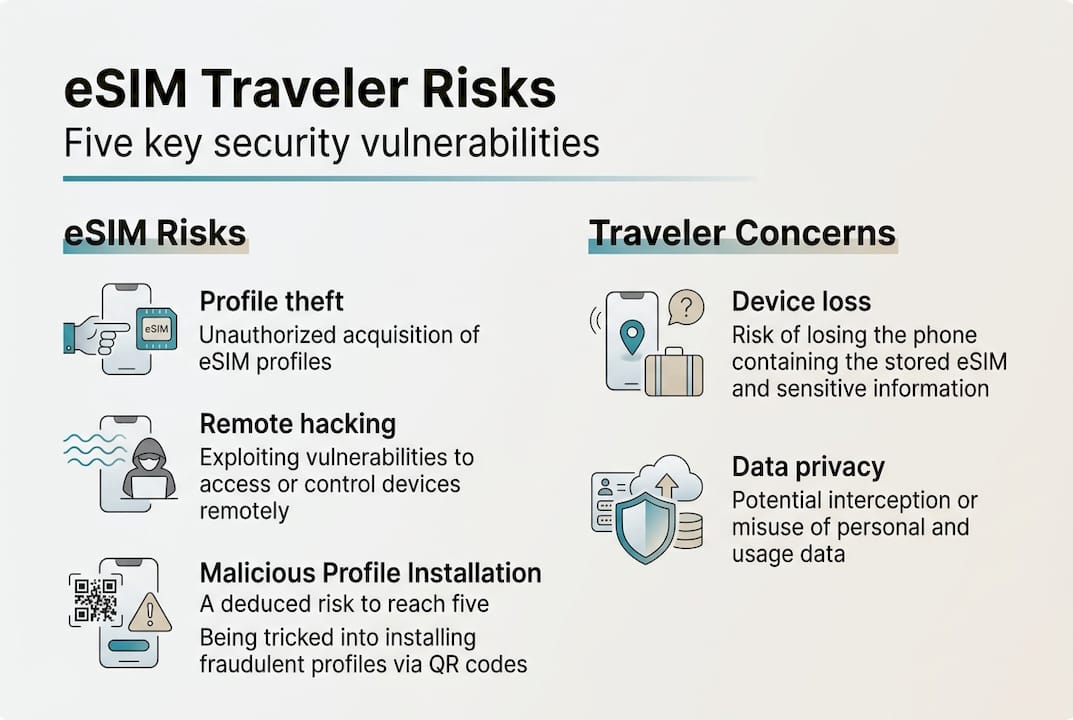
The 2025 hack on Kigen eUICC exposed critical vulnerabilities that every eSIM user should understand. Security researchers exploited Java Card type confusion flaws in widely deployed eUICC hardware, demonstrating that even certified secure elements contain exploitable weaknesses. The attack required initial physical device access to extract cryptographic keys, but once compromised, attackers could clone eSIM profiles and remotely download additional profiles via SMS-PP messages without further physical interaction.
The exploit methodology revealed several attack vectors that bypass standard security assumptions:
- Physical key extraction through voltage glitching and side-channel analysis of the eUICC chip during cryptographic operations
- Malicious Java Card applet installation that persists across profile changes and operating system updates
- Remote profile manipulation via specially crafted SMS messages exploiting the SIM Application Toolkit protocol
- Profile cloning enabling simultaneous use of identical credentials on multiple devices for surveillance or fraud
What makes this vulnerability particularly concerning is its scale and persistence. The affected Kigen eUICC hardware ships in billions of devices across hundreds of mobile operators worldwide. While Kigen released patches addressing the specific Java Card flaws, the incident demonstrates that hardware-level vulnerabilities can remain undetected for years despite rigorous certification processes. Devices already in circulation may never receive updates, creating a persistent attack surface for sophisticated adversaries.
The exploit’s limitations provide some reassurance for typical travelers. Executing the attack requires specialized equipment, technical expertise, and either physical device access or social engineering to deliver malicious SMS messages. Random opportunistic attacks remain unlikely, but targeted surveillance of high-value individuals becomes feasible. For crypto users carrying significant digital assets, this risk profile demands additional protective measures beyond relying solely on eSIM security.
“The Kigen eUICC vulnerabilities underscore that hardware security certification provides important but not absolute protection. Travelers should layer multiple security controls, selecting providers with proven track records of rapid security updates and transparent vulnerability disclosure practices.” — Mobile Security Research Team
Understanding these risks helps you make informed decisions about crypto esim privacy no kyc options that minimize personal data exposure while maintaining strong technical security foundations.
Comparing eSIM and physical SIM security for global travelers
Evaluating how eSIM generally more secure than physical SIM cards helps travelers understand the practical security improvements this technology delivers. Physical SIM cards remain vulnerable to straightforward theft, with attackers simply removing the card from an unattended device and inserting it into another phone. This attack requires seconds to execute and no technical sophistication. In contrast, eSIM profiles bind cryptographically to specific eUICC hardware, making simple transfer impossible without exploiting complex vulnerabilities like those discovered in the Kigen incident.

| Security aspect | eSIM | Physical SIM |
|---|---|---|
| Physical theft protection | Profile bound to device hardware, cannot be removed | Easily removed and inserted into another device |
| Cloning resistance | Requires sophisticated hardware attacks and cryptographic key extraction | Vulnerable to SIM card readers and cloning tools |
| Remote deactivation | Instant profile suspension via network commands | Requires operator contact and manual intervention |
| Authentication method | PKI-based mutual authentication with elliptic curve cryptography | Shared secret authentication with lower cryptographic strength |
| Social engineering vulnerability | SIM swap attacks possible through operator customer service | SIM swap attacks possible through operator customer service |
| Recovery options | Remote profile reactivation on replacement device | Requires new physical card issuance and delivery |
Despite eSIM’s technical advantages, both technologies share vulnerability to social engineering attacks. SIM swap fraud occurs when attackers convince mobile operators to transfer your phone number to a SIM card they control. This attack bypasses all cryptographic protections by exploiting human customer service processes rather than technical vulnerabilities. Once successful, attackers receive your calls and SMS messages, potentially compromising accounts protected by SMS-based two-factor authentication.
Persistent threats affecting both SIM types include:
- Account takeover through social engineering of operator customer service representatives
- SMS interception via SS7 protocol vulnerabilities in global telecom infrastructure
- Malware on compromised devices accessing SIM application toolkit interfaces
- Phishing attacks targeting operator account credentials for profile management access
Pro Tip: Never rely solely on SMS-based authentication for securing cryptocurrency accounts or sensitive financial services. Implement hardware security keys or authenticator apps that generate time-based codes independent of your mobile number. This approach protects you even if attackers successfully execute a SIM swap attack.
For international travelers, eSIMs provide superior security through elimination of physical theft risks and faster recovery options when traveling across multiple countries. The ability to remotely activate replacement profiles means you can restore connectivity within minutes rather than waiting days for physical SIM card delivery to foreign addresses. This advantage proves especially valuable for digital nomads who rely on constant connectivity for remote work and crypto trading activities.
Comparing esim vs physical sim international travel options reveals that security represents just one factor among convenience, cost, and coverage considerations. However, for crypto-savvy travelers carrying digital assets, the enhanced security profile of eSIM technology provides meaningful risk reduction compared to traditional alternatives. Implementing proper data protection practices complements these technical security advantages.
Privacy and practical security considerations for travel eSIM users
Beyond technical security features, travel eSIMs route data through complex networks that introduce privacy considerations distinct from traditional mobile service. When you purchase a travel eSIM from a reseller, your data typically routes through third-party foreign networks before reaching the internet. This architecture exposes connection metadata including timestamps, data volumes, and destination IP addresses to multiple intermediaries beyond your chosen eSIM provider. For privacy-conscious travelers, understanding these data flows helps you implement appropriate protective measures.
Research analyzing travel eSIM providers revealed concerning privacy practices affecting 20% of tested services. Profile deletion failures mean your credentials and usage history persist on provider systems even after you believe you’ve removed them. Profile lock-in occurs when providers implement proprietary extensions to GSMA standards, preventing you from transferring your number or data allowance to alternative services. These practices create vendor dependencies that limit your control over personal information and reduce competitive pressure for better privacy protections.
Implementing these numbered best practices maximizes your travel eSIM security:
- Activate new eSIM profiles exclusively over trusted VPN connections to prevent interception of provisioning credentials during the initial download process
- Maintain separate eSIM profiles for cryptocurrency activities, using one profile for general browsing and a dedicated profile protected by VPN for accessing exchange accounts and wallet management
- Monitor your actual IP address and network routing after connecting to verify data flows through expected countries and operators, watching for unexpected routing through high-risk jurisdictions
- Delete unused eSIM profiles completely from your device rather than simply disabling them to reduce attack surface and prevent accidental reconnection
- Review your eSIM provider’s data retention policies and jurisdiction to understand how long they store connection logs and which government authorities can request access
When evaluating eSIM providers, check these privacy and compliance factors:
- GSMA certification status and compliance with RSP security standards
- Data retention policies specifying how long connection logs and metadata remain stored
- Jurisdiction of incorporation and applicable data protection regulations
- Transparency reports disclosing government data requests and provider responses
- Payment anonymity options including cryptocurrency acceptance without identity verification
- Profile deletion guarantees with technical verification of complete removal
Device theft represents an underappreciated exploit vector for eSIM security. Unlike physical SIM cards that you can remove and store separately, eSIM profiles remain embedded in stolen devices. While PIN locks and encryption provide some protection, sophisticated attackers with physical access can exploit the same vulnerabilities used in the Kigen incident. For travelers carrying devices with crypto wallet access or sensitive business data, implementing remote wipe capabilities and maintaining encrypted backups becomes essential.
Exploring crypto payments mobile secure global data access strategies helps you leverage cryptocurrency’s privacy benefits while maintaining strong operational security. The ultimate crypto esim guide provides comprehensive recommendations for selecting providers and configuring profiles to maximize both privacy and security across international travel scenarios.
Secure your global mobile data with CryptoeSIM
Now that you understand eSIM security fundamentals and potential vulnerabilities, choosing the right provider becomes your most important security decision. CryptoeSIM specializes in secure, privacy-focused eSIM solutions designed specifically for international travelers and digital nomads who value both connectivity and confidentiality. Our platform supports cryptocurrency payments including Bitcoin, Ethereum, and over 300 tokens, enabling truly anonymous purchases without KYC requirements that expose your identity.
With coverage across 190+ countries and instant activation, you maintain seamless connectivity while implementing the multi-profile security strategies outlined in this guide. Our GSMA-certified infrastructure ensures you benefit from standardized security protocols while our no-account-required purchasing protects your privacy from the first transaction. Whether you need dedicated profiles for crypto trading or simply want reliable international data without privacy compromises, CryptoeSIM delivers the secure connectivity foundation your mobile lifestyle demands.
Frequently asked questions
Is an eSIM more secure than a physical SIM for international travel?
Yes, eSIM generally more secure than physical SIM cards due to cryptographic profile binding that prevents simple theft and cloning. Physical SIM cards can be removed from devices in seconds and used immediately in another phone, while eSIM profiles require sophisticated hardware attacks to extract and clone. However, both technologies remain equally vulnerable to social engineering attacks like SIM swapping that exploit operator customer service rather than technical security.
What are the main vulnerabilities discovered in eSIM technology recently?
The 2025 hack on Kigen eUICC exploited Java Card type confusion flaws in widely deployed secure element hardware. Attackers with initial physical device access could extract cryptographic keys through voltage glitching and side-channel analysis, then install malicious applets enabling remote profile downloads via SMS messages. While patches addressed these specific vulnerabilities, the incident revealed that even certified hardware contains exploitable weaknesses affecting billions of devices globally.
How can crypto-savvy travelers maximize their eSIM security while abroad?
Best practices include activating eSIM profiles exclusively over VPN connections to protect provisioning credentials during download. Maintain separate eSIM profiles for cryptocurrency activities, using dedicated VPN-protected profiles for exchange access and wallet management while keeping general browsing on different profiles. Monitor your actual IP address and network routing to detect unexpected data flows through high-risk jurisdictions, and choose only GSMA-certified providers with proven security track records.
Are travel eSIMs a privacy risk due to third-party network routing?
Yes, travel eSIMs often route data through third-party foreign networks that expose connection metadata including timestamps, data volumes, and destination addresses to resellers and intermediary operators. Research found 20% of travel eSIM providers fail to completely delete profiles upon user request, creating persistent privacy risks. Profile lock-in through proprietary extensions prevents transferring services to alternative providers, reducing your control over personal data and limiting competitive privacy improvements.