How Mobile Data Plans Work for Travelers in 2026

TL;DR:
- Mobile data plans provide internet access via cellular networks, with usage limits and throttling policies affecting speed. Prepaid eSIM plans are ideal for travelers, offering flexible, contract-free options with instant activation and regional coverage. Managing device settings and understanding plan details helps avoid unexpected data overages and costly roaming charges.
A mobile data plan is a service from a cellular carrier that gives your phone internet access without Wi-Fi by connecting to a network of towers and allocating a set amount of data measured in gigabytes. Understanding how mobile data plans work is the difference between staying connected on a work call in Tokyo and hitting a $200 roaming bill before lunch. This guide breaks down the full picture: the technology behind data transmission, the real differences between plan types, how your device quietly burns through data, and how to pick the right plan for travel or remote work.
How does mobile data actually travel to your device?

Mobile data works by converting your internet requests into digital packets and sending them to the nearest cell tower over licensed radio frequencies. Each cell tower covers a geographic zone called a cell. When you move between zones, your connection hands off between towers automatically. That handoff is why you can stream a podcast while driving without dropping the audio.
The process runs like this:
- Your device sends a data request over a radio frequency assigned to your carrier.
- The cell tower receives the request and forwards it through a backhaul link to the carrier’s core network.
- The core network routes the request to the internet, retrieves the data, and sends it back through the same path.
- Your device reassembles the data packets and displays the result.
Before any of this happens, your SIM card authenticates your identity. SIM authentication uses cryptographic algorithms to verify your subscriber credentials before the network grants access. This is why a stolen SIM cannot simply be dropped into another phone and used on your account without authorization.
Speed depends on more than just signal bars. Network congestion and your priority level both affect how fast data actually reaches you. Carriers use technologies like massive MIMO and fiber backhaul to handle millions of simultaneous connections, but during peak hours in dense areas like airports or conference centers, speeds drop for lower-priority users first.
| Network Generation | Typical Download Speed | Common Use Case |
|---|---|---|
| 3G | 1–8 Mbps | Basic browsing, messaging |
| 4G LTE | 20–100 Mbps | Streaming, video calls |
| 5G | 100–1,000 Mbps | High-resolution video, cloud work |
Prepaid vs. postpaid: which plan type fits you?
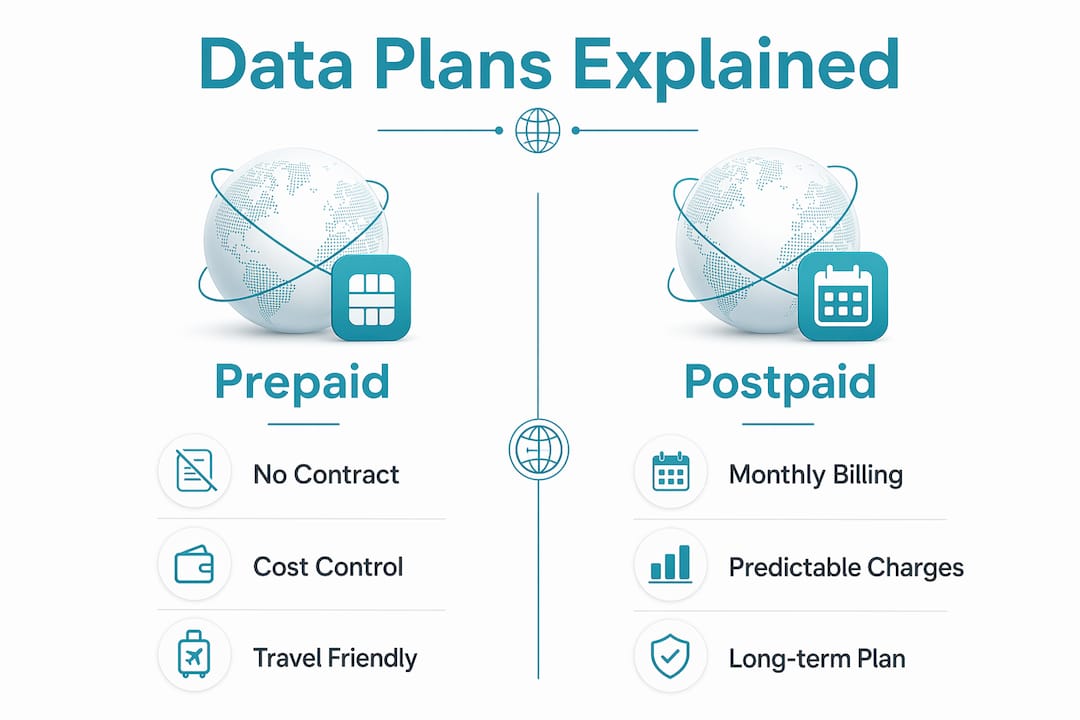
Mobile data plans fall into four main categories: pay-as-you-go, prepaid monthly, postpaid contract, and unlimited. Each has a distinct cost structure and a specific type of user it serves best.
Prepaid plans require upfront payment and carry no long-term contracts. You buy a set amount of data before you use it. When it runs out, you either top up or go without. This structure gives you total cost control, which is why prepaid is the default choice for international travelers.
Postpaid plans bill you at the end of the month and often involve 12–24 month contracts with predictable monthly charges. The trade-off is flexibility. Breaking a postpaid contract early typically triggers a fee. For someone working remotely from a single country long-term, postpaid offers stability. For someone moving between countries every few weeks, it creates friction.
| Plan Type | Contract | Cost Control | Best For |
|---|---|---|---|
| Prepaid | None | High | Travelers, short-term users |
| Postpaid | 12–24 months | Moderate | Long-term residents |
| Pay-as-you-go | None | Very high | Occasional users |
| Unlimited | Varies | Low | Heavy data users at home |
Unlimited plans sound straightforward but carry a critical nuance. Many unlimited plans impose a premium data cap after which speeds are throttled to 2G levels. A plan advertised as “unlimited” may deliver full-speed data for the first 50GB, then slow to speeds too low for video calls. Heavy users need to read the fine print before committing.
Pro Tip: When comparing unlimited plans, look for the “premium data” or “prioritized data” figure in the plan details. That number, not the word “unlimited,” tells you how much full-speed data you actually get.
Choosing between prepaid and postpaid comes down to whether you value flexibility or billing consistency. For international travel and remote work, flexibility almost always wins.
How does data usage on mobile add up so fast?
The average person uses approximately 22GB of mobile data per month. That number surprises most people until they see what drives it. HD video streaming alone consumes about 3GB per hour. A two-hour video call on Zoom or Google Meet burns through roughly the same amount.
Here is a practical breakdown of common activities and their data costs:
- HD video streaming (Netflix, YouTube): approximately 3GB per hour
- Standard video calls (Zoom, Google Meet): 1–1.5GB per hour
- Music streaming (Spotify, Apple Music): 50–150MB per hour
- Social media browsing (Instagram, TikTok): 100–300MB per hour
- Email and messaging: under 10MB per hour
Background data is the silent budget killer. iOS Wi-Fi Assist and Android Network Switch can automatically switch your device from Wi-Fi to cellular data when the Wi-Fi signal weakens. You think you are on Wi-Fi. Your phone is quietly using your data plan. This is especially common in hotels and cafes where Wi-Fi signals fluctuate.
Hotspot usage adds another layer of complexity. Mobile hotspot data either draws from a dedicated hotspot allowance or from your general plan, depending on your carrier. If you tether a laptop to your phone for remote work, you can exhaust a 10GB plan in a single workday of video calls.
Pro Tip: On iOS, go to Settings > Cellular > Wi-Fi Assist and turn it off. On Android, go to Network Settings and disable Network Switch. Both changes stop your phone from secretly burning cellular data when Wi-Fi gets spotty.
Disabling automatic switching features is one of the most effective ways to control data costs while traveling. Pair that with setting data usage alerts in your phone’s settings, and you will never hit an overage charge by accident.
How to choose the right data plan for travel and remote work
Picking the right plan for international use requires a different checklist than picking a domestic plan. Coverage, roaming policies, and contract flexibility matter far more than they do at home.
Here is what to evaluate before committing to a plan:
- Coverage in your destination countries. Not all carriers have roaming agreements everywhere. Verify that your plan covers the specific countries on your itinerary, not just broad regions.
- Roaming fees and fair-use policies. Some postpaid plans include roaming but throttle speeds abroad or charge per-MB fees after a daily cap. Read the roaming terms, not just the headline price.
- Data allowance versus your actual usage. If you average 22GB per month at home and plan to work remotely, a 10GB travel plan will not last two weeks.
- eSIM compatibility. eSIM technology lets you add a local or regional data plan to your phone without swapping physical SIM cards. For travelers moving between countries, eSIM advantages for global travelers include instant activation, no roaming markups, and the ability to hold multiple plans simultaneously.
- Contract terms and cancellation. A prepaid eSIM plan with no contract beats a postpaid plan with a 12-month commitment if your travel schedule is unpredictable.
For remote workers specifically, the math on top international eSIM data plans often favors regional data packages over carrier roaming add-ons. A regional eSIM covering Europe or Southeast Asia typically costs less per gigabyte than activating roaming on a domestic postpaid plan.
Pro Tip: Track your data usage for one full week at home before you travel. That number, multiplied by your trip length, gives you a realistic minimum data allowance to shop for.
The global eSIM coverage options for digital nomads have expanded significantly in 2026. Plans covering 190 or more countries now exist at price points that make carrier roaming fees look absurd by comparison.
Key takeaways
Mobile data plans deliver internet access through cellular networks by allocating data in gigabytes, and choosing the right plan type, managing device settings, and understanding throttling policies determines whether you stay connected or pay more than you should.
| Point | Details |
|---|---|
| Data travels as packets | Your phone sends requests to cell towers, which route data through backhaul links to the internet and back. |
| Unlimited plans have limits | Most unlimited plans throttle speeds after a premium data cap, often 50GB or less. |
| Background settings drain data | iOS Wi-Fi Assist and Android Network Switch silently switch to cellular data; disable both when traveling. |
| Prepaid beats postpaid for travel | No contracts and upfront cost control make prepaid the practical choice for international use. |
| eSIMs cut roaming costs | Regional eSIM plans covering multiple countries typically cost less per gigabyte than carrier roaming add-ons. |
What i’ve learned managing data plans across 30+ countries
Most people overpay for mobile data abroad because they trust their home carrier’s roaming add-on without checking alternatives. I made that mistake exactly once. A two-week trip through Southeast Asia cost me $180 in roaming fees on a plan I could have replaced with a $25 regional eSIM.
The real trap is not the plan itself. The trap is the device settings nobody tells you to change. Wi-Fi Assist burned through 4GB of my data on a single trip before I figured out what was happening. Once I disabled it and set a data usage alert, my consumption dropped by nearly a third without changing how I worked.
My honest advice: treat your data plan like a travel budget. Know your number before you leave, buy slightly more than you think you need, and pick a plan you can top up instantly if you run short. Prepaid eSIM plans win on every one of those criteria. They activate in minutes, carry no contract risk, and let you add data from your phone without hunting for a SIM card shop in an unfamiliar city.
The one thing I would add that most guides skip: check whether your plan’s hotspot allowance is separate from your main data. I once ran out of hotspot data mid-presentation while my main data balance sat untouched. That is a plan detail worth five minutes of research before you board the plane.
— Mohammed
Get global data coverage without the roaming surprises
Cryptoesim offers prepaid eSIM plans covering 190+ countries with instant digital activation and no contracts. You pay only for what you need, activate in minutes, and never deal with physical SIM cards or carrier roaming markups.
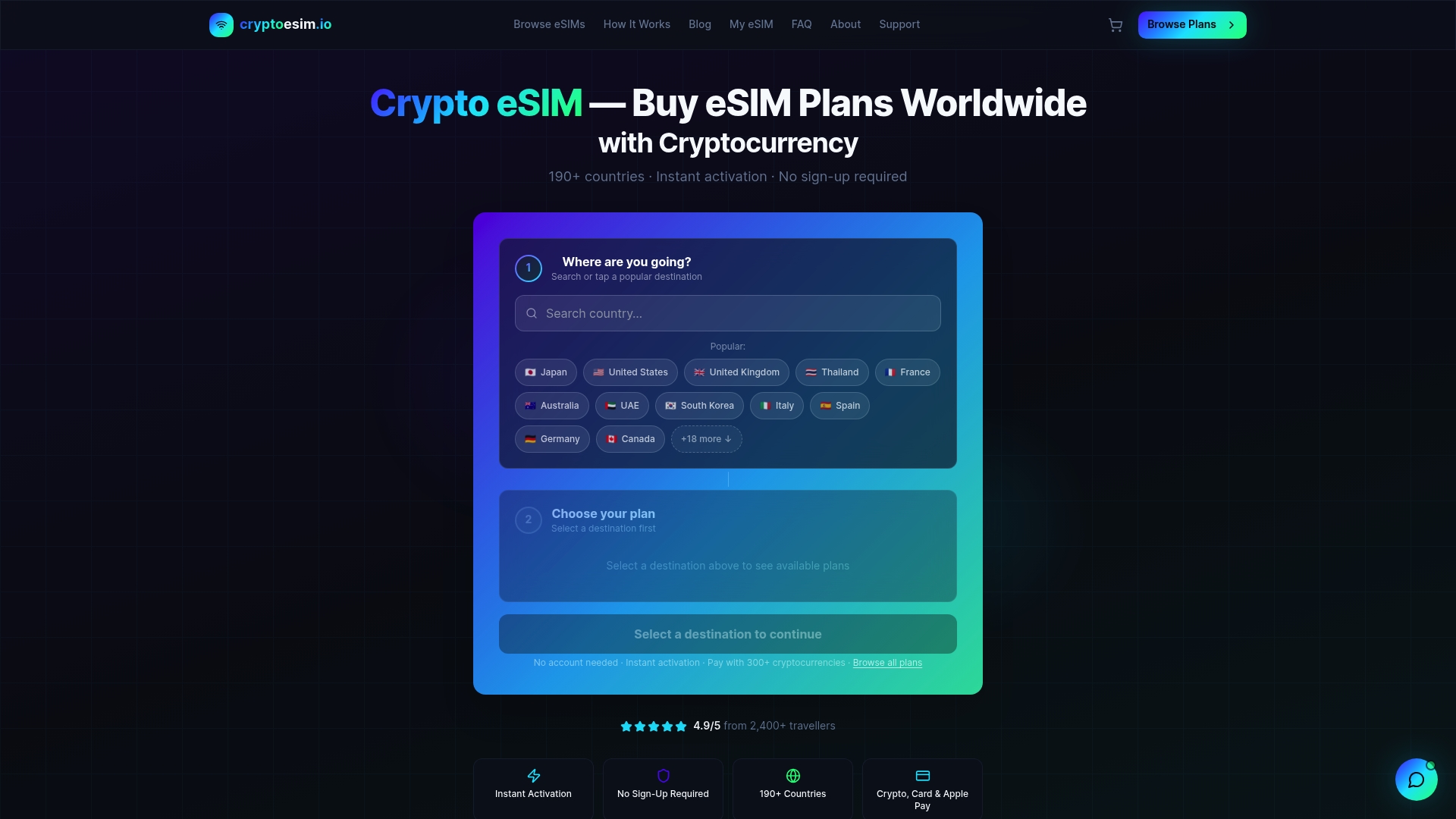
Plans are available through crypto-friendly eSIM packages that accept Bitcoin, Ethereum, and over 300 other tokens, along with credit cards and Apple Pay. No account creation required and no KYC process. For remote workers and frequent travelers who want data that works the moment they land, Cryptoesim is the practical alternative to expensive carrier roaming. You can also explore additional eSIM packages for alternate regional coverage options.
FAQ
What is a mobile data plan, exactly?
A mobile data plan is a service from a cellular carrier that provides internet access over a network of towers, allocating a set amount of data in gigabytes or offering unlimited access for a monthly fee.
Why does my data run out faster than expected?
HD streaming consumes about 3GB per hour, and device features like iOS Wi-Fi Assist and Android Network Switch silently switch from Wi-Fi to cellular data, accelerating usage without any visible indication.
Are unlimited data plans actually unlimited?
Most unlimited plans impose a premium data cap, after which speeds are throttled to slower rates. Full-speed data ends at that cap, even though the plan technically remains active.
What is the best data plan option for international travel?
Prepaid eSIM plans with regional or global coverage offer the best combination of cost control, flexibility, and instant activation for travelers, with no roaming fees or long-term contracts.
How does an eSIM differ from a regular SIM for data plans?
An eSIM is a digital SIM built into your device that lets you activate a data plan remotely without a physical card. The difference between crypto eSIM and regular eSIM options comes down to payment method and privacy, with crypto-based plans offering no-KYC activation.