Unlock privacy benefits of eSIM for travelers in 2026

You’ve heard eSIMs promise seamless global connectivity and enhanced privacy for international travel. But recent security research reveals a more complex reality. While eSIM technology does offer legitimate privacy advantages over traditional SIM cards, it also introduces new vulnerabilities through third-party data routing and reseller access to sensitive user information. This guide cuts through the hype to explain how eSIMs actually impact your privacy, what risks exist, and how combining eSIM technology with cryptocurrency payments can genuinely protect your data while traveling.
Table of Contents
- Understanding eSIM Technology And Its Privacy Implications
- Privacy Risks From Data Routing And Reseller Access
- Managing eSIM Profiles: Risks And Best Practices
- Enhancing Privacy With Cryptocurrency Payments And Trusted Providers
- Discover Private, Crypto-Friendly eSIMs At CryptoeSIM.io
- Frequently Asked Questions
Key takeaways
| Point | Details |
|---|---|
| Remote provisioning flexibility | eSIMs enable instant activation across 190+ countries without physical SIM swapping, ideal for travelers and remote workers |
| Hidden routing risks | Travel eSIMs often route data through undisclosed third-party networks, creating jurisdictional privacy exposure |
| Reseller data access | eSIM resellers can access your IMSI, location data, and messaging capabilities without clear user consent |
| Crypto payment advantage | Purchasing eSIMs with Bitcoin or Ethereum reduces payment tracking and enhances transaction anonymity |
| Profile management matters | Proper eSIM profile handling prevents lock-in situations and ensures you maintain control over your connectivity |
Understanding eSIM technology and its privacy implications
An eSIM is a programmable digital SIM embedded directly into your device, eliminating the need for physical SIM cards. Unlike traditional SIMs that require manual installation, eSIMs use remote SIM provisioning (RSP) to download and activate cellular profiles over the internet. This means you can purchase an eSIM plan online and activate it immediately, regardless of your physical location.
For international travelers and remote workers, this flexibility transforms mobile connectivity. You can switch between carriers instantly, maintain multiple profiles simultaneously, and avoid the hassle of finding local SIM vendors in unfamiliar countries. Research shows eSIM adoption is accelerating as travelers recognize these convenience benefits.
The privacy advantages seem obvious at first glance. Physical SIM cards require in-person purchases that often involve identity verification and registration. eSIMs purchased online can theoretically offer more anonymity, especially when combined with privacy-focused payment methods. You avoid handing over passport copies to random mobile shops in foreign airports.
However, the remote management capability that makes eSIMs convenient also creates new privacy vulnerabilities. Your cellular profile now lives in a digital ecosystem involving multiple parties: the eSIM platform, network operators, and potentially numerous intermediaries. Each connection point represents a potential privacy leak.
Pro Tip: Before purchasing any eSIM, research whether the provider clearly discloses which networks will handle your data and in which jurisdictions those networks operate.
The key privacy considerations include:
- Data routing through networks you didn’t explicitly choose
- Remote access capabilities that could be exploited
- Metadata collection across the provisioning chain
- Lack of transparency in reseller business practices
Understanding these technical realities helps you make informed decisions about which eSIM providers to trust and how to configure your device for maximum privacy protection.
Privacy risks from data routing and reseller access
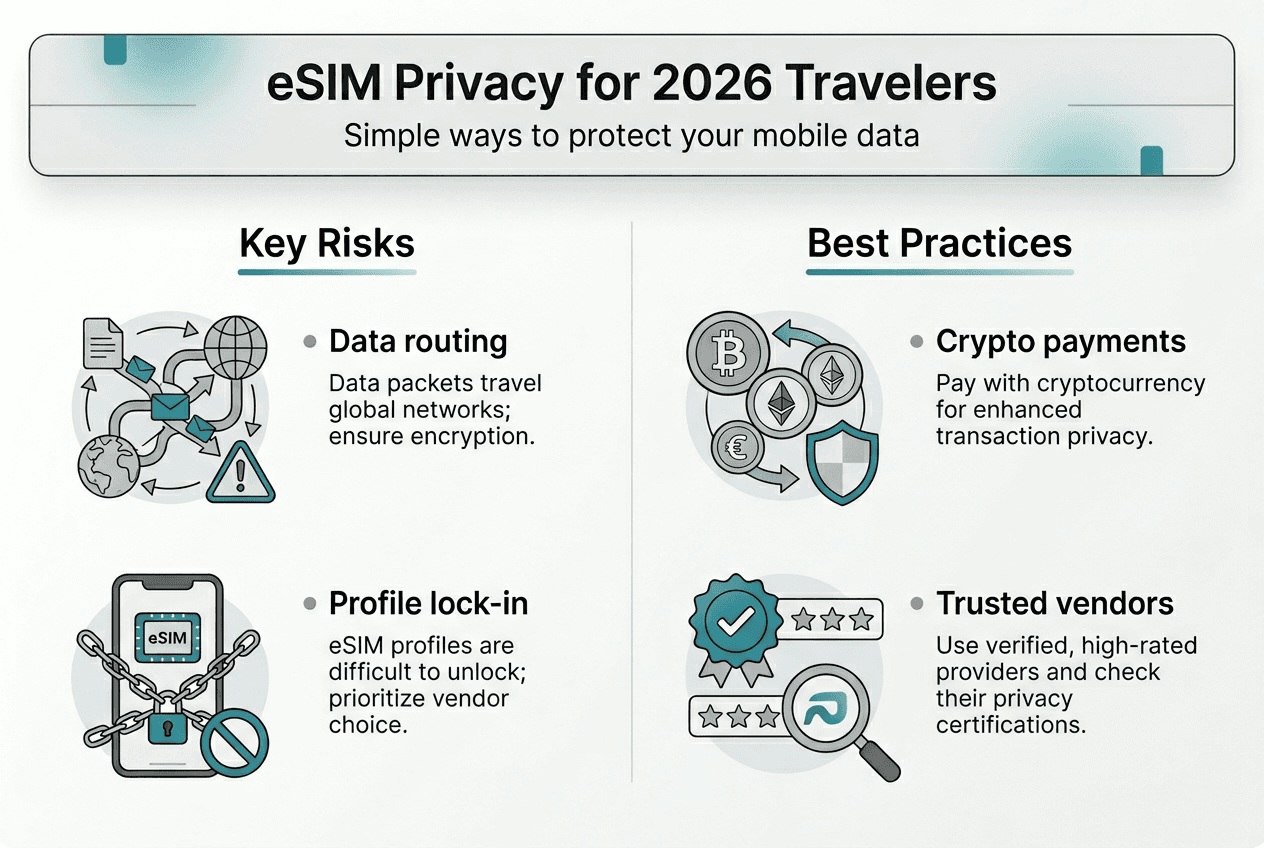
The most significant privacy risk with travel eSIMs involves opaque data routing practices. Security researchers discovered that travel eSIMs frequently route user traffic through third-party networks without user knowledge or consent. In some cases, data passed through Chinese telecommunications infrastructure even when users purchased eSIMs marketed for European or American use.

This creates serious jurisdictional exposure. Your internet traffic, location data, and communication metadata could be subject to surveillance laws in countries you never intended to connect through. For business travelers handling sensitive information or journalists working in restrictive environments, this represents a genuine security threat.
The reseller ecosystem amplifies these concerns. Researchers found that becoming an eSIM reseller requires minimal verification, allowing almost anyone to access the provisioning infrastructure. Once approved as a reseller, individuals gain access to:
- International Mobile Subscriber Identity (IMSI) numbers
- Real-time device location data
- SMS messaging capabilities to and from user devices
- Profile management controls including remote deletion
This level of access exists largely without user awareness. When you purchase an eSIM from an online reseller, you’re trusting that company and everyone in their supply chain to handle your data responsibly. The lack of regulatory oversight in this space means few mechanisms exist to verify or enforce privacy commitments.
One security researcher noted:
“The eSIM reseller market operates with surprisingly little oversight. We were able to gain reseller credentials and access sensitive user data with minimal scrutiny, revealing systemic privacy vulnerabilities in how travel eSIMs are provisioned and managed.”
The provisioning workflow itself creates additional exposure. Each time you activate an eSIM profile, your device communicates with multiple servers to authenticate and download the profile. These communications reveal device identifiers, location information, and usage patterns. Without end-to-end encryption and clear data handling policies, this metadata can be collected and potentially sold or shared.
For privacy-conscious travelers, understanding these risks is essential. Not all eSIM providers operate the same way, and choosing a transparent provider focused on privacy makes a substantial difference in your actual privacy posture.
Managing eSIM profiles: risks and best practices
Beyond data routing concerns, eSIM technology introduces operational risks related to profile management. Research using private LTE testbeds validated that eSIM profiles can experience deletion failures and lock-in situations that prevent users from switching providers or removing unwanted profiles.
Profile lock-in occurs when an eSIM profile cannot be properly deleted from your device, even when you follow standard removal procedures. This might happen due to misconfigured provisioning servers, incomplete deletion protocols, or intentional restrictions imposed by certain providers. When locked in, you may be unable to free up eSIM slots for new profiles or fully remove a provider’s access to your device.
Deletion failures present similar challenges. You initiate profile removal through your device settings, but the profile remains partially active or continues consuming device resources. In worst-case scenarios, remnant profile data could still transmit information even after you believe you’ve removed the eSIM.
To manage eSIM profiles securely and maintain control:
- Test profile deletion immediately after installation by adding and removing a test profile to verify the provider’s deletion process works correctly
- Document which eSIM profiles you have active and review this list monthly to identify any unexpected additions
- Use device settings to disable data access for eSIM profiles you’re not actively using rather than relying solely on deletion
- Research provider reputation specifically regarding profile management before purchasing, looking for user reports of lock-in issues
- Maintain at least one eSIM slot available for emergency connectivity by avoiding filling all available slots simultaneously
- Keep your device firmware updated as manufacturers regularly patch eSIM management vulnerabilities
- Consider using devices that support more eSIM profiles simultaneously to reduce the need for frequent deletion and reinstallation
Pro Tip: After installing a new eSIM profile, immediately attempt to delete it and reinstall to confirm the provider’s removal process functions properly before you depend on that profile during international travel.
The technical complexity of eSIM provisioning means that even legitimate providers can experience management issues. However, providers committed to user control will prioritize reliable profile deletion and clearly document the removal process. If a provider’s documentation lacks clear deletion instructions or user reviews mention persistent profile problems, consider that a red flag.
Maintaining control over your eSIM profiles directly impacts your privacy. Profiles you cannot remove represent ongoing data exposure risks, potentially continuing to transmit location and usage information even when you believe you’ve severed the connection.
Enhancing privacy with cryptocurrency payments and trusted providers
One of the most effective privacy enhancements for eSIM users involves purchasing plans with cryptocurrency rather than traditional payment methods. When you buy an eSIM with Bitcoin or other cryptocurrencies, you eliminate the direct link between your identity and your mobile connectivity.
Credit card and PayPal transactions create detailed payment records that connect your real identity to specific eSIM purchases. These records include timestamps, amounts, and merchant details that could be subpoenaed or accessed through data breaches. Cryptocurrency transactions, when handled properly, provide pseudonymous payment that significantly reduces this traceability.
The privacy benefits compound when you combine crypto payments with providers that don’t require account creation. Traditional mobile carriers demand extensive personal information during signup. Privacy-focused eSIM platforms allow you to purchase and activate plans using only an email address or even without any registration at all.
However, cryptocurrency payments alone don’t solve all privacy concerns. The global eSIM reseller marketplace operates with minimal regulatory oversight, creating opportunities for providers with questionable data practices. Choosing a trustworthy provider requires evaluating several factors:
- Network transparency: Does the provider clearly disclose which mobile networks will handle your data and in which countries?
- Data handling policies: What information does the provider collect, how long do they retain it, and with whom might they share it?
- Payment privacy: Does the provider support cryptocurrency payments and avoid requiring unnecessary personal information?
- Technical security: Does the provider use encrypted provisioning channels and modern security protocols?
- User control: Can you easily manage and delete eSIM profiles through clear, documented processes?
Beyond provider selection, additional privacy practices strengthen your overall security posture. Using a VPN in conjunction with your eSIM encrypts your internet traffic, preventing network operators from monitoring your browsing activity. Configuring your device to minimize location services usage reduces the metadata your eSIM can expose. Regularly reviewing device permissions ensures apps cannot access your cellular connection inappropriately.
The combination of crypto payments and careful provider selection creates a substantially more private mobile connectivity experience than traditional approaches. You maintain anonymity in payment, reduce identity exposure during purchase, and minimize ongoing data collection by choosing providers committed to transparency and user privacy.
Discover private, crypto-friendly eSIMs at CryptoeSIM.io
If you’re serious about maintaining privacy while traveling internationally, choosing the right eSIM provider makes all the difference. CryptoeSIM.io specializes in privacy-focused eSIM plans that you can purchase with Bitcoin, Ethereum, and over 300 other cryptocurrencies, eliminating payment tracking and identity exposure.
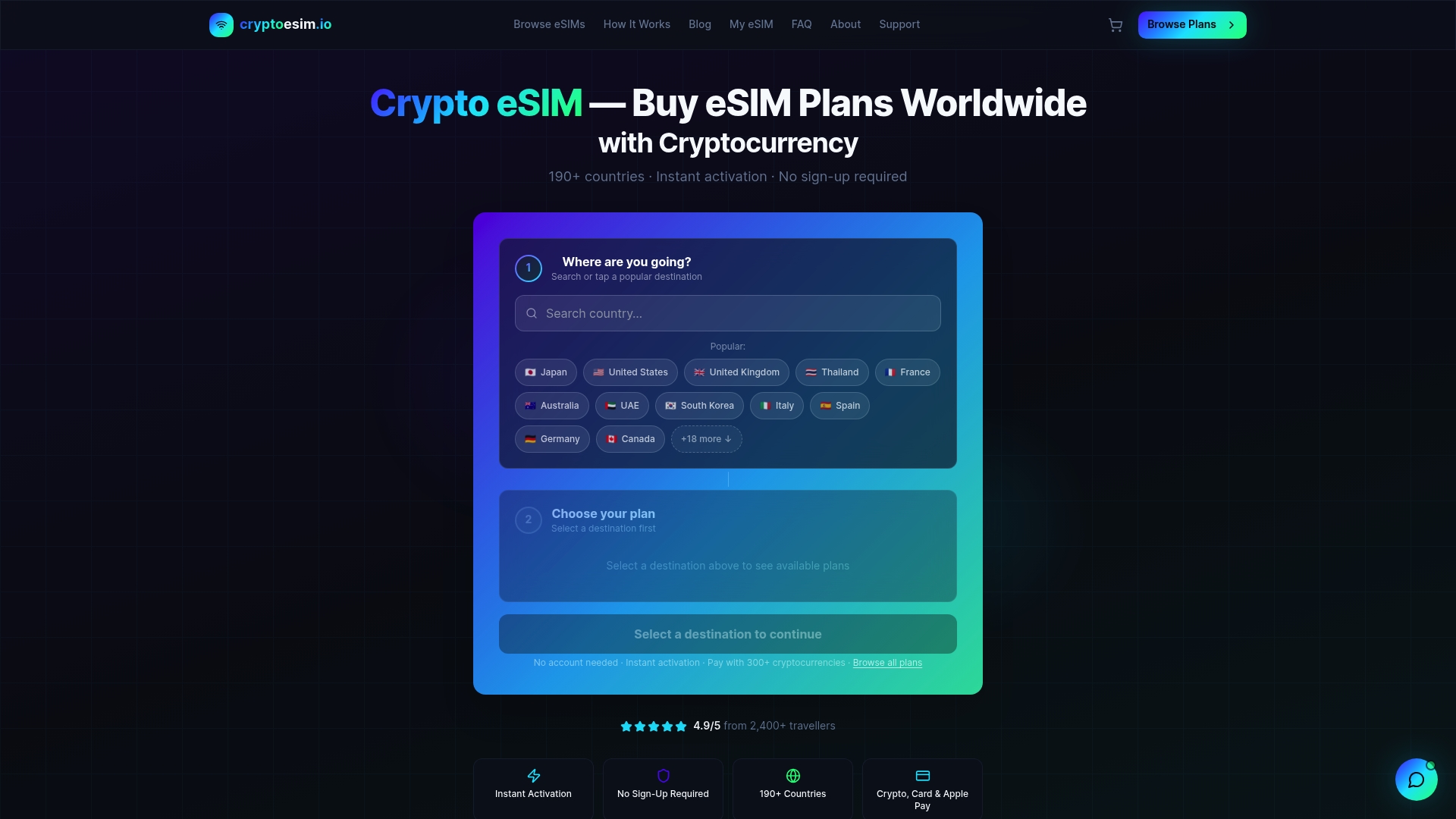
The platform offers instant activation across 190+ countries without requiring account creation, giving you genuine anonymity from purchase through activation. You get the convenience of immediate global connectivity combined with the privacy benefits of crypto payments and minimal data collection. Whether you’re a digital nomad, frequent business traveler, or privacy-conscious remote worker, CryptoeSIM.io provides the tools you need to stay connected without compromising your personal information. Explore the blog to learn more about buying eSIMs with Bitcoin and comparing crypto eSIM options for your specific travel needs.
Frequently asked questions
What is an eSIM and how does it differ from a physical SIM?
An eSIM is a programmable digital SIM embedded directly into your device, unlike removable physical SIM cards. It supports remote provisioning, allowing you to download and activate cellular profiles over the internet without handling physical cards. This offers greater flexibility for travelers but introduces unique privacy considerations related to remote management and data routing. Learn more about how eSIMs work and their technical implementation.
How can using cryptocurrency improve my privacy when buying eSIMs?
Cryptocurrency payments eliminate the direct connection between your identity and your eSIM purchase that credit cards and PayPal create. Bitcoin and Ethereum transactions provide pseudonymous payment records that are significantly harder to trace back to your real identity compared to traditional payment methods. This reduces the data trail connecting you to your mobile connectivity. Discover how to buy eSIMs with Bitcoin for maximum payment privacy.
What privacy risks should I know about when using travel eSIMs?
Travel eSIMs can route your data through undisclosed third-party networks, potentially exposing your traffic to surveillance in unexpected jurisdictions. Resellers may access your IMSI, location data, and messaging capabilities without clear disclosure. The lack of regulatory oversight in the global eSIM marketplace means privacy practices vary dramatically between providers. Choosing transparent providers and using cryptocurrency payments significantly reduces these risks.
What steps can I take to avoid privacy risks when using an eSIM abroad?
Use reputable eSIM providers known for network transparency and minimal third-party routing. Purchase eSIMs with cryptocurrency to avoid payment tracking and identity exposure. Regularly review and manage your eSIM profiles to prevent lock-in situations. Consider using a VPN to encrypt your traffic and prevent network-level monitoring. Keep your device firmware updated to patch security vulnerabilities. Compare crypto eSIM privacy features before making your purchase decision.