Crypto Wallet Address Explained for Beginners
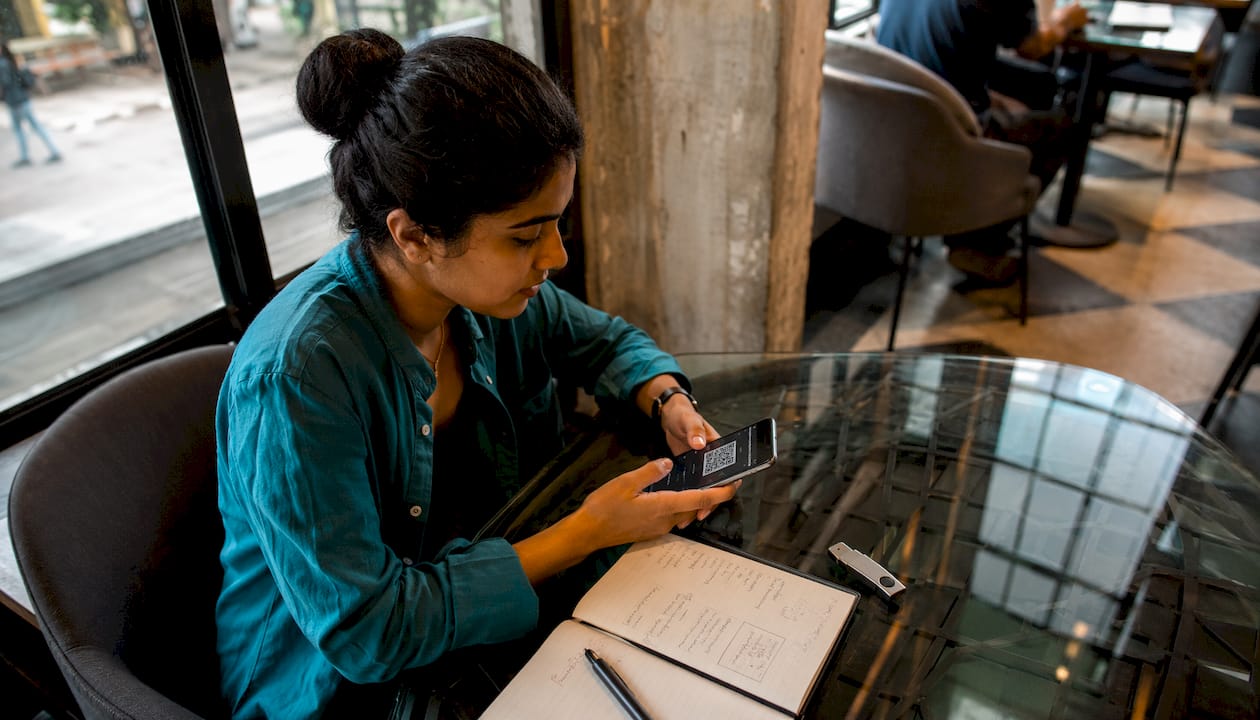
A crypto wallet address is a unique string of letters and numbers that works like your digital account number. You share it with anyone who wants to send you cryptocurrency, and the blockchain uses it to route funds directly to your wallet. Think of it the way you think of a bank account number: public, shareable, and specific to you.
What is a crypto wallet address, exactly?
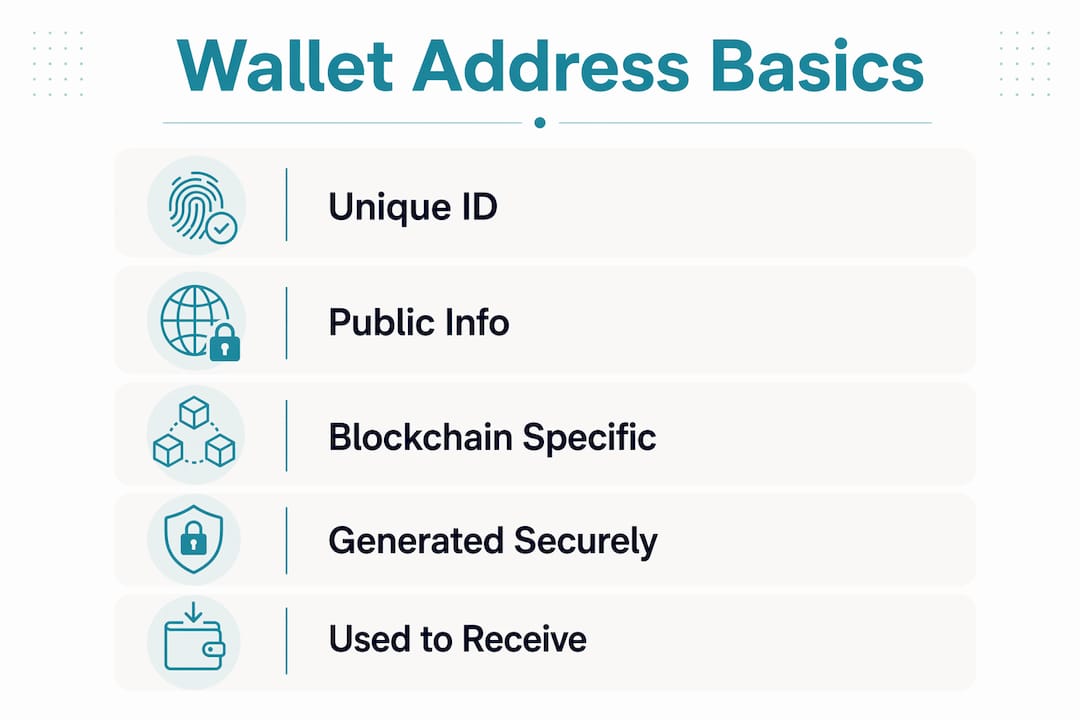
A wallet address is an alphanumeric string, typically a few dozen characters long (varying by blockchain), derived from your public key through a one-way cryptographic process. It serves as your public destination on the blockchain. Anyone can send funds to it. Nobody can access your funds using it alone.
- It is safe to share publicly for receiving payments
- It looks different depending on the blockchain (Bitcoin vs. Ethereum, for example)
- It is generated automatically when you set up a wallet
- It is not the same as your private key or seed phrase
The bank account analogy holds up well here. Your account number is public. Your PIN is not. A wallet address is the account number. Your private key is the PIN. Share one freely; guard the other completely.
How wallet addresses work in transactions
Every time you send or receive crypto, the blockchain records the wallet addresses involved. The transaction is permanent. There is no undo button, no customer service line, and no refund process if you send to the wrong address.
- The sender enters the recipient’s wallet address and the amount
- The network verifies the transaction using cryptographic signatures
- The blockchain permanently records the transfer against both addresses
- Your private key authorizes the send; your address only receives
One thing beginners often miss: you must use the correct address format for the correct blockchain. Sending Bitcoin to an Ethereum address, or vice versa, typically results in a permanent loss of funds. The address prefix tells you which chain you are on. Bitcoin addresses start with 1, 3, or bc1. Ethereum addresses start with 0x.
How to find or create your wallet address
Getting your wallet address takes about 30 seconds once your wallet is set up. The process is nearly identical across software wallets and exchanges.
- Open your wallet app or exchange account
- Select the cryptocurrency you want to receive
- Tap or click Receive (some apps label it Deposit or Request)
- Copy the address string or scan the QR code
For hardware and software wallets, the address appears at the top of the main screen or one tap under Receive. On exchanges, look inside the Deposit menu, select your asset, and choose the correct network before copying.
Pro Tip: Use the QR code whenever possible. Scanning eliminates the risk of a typo or a malware-swapped address entirely.

Safety best practices for your wallet address
The biggest risk with wallet addresses is not hacking. It is human error, specifically copy-paste mistakes and clipboard malware that silently replaces a copied address with an attacker’s address.
- Always verify the first and last characters after pasting an address
- Never manually type a long address; always copy or scan
- Your wallet address is public and safe to share; your private key and seed phrase are not
- Use reputable wallet software and keep it updated
- Double-check the network before sending (ERC-20, TRC-20, and BEP-20 are not interchangeable)
Pro Tip: For any high-value transfer, paste the address, then compare the first four and last four characters against the original before confirming. Clipboard malware changes the middle characters, not the ends, so attackers count on you skipping this check.
A wallet address is fully public by design. Sharing it cannot give anyone access to your funds. Only the private key can authorize spending. Lose the private key and the address becomes permanently inaccessible to you, even though it still exists on the blockchain.

How wallet addresses are generated cryptographically
Your private key is a randomly generated 256-bit number. Multiply it against an elliptic curve (Bitcoin uses secp256k1) and you get a public key. Hash that public key, add a checksum and a prefix, and you have a wallet address. The math only runs in one direction. Nobody can reverse a wallet address back to a private key.
- Private key → public key (via elliptic curve multiplication)
- Public key → wallet address (via hashing and formatting)
- The checksum built into the address catches most typos before a transaction goes through
- Standards like BIP32, BIP39, and BIP44 let a single seed phrase generate addresses across Bitcoin, Ethereum, Solana, and more
That last point surprises most beginners. One 12-word or 24-word seed phrase can control dozens of separate addresses across different blockchains simultaneously. Lose the phrase and every address derived from it becomes inaccessible.
Bitcoin address types: legacy, SegWit, and beyond
Bitcoin alone has four active address formats, each with a different prefix and fee structure.
| Format | Prefix | Notes |
|---|---|---|
| Legacy (P2PKH) | 1 |
Oldest format, universally supported |
| P2SH | 3 |
Script hash, often used for multisig |
| Native SegWit (Bech32) | bc1q |
Lower fees, lowercase only |
| Taproot | bc1p |
Latest format, enhanced privacy |
Ethereum and EVM-compatible chains (Polygon, Arbitrum, Base) all use the 0x prefix with a 42-character hex string. Solana uses Base58 with no prefix. Tron addresses start with T. All four Bitcoin formats are valid today, but older services sometimes cannot send to the newer bc1 formats.
Common mistakes to avoid with wallet addresses
Most crypto losses tied to addresses come from a short list of repeatable errors.
- Wrong network: Sending USDT over TRC-20 to an ERC-20 address loses the funds
- Clipboard swap: Malware replaces your copied address with an attacker’s; always verify after pasting
- Manual typos: Typing a 42-character string by hand almost guarantees an error
- Sending to an exchange deposit address long-term: Exchange deposit addresses can change; always generate a fresh one
- Confusing address with private key: Your address is public; your private key is not
How to verify a wallet address before sending
Verification takes 60 seconds and can save your entire transfer. Paste the address into a blockchain explorer like Etherscan (for Ethereum) or Blockchain.com (for Bitcoin) before sending. A valid address will show a transaction history or at least confirm it exists on the correct network.
For hardware wallets, always confirm the address on the device’s physical screen, not just your computer monitor. Malware can alter what your screen displays without touching the hardware device itself.
Key Takeaways
A crypto wallet address is a public, shareable identifier derived from your public key, and protecting your private key is the only security action that actually matters.
| Point | Details |
|---|---|
| Address length and format | Wallet addresses generally range from 25 to 40 characters, varying by blockchain (e.g., bc1 for Bitcoin, 0x for Ethereum). |
| One-way derivation | Addresses are generated from private keys via elliptic curve math; the process cannot be reversed. |
| Safe to share publicly | Sharing your address lets others send you funds but gives no access to spend them. |
| Verify after every paste | Check the first and last characters after copying; clipboard malware targets the middle. |
| One seed phrase, many addresses | Standards like BIP44 let a single seed phrase generate addresses across multiple blockchains. |
Put your crypto knowledge to work
You understand how wallet addresses work. Now put that knowledge into a real transaction. Cryptoesim lets you buy a global eSIM with Bitcoin, Ethereum, or over 300 other tokens, with no account required and instant activation in 190+ countries. It is one of the cleanest real-world uses of a crypto wallet address you will find.