Why Avoid Physical SIM Cards: 2026 Travel Guide

TL;DR:
- Switching from physical SIM cards to eSIM technology enhances security by eliminating vulnerabilities like theft and SIM swap attacks. It also offers travelers faster activation, seamless carrier switching, and improved device durability by removing the need for SIM trays. Physical SIMs remain useful mainly as emergency backups for older or locked devices, but industry shifts make eSIM the default standard for modern, security-conscious users.
Physical SIM cards are removable plastic chips that expose your phone to theft, fraud, and hardware failure in ways that eSIM technology completely eliminates. The reasons to avoid physical SIM cards go beyond convenience. They touch on security, device durability, and the real cost of lost connectivity mid-trip. Apple iPhone XS and newer models, along with Samsung Galaxy S20 and newer devices, all support eSIM natively. In 2026, the shift away from physical SIM cards is no longer a trend. It is the practical default for travelers, remote workers, and anyone who values uninterrupted mobile access.
Why avoid physical SIM cards: security risks you cannot ignore
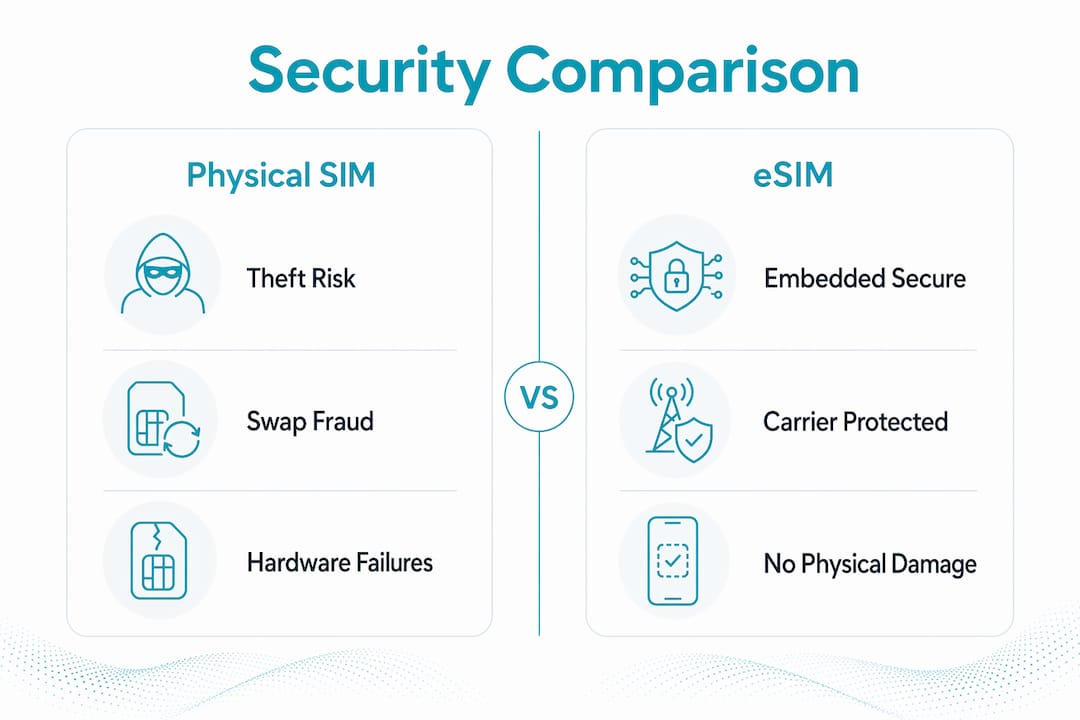
Physical SIM cards are the weakest link in mobile security. A thief can remove and abuse a physical SIM in under 60 seconds. That means your calls, SMS messages, and two-factor authentication codes are all exposed the moment your phone leaves your hand.
SIM swap fraud is the most dangerous attack physical SIM users face. A fraudster contacts your carrier, impersonates you, and convinces a representative to transfer your number to a new SIM. Once they control your number, they intercept every SMS verification code sent to it. Bank accounts, email inboxes, and crypto wallets all become accessible. The FBI reported billions in losses tied to SIM swap attacks in recent years, and physical SIM cards are the primary attack surface.
eSIM technology closes this gap at the hardware level. An eSIM is cryptographically bound to your device and requires carrier-level authorization before any profile transfer occurs. There is no physical chip to steal, no tray to pop open, and no shortcut for a fraudster to exploit.
| Security Factor | Physical SIM | eSIM |
|---|---|---|
| Theft risk | High: removable in seconds | Low: embedded in device |
| SIM swap vulnerability | High: social engineering works | Low: requires cryptographic authorization |
| 2FA interception | Easily intercepted after swap | Blocked without carrier approval |
| Physical damage risk | Corrosion, breakage, loss | None: software-based profile |
Pro Tip: If you use SMS-based two-factor authentication for banking or crypto accounts, switching to eSIM removes one of the most exploited attack vectors in mobile fraud.
How does eSIM technology improve convenience for travelers?
eSIM activation requires no store visit, no shipped plastic card, and no waiting. eSIMs activate in minutes by scanning a QR code or tapping through a carrier app. A single device can store up to eight profiles, letting you switch between a home plan and a local travel plan without touching any hardware.
For travelers, this changes everything about international connectivity:
- No airport SIM hunt. You activate a local data plan before you board, not after you land in a foreign terminal at midnight.
- Keep your home number active. Dual SIM and dual eSIM configurations let you run a home number and a travel data plan simultaneously on one device.
- Instant carrier switching. Physical SIM swaps involve logistics and paperwork. With eSIM, switching carriers takes about three minutes and a QR code scan.
- No lost SIM tray tools. Every traveler has fumbled with a SIM ejector pin in a hotel room. eSIM removes that entirely.
- Multiple country plans stored. You can pre-load regional plans for Europe, Asia, and the Americas and toggle between them as your itinerary changes.
One real limitation worth knowing: eSIM transfers to a new device require contacting your carrier and provisioning a new profile. If your phone breaks abroad, you cannot simply pop your SIM into a borrowed phone. That process takes time and carrier assistance. It is a genuine trade-off, not a dealbreaker, but worth planning around.
Pro Tip: Set up your travel eSIM profile at home on your regular Wi-Fi before departure. Relying on airport Wi-Fi to complete activation is a real risk, especially in terminals with unstable or restricted connections.
What practical disadvantages do physical SIM cards still have in 2026?
The disadvantages of physical SIM cards are not theoretical. They show up in real situations that travelers and everyday users encounter regularly.
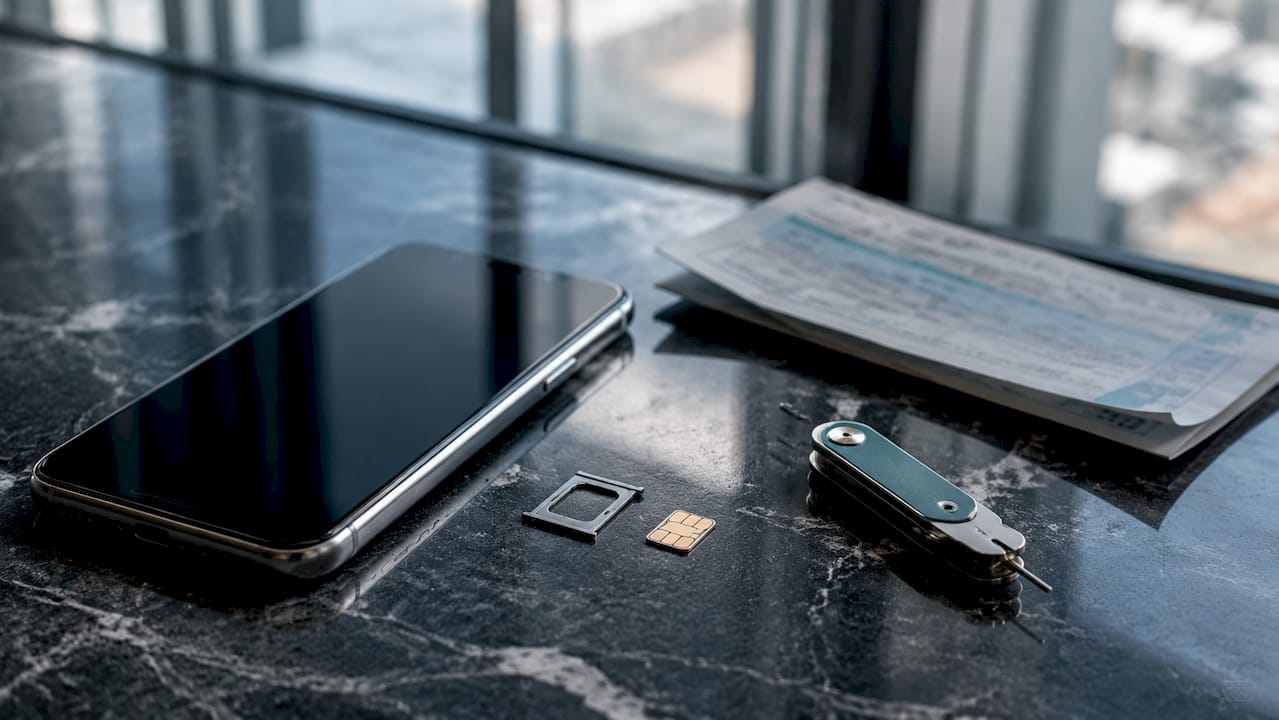
Physical SIMs can corrode, crack, or be lost, and any of those outcomes interrupts your service immediately. An eSIM profile, by contrast, is embedded in your device’s hardware and protected by the same security that protects the device itself. Software-based issues with eSIM are rare and almost always resolved remotely without replacing any hardware.
Physical SIM cards do retain one genuine advantage: instant portability to any compatible device. If your phone dies completely, you can pull the SIM and drop it into a cheap backup phone within seconds. eSIM cannot match that speed in a true emergency. For travelers carrying older or carrier-locked backup devices, this matters.
That said, the use cases where physical SIM cards outperform eSIM are shrinking. Most MVNOs now support eSIM provisioning. Device compatibility has expanded across every major manufacturer. The argument that physical SIMs are more universally compatible was stronger in 2022 than it is today. Industry experts now classify physical SIM preference as a niche resilience choice rather than a mainstream advantage.
The honest summary: physical SIM cards are useful as emergency backups, not as primary connectivity tools for anyone who travels or values security.
Why are device manufacturers moving away from physical SIM trays?
The engineering case against physical SIM cards is as strong as the security case. The SIM tray is a physical opening in your device’s body. That opening is a water ingress point, and it limits how well manufacturers can seal a phone against moisture and dust.
Here is how removing the SIM tray benefits device design:
- Improved water resistance. Removing the SIM tray enhances water resistance ratings and reduces the risk of internal corrosion from moisture exposure.
- Freed internal space. The physical SIM slot and tray mechanism take up measurable internal volume. Removing them gives engineers room to add battery capacity, antenna arrays, or cooling systems.
- Simplified global distribution. A single hardware design works across all carriers worldwide. Manufacturers no longer need to produce region-specific SIM tray variants or manage that inventory complexity.
- Faster product cycles. eSIM supports multiple carriers in one hardware design, letting OEMs release devices globally without waiting on carrier-specific packaging.
- IoT and enterprise scalability. Remote eSIM management lets companies deploy thousands of connected devices, from fleet trackers to industrial sensors, without physically handling a SIM card for each unit.
| Design Factor | Physical SIM Tray | eSIM |
|---|---|---|
| Water resistance | Compromised by tray opening | Fully sealable device body |
| Internal space | Slot and mechanism consume space | Space reclaimed for other components |
| Global distribution | Requires regional SIM variants | Single hardware design worldwide |
| Enterprise deployment | Manual SIM insertion per device | Remote provisioning at scale |
Apple removed the physical SIM tray entirely from US models of the iPhone 14 in 2022. That decision was not a gimmick. It was an engineering statement about where mobile hardware is heading.
Key takeaways
Avoiding physical SIM cards is the right call for most travelers and security-conscious users in 2026, because eSIM technology delivers better security, faster activation, and stronger device durability with no meaningful trade-off for modern devices.
| Point | Details |
|---|---|
| Security advantage | eSIMs cannot be stolen or swapped without carrier-level cryptographic authorization. |
| Travel convenience | Activate local data plans via QR code before departure, with no store visit required. |
| Device durability | Removing the SIM tray improves water resistance and frees internal hardware space. |
| Physical SIM backup value | Keep a physical SIM only for emergency use with older or carrier-locked backup devices. |
| Prepare before you travel | Set up eSIM profiles at home on stable Wi-Fi to avoid activation failures at airports. |
The shift i have watched happen in real time
I have been tracking mobile connectivity options for travelers for years, and the physical SIM card conversation has changed more in the last 18 months than in the previous decade. The question used to be “does eSIM work well enough?” Now the question is “why would you still use a physical SIM?”
The security argument alone should be enough for most people. SMS-based two-factor authentication is already considered weak by cybersecurity standards. Pairing it with a physical SIM card that can be stolen or socially engineered away from your carrier is a compounding risk. I have spoken with travelers who lost access to their bank accounts mid-trip because of SIM swap attacks. That experience is avoidable.
Where I think conventional wisdom gets it slightly wrong is on the backup question. Most guides tell you to ditch physical SIMs entirely. My view is more practical: carry a cheap unlocked backup phone with a local physical SIM for true emergencies, but run your primary device on eSIM. That setup gives you the security and convenience of eSIM day-to-day, plus a physical fallback if your main device fails completely.
The one mistake I see travelers make repeatedly is waiting until they land to set up their travel eSIM. Airport Wi-Fi is unreliable, sometimes restricted, and occasionally unavailable. Set up your profiles at home. Test them before you leave. Arrive connected.
The travelers who embrace eSIM early and plan their profiles in advance consistently report fewer connectivity problems abroad. That is not a coincidence. It reflects the genuine reliability advantage that software-based connectivity has over physical hardware.
— Mohammed
Get connected anywhere with Cryptoesim
Cryptoesim offers eSIM data plans in over 190 countries with instant digital delivery and no account creation required. You scan a QR code, activate your plan, and you are online. No waiting for a card to ship. No hunting for a SIM vendor at your destination.
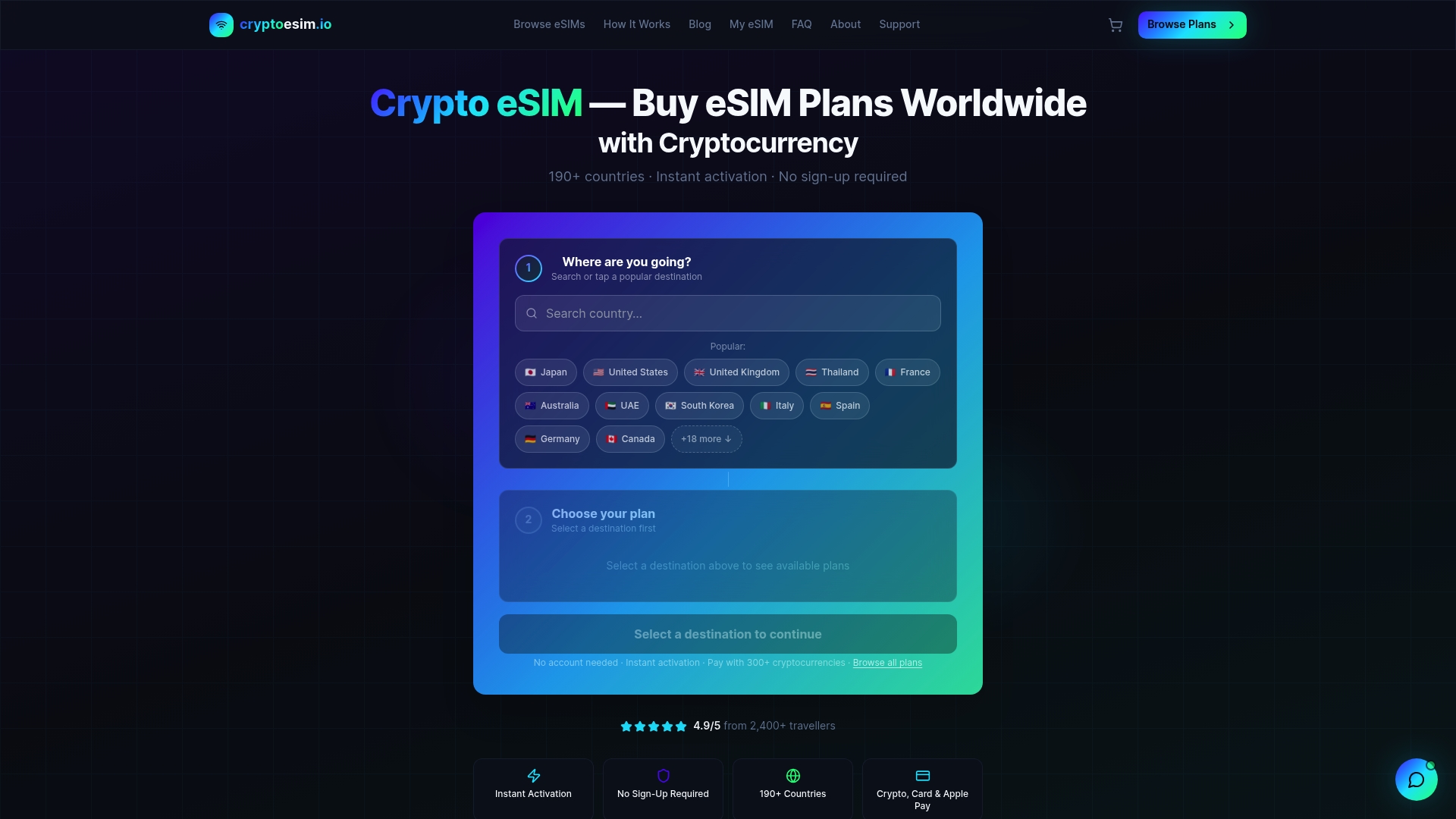
For travelers who value privacy, Cryptoesim accepts Bitcoin, Ethereum, and over 300 other crypto tokens alongside credit cards and Apple Pay. There is no KYC process and no personal data required to purchase. If you want to test the experience, start with a single-country travel data plan before your next trip. You will see exactly why secure mobile data and eSIM technology belong together.
FAQ
What makes physical SIM cards a security risk?
Physical SIM cards can be removed from your device in under 60 seconds, allowing thieves to intercept SMS two-factor authentication codes and access your accounts. eSIMs require cryptographic carrier authorization before any profile transfer, making this attack far harder to execute.
Can i use eSIM and a physical SIM at the same time?
Yes. Most devices released after 2020 support dual SIM configurations that combine an eSIM and a physical SIM slot, letting you run a home number and a travel data plan simultaneously without swapping hardware.
What happens to my eSIM if my phone breaks?
Transferring an eSIM profile to a replacement device requires contacting your carrier to provision a new profile, which takes longer than simply moving a physical SIM card. Plan for this by keeping a carrier support contact handy when traveling.
Do all carriers support eSIM in 2026?
Most major carriers and a growing number of MVNOs now support eSIM provisioning. Coverage varies by country and carrier, so confirm eSIM compatibility with your specific provider before switching, especially in less-developed markets.
Is eSIM activation difficult for first-time users?
eSIM activation is straightforward on any supported device. You scan a QR code provided by your carrier or eSIM provider, follow the on-screen prompts, and your plan activates within minutes. The only real risk is attempting activation on unstable Wi-Fi, so complete setup at home before traveling.