Why Instant Mobile Data Matters for Global Travelers

TL;DR:
- Instant mobile data enables travelers to connect immediately upon arrival, ensuring reliable, borderless internet access.
- Pre-installed eSIM plans maintain continuous communication, reduce security risks, and prevent delays caused by traditional SIM methods.
Instant mobile data is defined as immediate, on-demand internet access delivered through cellular networks the moment your device connects to a local carrier abroad. Over 54% of travelers name slow or unreliable internet as their single biggest frustration on the road. That number explains why instant mobile data matters far beyond convenience. Mobile technologies contributed $7.6 trillion to the global economy in 2025, and a significant share of that value flows through the devices in travelers’ pockets. Whether you carry an iPhone 15 Pro or a Samsung Galaxy S24, the quality of your data connection shapes every hour of your trip.
Why instant mobile data matters: the technology behind it
Mobile data, also called cellular data, connects your phone to the internet through a network of radio towers operated by local carriers. It works independently of Wi-Fi, which means you are never dependent on a hotel router or a coffee shop signal to get online.

The technology that makes instant access possible for international travelers is the eSIM, or embedded SIM. Unlike a physical SIM card you slot into your phone, an eSIM is a programmable chip already built into modern devices. eSIMs allow pre-trip activation of local data plans, so your phone connects to a carrier network the moment your plane lands, with zero waiting at an airport kiosk.
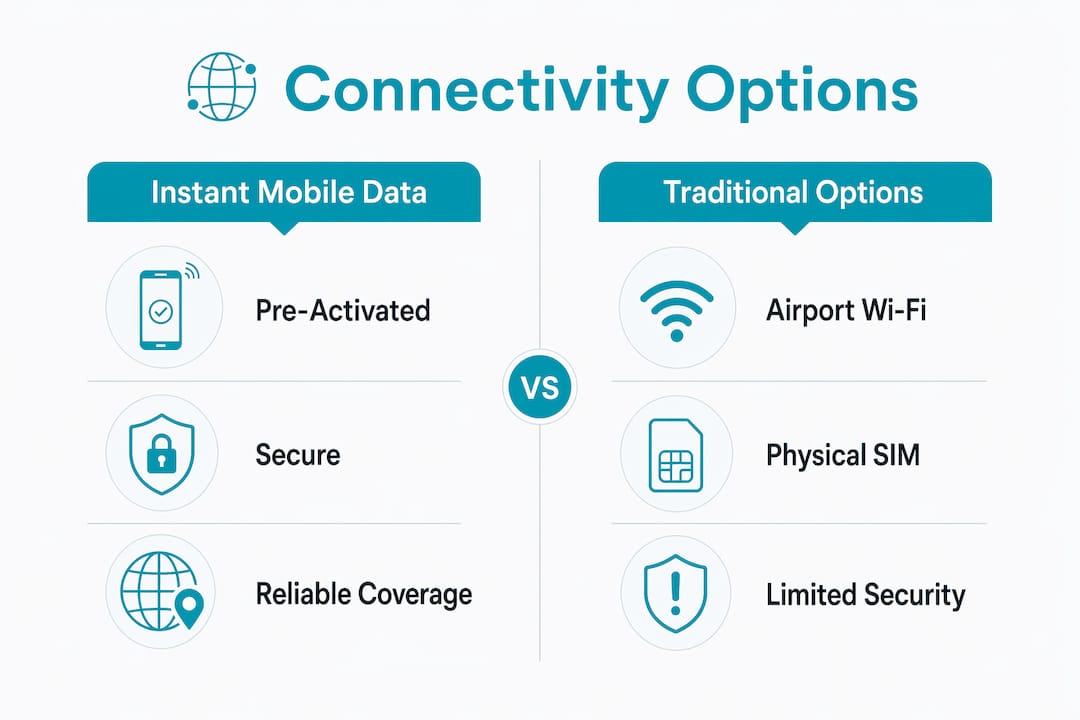
Here is how eSIM-based instant data differs from the alternatives:
- Traditional roaming: Your home carrier charges per-megabyte or daily fees that can reach $10 to $15 per day. Coverage depends entirely on your carrier’s international agreements.
- Physical local SIM: Requires finding a carrier store, waiting in line, presenting ID, and potentially unlocking your device. You lose your home number in the process.
- Airport Wi-Fi: Free in theory, but captive portals, slow speeds, and security vulnerabilities make it unreliable for anything beyond casual browsing.
- eSIM instant data: Activated before departure, connects automatically on arrival, and runs alongside your home SIM so your regular number stays active.
That last point matters more than most travelers realize. Your home phone number stays functional alongside an eSIM data plan, which means two-factor authentication codes, bank alerts, and WhatsApp messages all arrive without interruption.
Pro Tip: Before your trip, set your eSIM as the default data line in your phone settings and turn off data roaming on your physical SIM. This single step prevents surprise roaming charges while keeping your home number reachable.
How connectivity shapes the entire travel experience
91% of travelers depend on their smartphone for navigation, communication, and bookings throughout a trip. That figure reframes the question entirely. Mobile data is not a travel accessory. It is the operating system of modern travel.
Think about what the first 30 minutes abroad actually require: confirming your hotel address, calling a rideshare, checking if your connecting gate changed, converting currency, and messaging your family that you landed safely. Every one of those tasks requires a live data connection. Without it, you are not just inconvenienced. You are operationally blind in an unfamiliar place.
“Travelers expect connectivity to function like essential utilities — instant, reliable, and borderless.” — Business Insider Africa, eSIM Era Report
Research from Skift describes mobile connectivity as an emotional infrastructure, providing autonomy, peace of mind, and continuity. That framing is accurate. When your data drops during a flight delay and you cannot rebook, the stress is not just logistical. It is the feeling of losing control in a situation that already demands your full attention.
Remote workers face an even sharper version of this problem. A consultant on a client call from Lisbon or a developer pushing code from Bali cannot afford a 20-minute gap in connectivity. For them, the importance of mobile data is measured in billable hours and professional reputation, not just travel comfort.
Connectivity disruptions cause anxiety by breaking trust in the digital infrastructure of travel. That is why reliability consistently ranks higher than data volume in traveler surveys. Most people do not need 50 GB per month abroad. They need 5 GB that works every single time they open an app.
eSIM vs. airport Wi-Fi vs. local SIM: which wins?
The comparison between instant mobile data and traditional connectivity options is not close once you account for the full cost of each.
| Option | Cost | Setup time | Security | Coverage |
|---|---|---|---|---|
| eSIM instant data | Predictable prepaid rate | Minutes, before departure | High (private cellular) | 190+ countries with regional plans |
| Traditional roaming | $10 to $15 per day or more | None, but expensive | High | Limited by carrier agreements |
| Airport Wi-Fi | Free to low cost | 5 to 15 minutes per portal | Low (shared network) | Airport only |
| Physical local SIM | Low cost, but variable | 30 to 60 minutes in-store | High | Single country only |
Public Wi-Fi carries serious security risks for travelers, including exposure to man-in-the-middle attacks and credential theft on shared networks. Using a private cellular connection removes that risk entirely. For remote workers handling client data or logging into corporate systems, this is not a minor consideration.
Physical SIM cards create a different set of problems. Up to 70% of Earth’s landmass lacks conventional terrestrial cell service, which means local SIM coverage is patchy in rural or developing regions. eSIM plans with multi-country regional coverage give you network-switching flexibility that a single-country physical SIM simply cannot match.
The pre-trip activation advantage of eSIMs is the detail that separates them from every other option. You configure your data plan from your couch, not from a chaotic arrivals hall. eSIMs support global travel with multi-country regional plans and automatic network switching, which is exactly what a traveler crossing from France into Spain or from Thailand into Vietnam needs.
Pro Tip: When comparing eSIM plans, check whether hotspot sharing is included. Many travelers use their phone as a mobile hotspot for a laptop or tablet, and some budget plans restrict this feature.
What steps should you take before traveling abroad?
Preparation is the difference between landing with instant connectivity and spending your first hour abroad hunting for a SIM card vendor. Follow these steps before every international trip.
- Confirm eSIM compatibility. Most iPhones from the iPhone XS onward and Android flagships from Google Pixel 3 and Samsung Galaxy S20 onward support eSIM. Check your device settings under “Mobile Data” or “SIM Card” to verify.
- Verify your phone is unlocked. An unlocked phone and eSIM compatibility are both required to use a third-party data plan. Contact your carrier to confirm unlock status before departure.
- Purchase and install your eSIM plan before you leave. Waiting until arrival to arrange mobile data leads to connection delays and frustration. Install the eSIM profile at home, where you have stable Wi-Fi and no time pressure.
- Set the eSIM as your default data line. In your phone’s settings, assign the eSIM to handle cellular data. Leave your physical SIM active for calls and SMS only.
- Disable data roaming on your home SIM. This prevents your carrier from automatically switching to roaming and charging you without warning.
- Check coverage maps for your destination. Reputable eSIM providers publish coverage maps by country and carrier. Confirm your plan covers the specific regions you are visiting, not just the capital city.
- Confirm hotspot support if you need it. If you plan to tether a laptop, verify that your eSIM plan explicitly permits hotspot use.
The single most common mistake travelers make is treating mobile data as something to figure out on arrival. Pre-trip eSIM installation is best practice precisely because it removes the arrival-day scramble entirely. You step off the plane, your phone connects, and you are already looking up directions to your hotel.
Key takeaways
Instant mobile data is the single most critical utility for international travelers and remote workers because it enables navigation, communication, and real-time problem-solving from the moment of arrival.
| Point | Details |
|---|---|
| Reliability beats volume | Travelers prioritize consistent connectivity over large data allowances when abroad. |
| eSIM activates before you land | Install your eSIM plan at home to connect automatically the moment your flight lands. |
| Public Wi-Fi is a security liability | Private cellular data eliminates the credential theft risks of shared airport or hotel networks. |
| Unlock your phone first | A locked device blocks all third-party eSIM plans regardless of compatibility. |
| Connectivity is emotional infrastructure | Data loss during travel creates anxiety and loss of control, not just inconvenience. |
The tolerance for connectivity delays has hit zero
I have watched the same scene play out in airports from Istanbul to São Paulo: a traveler staring at a “No Service” screen, visibly stressed, trying to remember if they wrote down the hotel address somewhere. It is not a minor inconvenience. It is a complete breakdown of the mental model they built for the trip.
What strikes me most is how quickly expectations shifted. Five years ago, travelers accepted that the first hour abroad would be chaotic. Today, that tolerance is gone. The digitization of travel, from mobile boarding passes to app-based hotel check-in to real-time flight rebooking, has made connectivity a prerequisite, not a bonus. When it fails, the entire system fails with it.
eSIM technology is the most significant practical development in travel connectivity in the past decade. The ability to buy a data plan from your phone before you pack your bag, and have it activate automatically on landing, removes the last friction point in international connectivity. I think travelers who have not yet adopted eSIM are carrying unnecessary risk on every trip.
The broader shift I see is travelers treating data the way they treat travel insurance: not as an optional extra, but as a baseline cost of traveling responsibly. That framing is right. The benefits of instant data are not about luxury. They are about maintaining the basic operational capacity to manage your own trip.
— Mohammed
Get instant mobile data for your next trip with Cryptoesim
Cryptoesim provides instant eSIM data plans across 190+ countries, activated digitally before you leave home. No physical SIM card, no account creation, and no KYC process required.
Plans are prepaid and flexible, designed for international travelers and remote workers who need reliable coverage without hidden fees. Hotspot sharing is supported, so your laptop stays connected too. Payment options include Bitcoin, Ethereum, over 300 other crypto tokens, credit and debit cards, and Apple Pay. You can buy an eSIM plan in minutes and have it ready on your device before your flight departs. For travelers who want to understand the full security case for private cellular data, Cryptoesim’s guide on secure mobile data abroad covers the details.
FAQ
Why does instant mobile data matter more than Wi-Fi abroad?
Instant mobile data provides a private, always-on connection that works anywhere your carrier has coverage, while Wi-Fi depends on location, portal access, and shared network security. Public Wi-Fi exposes travelers to cybersecurity risks that a private cellular connection eliminates entirely.
What is an eSIM and how does it give you instant data?
An eSIM is a programmable chip built into modern smartphones that lets you activate a local data plan digitally before you travel. Because activation happens before departure, your phone connects to a carrier network the moment you land, with no setup required on arrival.
Can I keep my regular phone number while using an eSIM data plan?
Yes. Your home SIM handles calls and SMS while the eSIM handles data, so your regular number stays active throughout your trip. This means you continue receiving verification codes and calls without interruption.
How do I know if my phone supports eSIM?
Most iPhones from the XS model onward and Android flagships including Google Pixel 3 and Samsung Galaxy S20 onward support eSIM. Check your phone’s settings under “Mobile Data” or visit your manufacturer’s website to confirm compatibility before purchasing a plan.
Is it safe to wait until I arrive to buy a data plan?
Waiting until arrival consistently leads to connection delays and frustration, particularly in busy international airports where carrier stores have long queues. Installing your eSIM plan before departure is the standard best practice for avoiding a disconnected first hour abroad.