International Connectivity Tips for Travelers in 2026

TL;DR:
- Using an eSIM before traveling provides instant, cost-effective connectivity across multiple countries. Combining a prepaid eSIM with a local SIM or hotspot ensures reliable internet and reduces roaming charges. Protect your data by disabling home roaming, using VPNs on public WiFi, and maintaining offline backups for seamless travel communication.
Reliable mobile access abroad is defined by one decision made before you board: how you plan to get data. The best international connectivity tips center on eSIM technology as the primary method, backed by local SIM cards, portable hotspots, and offline preparation as fallbacks. U.S. State Department guidance updated in may 2026 confirms that standard mobile plans often exclude international roaming by default, meaning unexpected charges hit travelers who skip this step. Digital nomads and remote workers face the highest stakes. A dropped connection mid-call or a blocked VPN can cost real money and real clients.
1. Why eSIMs are the fastest international connectivity tip to act on
An eSIM, or embedded SIM, is a digital SIM profile stored directly in your phone. No physical card, no airport kiosk, no waiting. Installing a prepaid eSIM before departure is the current best practice for international travelers because it provides connectivity the moment you land.
The practical advantages are significant:
- Instant activation: Scan a QR code and your data plan is live. Cryptoesim delivers plans this way for over 190 countries.
- No SIM swaps: Modern smartphones support multiple eSIM profiles simultaneously, so you never need to pop a tray open mid-trip.
- Multi-country coverage: One eSIM plan can cover an entire region, which matters for travelers crossing borders every few days.
- No account required: Platforms like Cryptoesim let you purchase without registration, using Bitcoin, Ethereum, credit cards, or Apple Pay.
Compared to physical SIM cards, eSIMs win on speed and convenience. Compared to carrier roaming plans, they win on cost. The one scenario where eSIMs fall short is on very old devices that lack eSIM hardware support. Check your phone’s specs before purchasing.
Pro Tip: Label each eSIM profile clearly in your phone settings (for example, “Europe Data” or “Japan Work”) so you always know which line is active and avoid accidental roaming charges on your home number.
2. How to read an eSIM QR code and activate before you fly
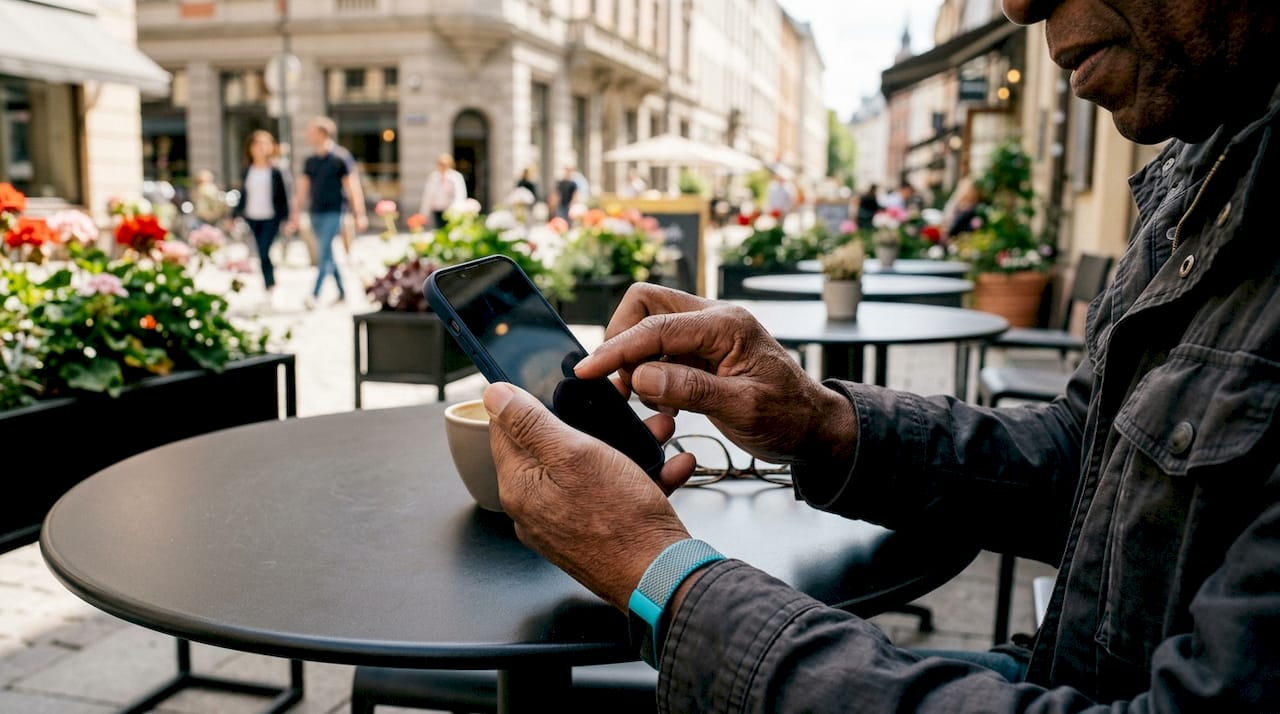
eSIM activation happens through a QR code sent to your email after purchase. Your phone’s camera scans the code, downloads the carrier profile, and installs it in seconds. A full walkthrough of eSIM QR code activation covers every device type and common error fixes.
Activate the eSIM while you still have home WiFi. This removes any dependency on airport connectivity. Once installed, set the eSIM as your data line and keep your home SIM active for calls and texts only, with data roaming disabled on the home line.
3. When local SIM cards make more sense
Local SIM cards remain the right choice for extended stays in a single country. A SIM purchased at a local carrier store often delivers faster speeds and better pricing than any prepaid travel plan for stays longer than two weeks.
The drawbacks are real, though. Many countries require passport registration at the point of sale. Physical SIM swaps mean storing your home SIM safely without losing it. And if you cross a border, you either pay roaming on the local SIM or repeat the whole process.
Local SIMs work best for:
- Long-term stays in one country (two weeks or more)
- High-data users who need the cheapest per-gigabyte rate available
- Travelers in markets where eSIM coverage is limited or expensive
Pro Tip: Before departure, disable data roaming on your primary home SIM entirely. This single setting prevents your carrier from silently connecting to a foreign network and billing you at rates that can reach $10 per megabyte.
4. What to know about international roaming plans
Carrier roaming plans are the most convenient option on paper and the most expensive in practice. Contacting your home carrier before departure is the minimum step every traveler should take, because roaming is not included by default on most standard plans.
Most major U.S. carriers offer day passes or monthly international add-ons. These work well for short trips where you need your existing number to receive calls. The ceiling on value is low, though. A $10 per day roaming pass for a two-week trip costs $140 before you use a single byte of data for work.
The smarter move is to use a roaming plan only for voice and SMS on your home number, then run all data through a prepaid eSIM on a separate profile. This combination gives you the best of both worlds without the bill shock.
5. Portable WiFi hotspots and travel routers
Business travelers and remote workers often prefer portable WiFi hotspots because a single device can connect laptops, tablets, and phones simultaneously. A hotspot is the right tool when you travel with multiple devices or work with colleagues who need shared connectivity.
Travel routers solve a different problem. Hotel WiFi is often open and unencrypted. A travel router connects to the hotel network and rebroadcasts it as a private, password-protected network your devices trust. This adds a layer of protection without requiring every device to run its own VPN.
The downsides of hotspots are battery drain and the extra device to carry and charge. For solo travelers with one phone, an eSIM is almost always lighter and cheaper.
Pro Tip: Download offline maps and key documents (hotel confirmations, boarding passes, visa copies) before every trip. When connectivity fails entirely, offline resources keep you moving.
6. Best apps for calls and messages on a data-only plan
Data-only eSIM plans work perfectly with VoIP apps, which means you can make calls and send messages without a traditional voice plan. WhatsApp, FaceTime, and Messenger all run over data and support voice and video calls at no extra cost beyond your data plan.
This matters because most prepaid travel eSIMs are data-only. You are not losing calling ability. You are shifting it to apps that work better internationally anyway, since they use WiFi or cellular data rather than carrier voice networks.
The key apps to have installed and tested before departure:
- WhatsApp: Works globally, supports voice, video, and text over data
- FaceTime: Best for Apple-to-Apple calls, high quality on good connections
- Messenger: Reliable fallback, works on both iOS and Android
- Google Meet or Zoom: For remote work video calls with teams
Pro Tip: Set up two-factor authentication (2FA) on all critical accounts before you travel, not after. Receiving a 2FA SMS on your home number while abroad is a common lockout scenario that a pre-configured authenticator app like Google Authenticator eliminates entirely.
7. How to protect your data on public WiFi abroad
Public WiFi networks are inherently insecure. Treat every open network, including hotel, café, and airport WiFi, as a network someone else can read. This is not paranoia. It is the standard security posture recommended by travel tech experts.
A VPN encrypts your traffic before it leaves your device. This means even if someone intercepts your connection on a public network, they see encrypted noise rather than your passwords or financial data. Choose a VPN with a no-logs policy and servers in multiple countries.
The minimum security checklist for traveling abroad:
- Install and test your VPN before departure
- Enable 2FA on email, banking, and work accounts
- Avoid logging into banking apps on public WiFi, even with a VPN
- Use your eSIM data connection for sensitive transactions instead of public WiFi
8. Managing multiple SIM profiles to avoid roaming fees
Properly labeling SIM profiles prevents one of the most common and expensive travel mistakes: your phone silently switching to the wrong line and triggering roaming charges. Most travelers do not realize this happens until they see the bill.
The correct setup is to designate one profile as your data line (your travel eSIM) and keep your home SIM active for calls only, with cellular data disabled on that profile. Your phone will use the travel eSIM for all internet activity and your home number for incoming calls and texts.
This two-profile approach is the core of a layered connectivity strategy that travel tech experts consistently recommend. It costs less than roaming, works in more countries, and requires no changes once configured correctly.
9. Reviewing your plan for the specific countries you are visiting
Coverage quality varies by country and by carrier. An eSIM plan that works well across Western Europe may have weak coverage in rural Southeast Asia. Check the specific network partners listed for your destination before purchasing any plan.
Cryptoesim lists coverage details for each plan, including the local network partners in each country. This transparency matters because a plan that partners with a country’s largest carrier will outperform one that routes through a smaller network.
For trips spanning multiple regions, look for top international eSIM data plans that bundle regional coverage rather than purchasing country-by-country. Regional plans reduce cost and eliminate the need to manage multiple active profiles.
10. Building a layered backup plan before every trip
Relying on a single connectivity method is the most common mistake travelers make. A primary eSIM can fail if the local partner network goes down. A hotspot battery dies. A local SIM gets lost. No single method is failure-proof.
The layered approach works like this: use a prepaid eSIM as your primary data source, carry a local SIM or portable hotspot as a backup, and maintain offline copies of all critical documents and maps. This structure means any single failure leaves you with two working alternatives.
Connectivity solutions should match your device count and data needs. A solo traveler with one phone needs a different setup than a remote worker running two laptops and a phone across three time zones.
Key Takeaways
The most reliable global communication strategy combines a prepaid eSIM as the primary data source with at least one backup method and full offline preparation before departure.
| Point | Details |
|---|---|
| eSIM is the best starting point | Install a prepaid eSIM before departure for instant activation and no SIM swaps on arrival. |
| Disable home SIM data roaming | Turn off data roaming on your primary line to prevent silent, expensive carrier charges abroad. |
| Layer your connectivity | Use an eSIM as primary, a local SIM or hotspot as backup, and offline maps as a final fallback. |
| Secure all public WiFi use | Run a VPN and enable 2FA before travel; treat every open network as insecure by default. |
| Match the solution to your needs | Solo travelers do well with eSIMs; multi-device remote workers benefit from adding a portable hotspot. |
Why I stopped trusting a single connection method abroad
The first time I lost connectivity mid-trip, I was in a small city in Portugal with a dead eSIM profile and no backup. My carrier’s roaming add-on had not activated properly, the local SIM kiosks were closed for a national holiday, and I had a client call in 40 minutes. I found a café with WiFi, but the connection dropped every three minutes. I made the call work, barely, but I spent the entire time managing the connection instead of the conversation.
That experience changed how I think about travel connectivity. The question is not which single method is best. The question is what happens when your best method fails. Every traveler I know who has been abroad for more than a few weeks has a version of this story.
The layered approach is not about spending more money. A prepaid eSIM from Cryptoesim costs less than one day of carrier roaming in most markets. Adding offline maps costs nothing. The real investment is 20 minutes of preparation before you leave home.
I am also skeptical of travelers who say they “just use hotel WiFi.” Hotel WiFi is slow, unreliable, and open to anyone on the same network. Running a VPN on hotel WiFi is better than nothing, but it does not fix the underlying speed problem. For remote workers especially, hotel WiFi as a primary connection is a plan that fails on its first busy morning.
The future of travel connectivity is clearly moving toward eSIM as the default. Device support is now near-universal on phones released after 2020, and coverage networks are expanding fast. The travelers who adopt this now are ahead of the curve, not early adopters taking a risk.
— Mohammed
Cryptoesim: eSIM plans for 190+ countries, no account needed
Cryptoesim offers prepaid eSIM data plans covering over 190 countries, with instant activation via QR code and no account registration required. Plans are available for purchase using Bitcoin, Ethereum, and over 300 other crypto tokens, as well as credit cards and Apple Pay.
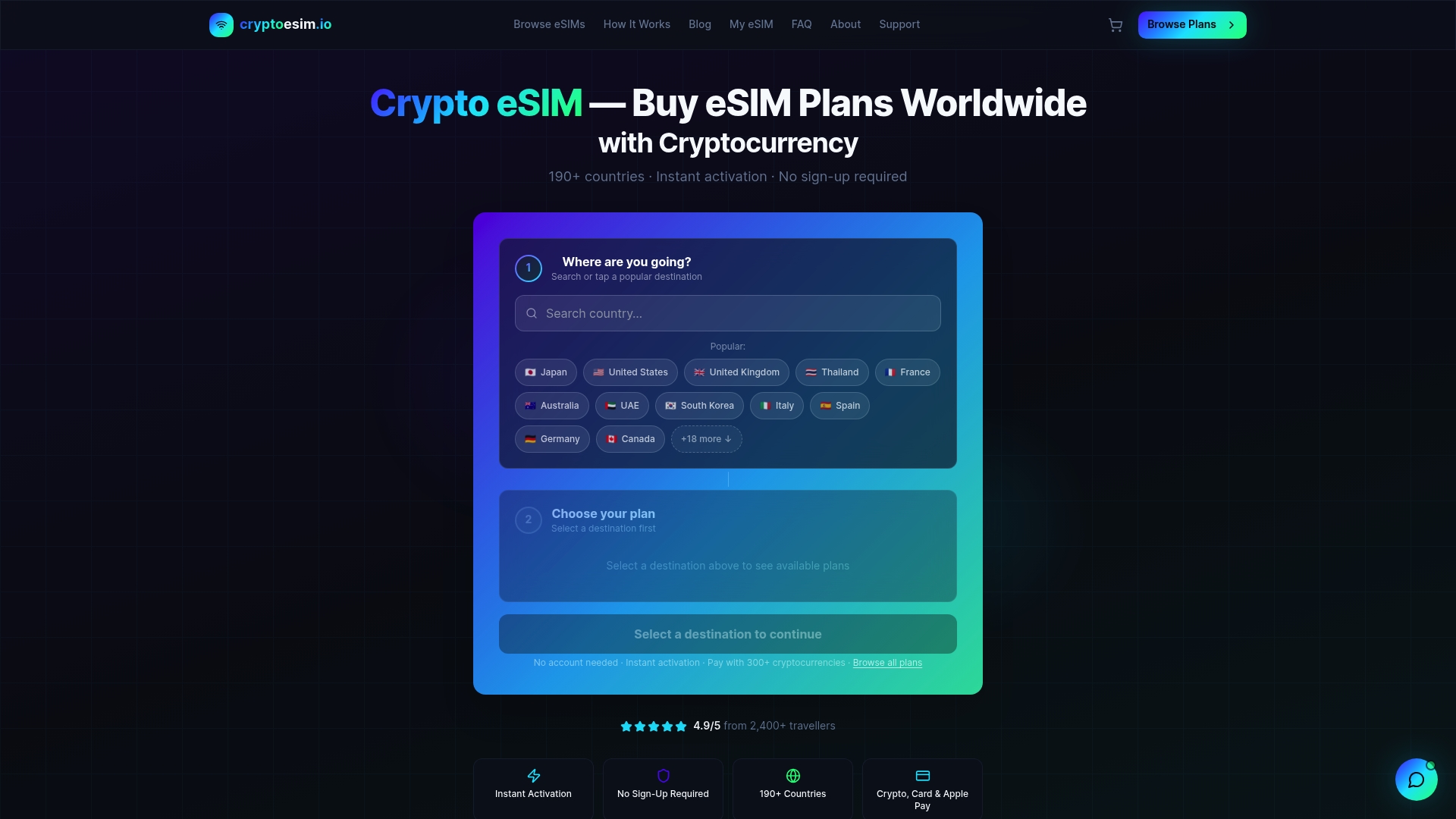
Privacy-conscious travelers appreciate that Cryptoesim requires no KYC verification. You pay, receive your QR code by email, scan it, and your data plan is live before you board. For remote workers and digital nomads who need reliable data without the friction of traditional carrier plans, Cryptoesim’s global eSIM packages cover the destinations and the payment methods that matter most. You can also review eSIM security considerations before purchasing to travel with full confidence.
FAQ
What is the best way to stay connected while traveling internationally?
Installing a prepaid eSIM before departure is the most reliable method. It activates instantly on arrival, covers multiple countries, and costs less than carrier roaming plans in most cases.
Do I need a voice plan, or can I use data only?
A data-only eSIM is sufficient for most travelers. Apps like WhatsApp, FaceTime, and Messenger handle calls and messages over data, eliminating the need for a traditional voice plan abroad.
How do I avoid unexpected roaming charges?
Disable cellular data on your home SIM before departure and use a separate travel eSIM for all data activity. This prevents your phone from silently connecting to foreign networks on your primary line.
Is public WiFi safe to use abroad?
Public WiFi is not secure by default. Use a VPN on every open network and avoid logging into banking or sensitive accounts unless you are on your own cellular data connection.
Can I use an eSIM and a physical SIM at the same time?
Most smartphones released after 2020 support dual SIM functionality, meaning you can run a travel eSIM for data alongside your physical home SIM for calls and texts simultaneously.