Why multi-currency payments are essential for eSIM data abroad
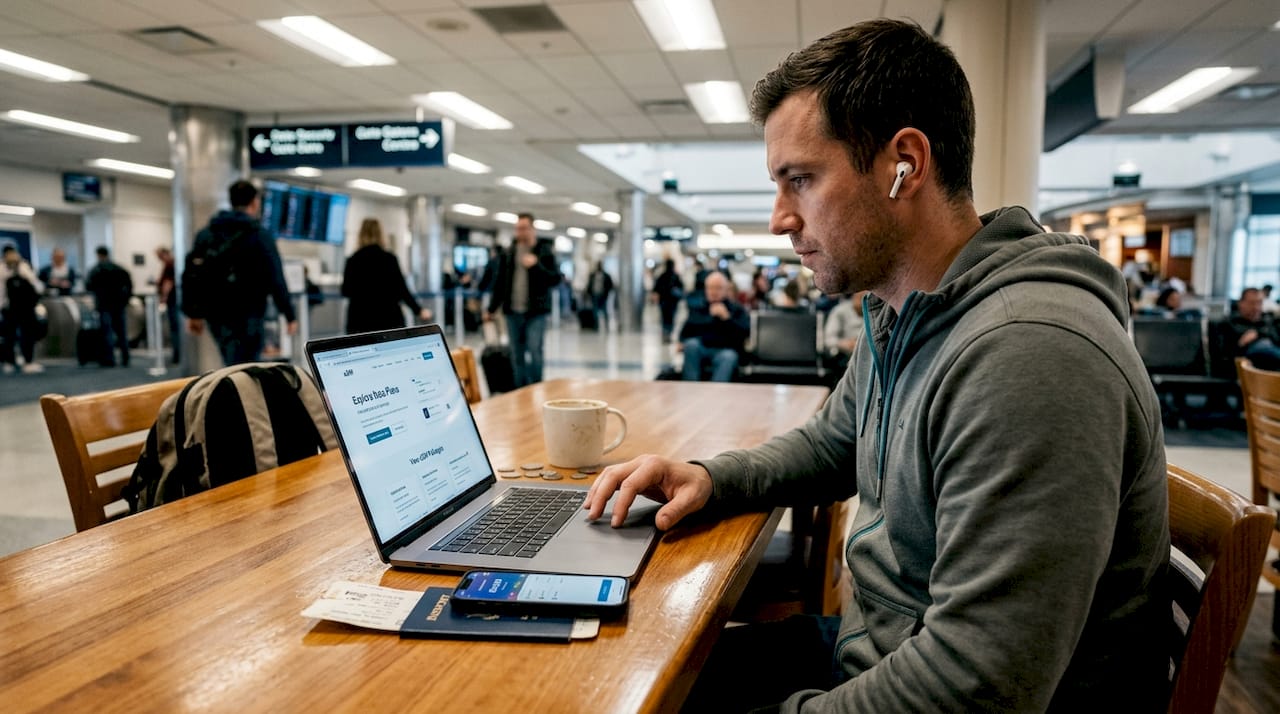
Paying for eSIM data plans abroad sounds simple until your bank quietly adds a 3% foreign transaction fee on top of an already inflated exchange rate. Traditional banks charge 2-5% FX fees per transaction, which can cost travelers $300 to $3,000 annually depending on spending volume. For digital nomads hopping between countries every few weeks, those fees stack up fast. Multi-currency payment solutions cut through that noise, letting you pay for eSIM plans at real exchange rates without the markup. This article breaks down exactly how they work, where they save you money, and how to avoid the traps that catch most travelers off guard.
Table of Contents
- The problem with paying for eSIMs abroad
- How multi-currency payments solve the pain points
- Real-world savings and practical use cases
- Expert tips for maximizing multi-currency benefits
- Risks and limitations of multi-currency payments
- Get flexible with your next eSIM purchase
- Frequently asked questions
Key Takeaways
| Point | Details |
|---|---|
| Bypass FX fees | Multi-currency accounts eliminate bank conversion charges on eSIM purchases. |
| Pay in local currencies | You gain flexibility and transparency by spending in the native currency of eSIM providers. |
| Save time and money | Avoid delays and hidden costs, often totaling hundreds of dollars per year for frequent travelers. |
| Security advantages | Digital wallets protect your funds with advanced security, real-time alerts, and instant account freezes. |
| Know the limitations | Keep backup payment methods and understand provider acceptance to minimize travel hassles. |
The problem with paying for eSIMs abroad
Let’s start by understanding what makes paying for eSIMs while abroad more complicated and costly than travelers expect.
Most eSIM providers price their plans in USD or EUR. That sounds fine until you realize your home bank converts your local currency at a rate it sets, not the market rate. The gap between those two rates is called the FX markup, and it’s pure profit for the bank. You never see it as a line item. It just quietly inflates every transaction.
There’s also a sneaky trap called DCC, or dynamic currency conversion. This happens when a payment terminal or checkout page offers to charge you in your home currency instead of the provider’s currency. It sounds helpful. It isn’t. DCC rates are typically worse than your bank’s already inflated rate, adding another 1 to 4% on top.
“Traditional banks charge 2-5% FX fees per transaction, while multi-currency accounts can save travelers $300 to $3,000 annually.”
For digital nomads crossing borders frequently, these costs compound. A $15 eSIM plan bought twelve times a year across different countries can quietly cost $20 to $25 per purchase once fees are factored in. That’s a 30 to 60% premium just for the privilege of using your own money.
Compare that to eSIM vs physical SIM options, and the financial case for going digital gets even stronger when you pair it with the right payment method.
- Unplanned FX markups added by your home bank
- Opaque exchange rates with no transparency
- DCC traps at checkout that inflate costs further
- Delayed transaction processing in some regions
- No control over the rate applied at the moment of purchase
How multi-currency payments solve the pain points
Now that you know the challenge, here’s how multi-currency payment options address it step by step.
A multi-currency wallet lets you hold balances in several currencies at once. When you pay for an eSIM plan priced in USD, the wallet checks if you have a USD balance first. If you do, it uses that directly. No conversion, no markup. If you don’t, it converts from your available balance at the interbank rate, which is the closest rate to what you see on Google.

Multi-currency payments allow holding, sending, and spending in multiple currencies from one account, avoiding the 2 to 4% FX markups that traditional banks apply. That’s the core mechanic that makes them so useful for eSIM purchases.
Here’s how the process works in practice:
- Load your multi-currency wallet with your home currency (USD, EUR, AUD, GBP, etc.)
- The wallet auto-selects the matching currency balance when you pay
- If no match exists, it converts at the interbank rate automatically
- You receive a real-time notification with the exact amount charged
- No hidden fees, no surprise markups on your statement
Security is another strong point. These wallets use tokenization, meaning your actual card number is never shared with the merchant. Real-time alerts notify you of every transaction, and most apps let you freeze your account instantly if something looks wrong.
| Feature | Traditional bank card | Multi-currency wallet |
|---|---|---|
| FX markup | 2-5% | 0-0.5% |
| Real-time alerts | Rare | Standard |
| Freeze account instantly | Rarely available | Yes, via app |
| Multi-currency balances | No | Yes |
| Tokenized payments | Sometimes | Always |
Providers like Wise and Revolut are the most widely used. Both integrate smoothly with eSIM platforms. If you’re curious how crypto eSIM vs regular eSIM payments compare, the flexibility gap becomes even more obvious.
Pro Tip: Load your wallet with USD before a trip if you know your eSIM plans are priced in USD. You lock in the rate at the time of loading, not at the time of purchase.
Real-world savings and practical use cases
But what does all this mean for your wallet and travel routine? Here’s the practical impact based on real numbers.
Let’s say you’re a traveler from Australia buying a $20 USD eSIM plan for Europe. Your Australian bank applies a 3.5% FX fee plus a $5 international transaction fee. That $20 plan just became $25.70. Do that six times across a year of travel and you’ve paid $34.20 in fees alone.
With a multi-currency wallet, you pre-convert AUD to USD at the interbank rate. The $20 plan costs $20. Full stop. Empirical data shows travelers save up to 4x on travel spending, with annual savings of $300 to $3,000 on volumes between $50,000 and $100,000.
| Scenario | Traditional bank | Multi-currency wallet |
|---|---|---|
| $20 eSIM plan (USD, paid in AUD) | ~$25.70 | ~$20.30 |
| $50 regional data plan | ~$54.25 | ~$50.50 |
| 12 eSIM purchases per year | ~$308 total | ~$244 total |
| Annual fee difference | Baseline | Save ~$64 |
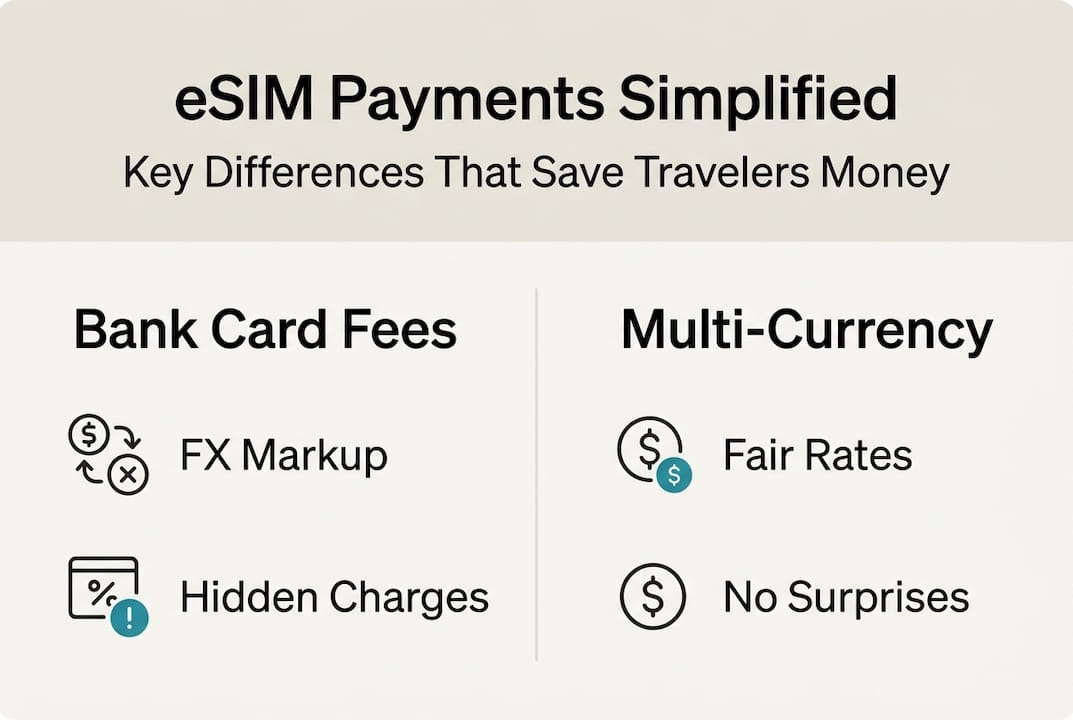
Weekends are a specific trap worth knowing about. Some multi-currency providers apply a small markup on weekend conversions because interbank markets are closed. Weekend FX markups and DCC at point of sale can add 1 to 4% to your transaction. The fix is simple: pre-convert on a weekday and hold the balance.
For travelers exploring best eSIM plans for Europe and Asia, pairing the right plan with the right payment method is the move. And if you prefer crypto, buying eSIMs with Bitcoin is another route that sidesteps traditional banking entirely.
- Pre-convert currencies on weekdays to avoid weekend markups
- Always decline DCC at checkout, pay in the provider’s currency
- Use USD balance for USD-priced eSIM plans to avoid any conversion
- Check your wallet’s weekend policy before a big trip
Expert tips for maximizing multi-currency benefits
To help you get more mileage and fewer headaches, here’s where the experts weigh in with actionable strategies.
The single most important habit is declining DCC every time it appears. When a checkout page asks if you want to pay in your home currency, say no. Always choose local currency or the eSIM provider’s pricing currency. This one habit alone can save you 1 to 4% per transaction.
Pre-converting for planned eSIM top-ups is the next level move. If you know you’re heading to Southeast Asia for three months and you’ll need three eSIM top-ups, convert the full amount before you leave. You lock in today’s rate and remove all FX risk from future purchases.
- Always decline DCC at checkout, no exceptions
- Pre-convert for known eSIM purchases before your trip starts
- Keep a crypto wallet as a backup payment method
- Monitor your provider’s weekend FX policy and plan conversions accordingly
- Ensure your phone is charged and has data access before topping up remotely
Keeping a backup payment method matters more than most travelers realize. A crypto wallet, mobile money account, or secondary card gives you options if your primary wallet app fails to load or a provider’s payment system is down. Streamlining your payment setup before departure reduces stress significantly.
For travelers who care about data security as much as payment security, the eSIM security risks guide is worth reading alongside your payment setup.
Pro Tip: Set up real-time spending alerts on your multi-currency wallet before every trip. If a fraudulent charge hits, you’ll know within seconds and can freeze the account before more damage is done.
Risks and limitations of multi-currency payments
No payment method is perfect. Let’s clarify a few downsides and what you can do to mitigate risk.
The biggest structural difference between a multi-currency wallet and a traditional bank account is deposit insurance. Most multi-currency providers are not banks in the traditional sense. Multi-currency accounts lack full deposit insurance compared to banks, and they’re not ideal for corporate reimbursements that require formal audit trails.
“FX volatility is a real risk if you’re holding large balances in less stable currencies. A currency that looks favorable today can shift significantly within days.”
There are also infrastructure gaps in emerging markets. In cash-heavy regions, digital wallets may not be accepted at all. Some unlimited eSIM plans also restrict hotspot use, which limits your ability to access your wallet app if your primary device runs out of data.
- Not all providers carry deposit insurance, check the terms before loading large balances
- FX volatility can erode value if you hold the wrong currencies too long
- Lower acceptance in cash-centric or infrastructure-limited regions
- Some providers apply weekend FX markups that reduce savings
- Corporate travelers may need traditional bank records for expense reporting
For travelers who want secure global data access, pairing a reliable eSIM with a well-chosen payment method covers most of the risk surface.
Get flexible with your next eSIM purchase
Ready to take the next step? Here’s one solution that offers secure, flexible payments for your travel connectivity needs.
CryptoeSIM.io is built for exactly the kind of traveler this article is written for. You can buy eSIM plans covering 190+ countries without creating an account, and payment options include Bitcoin, Ethereum, over 300 other crypto tokens, credit and debit cards, and Apple Pay. That’s the kind of flexibility that matches a multi-currency mindset perfectly.
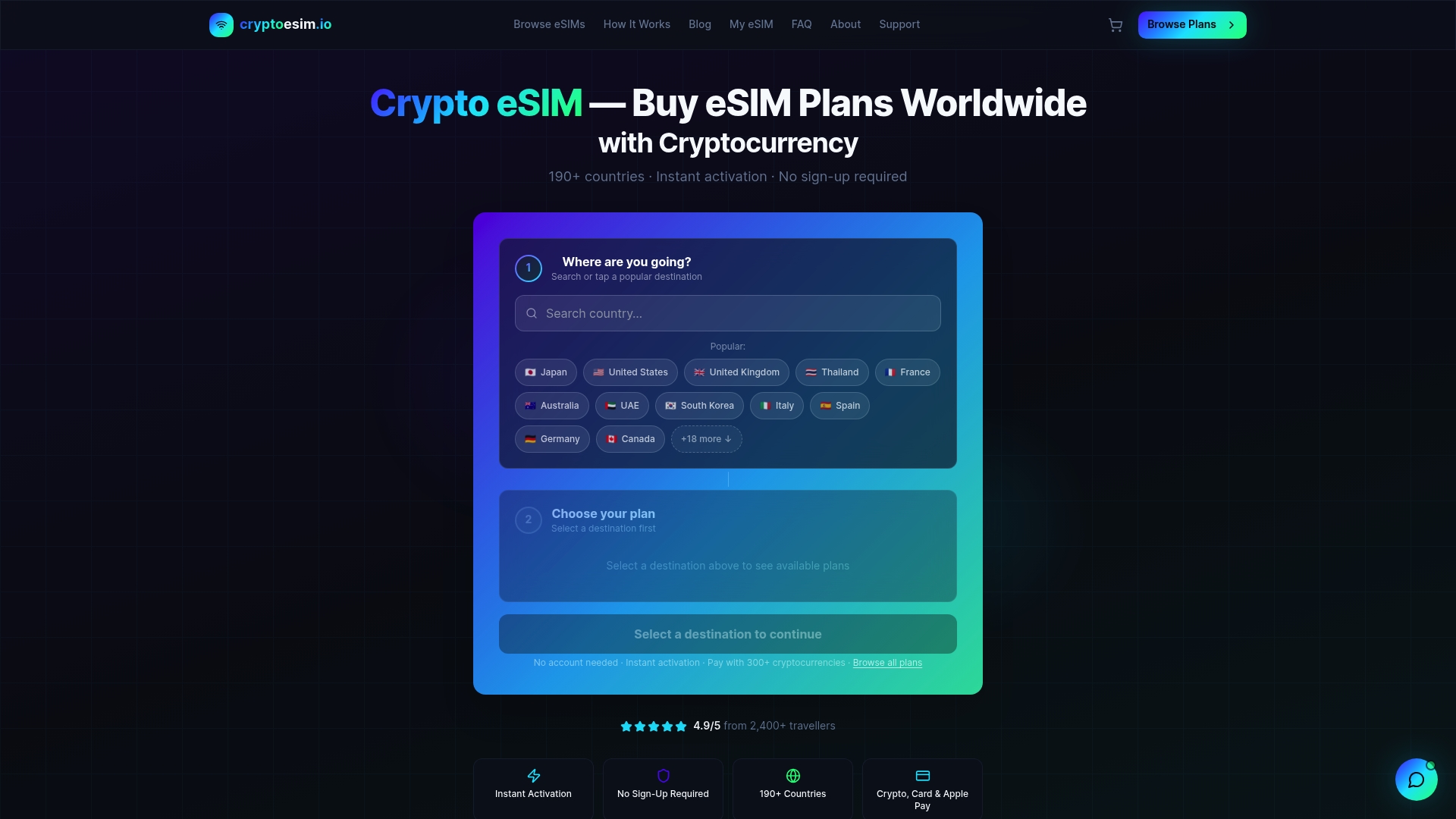
Whether you’re a frequent flyer who pre-converts currencies before every trip or a digital nomad who prefers buying eSIMs with Bitcoin to skip banking entirely, CryptoeSIM.io removes the friction. Instant activation, no physical SIM, no waiting. Just connectivity, on your terms, wherever you land next.
Frequently asked questions
How do multi-currency payments help avoid hidden fees on eSIM purchases?
Providers like Wise and Revolut enable payments at mid-market rates, so you pay for eSIMs in USD or local currencies without the FX markups or DCC fees that traditional banks add.
Are multi-currency wallets secure for travel payments?
Yes. Tokenization, real-time alerts, and biometric authentication reduce fraud risk significantly compared to carrying physical cards or using standard bank accounts abroad.
Do all eSIM providers accept multi-currency payments?
Most large providers price in USD, but wallet acceptance and local pricing options vary by region and platform, so it’s worth checking before you travel.
What are the risks of using multi-currency accounts for travel?
Multi-currency accounts lack full deposit insurance compared to traditional banks, and holding the wrong currencies during volatile periods can reduce your balance value unexpectedly.