Secure crypto transactions for mobile data plans

Traditional payment methods for mobile data plans burden travelers with delays, privacy risks, and high fees. Crypto payments transform this experience by offering instant confirmations, no identity checks, and lower costs. Lightning Network and fast blockchain technologies enable secure, private transactions that settle in seconds rather than minutes or hours. This guide walks you through how crypto secures mobile data purchases, the privacy advantages and risks you should understand, empirical performance data, and practical steps to maximize security and convenience when buying eSIM plans with cryptocurrency.
Table of Contents
- Key takeaways
- How crypto enhances transaction security for mobile data plans
- Privacy advantages and risks in crypto-based mobile data payments
- Empirical performance and cost benefits of crypto eSIMs
- Practical tips for securing your crypto transactions with eSIM purchases
- Explore secure crypto eSIM options with CryptoeSIM.io
- Frequently asked questions
Key Takeaways
| Point | Details |
|---|---|
| Lightning speed payments | Lightning Network enables instant confirmations and reduces delays when buying eSIMs by routing transactions off chain. |
| Privacy via onion routing | Payments do not link to personal identities and use layered encryption to obscure the path across hops. |
| Stablecoins hedge volatility | Stablecoins on fast blockchains offer predictable costs but privacy varies by chain. |
| No KYC required | Crypto based mobile data payments bypass traditional identity checks protecting traveler privacy. |
How crypto enhances transaction security for mobile data plans
Crypto payment technologies fundamentally change how you purchase and activate mobile data plans. The Lightning Network enables instant payment confirmations within seconds versus 10 to 30 minutes on-chain and uses no KYC, supporting 20+ cryptocurrencies in 180+ countries. This speed advantage eliminates the frustrating wait times that plague traditional banking transfers.
Lightning achieves this through off-chain payment channels that batch multiple transactions before settling on the main blockchain. When you purchase an eSIM, your payment routes through these channels using Hashed Timelock Contracts (HTLCs) that guarantee atomic execution across multiple hops. Either the entire payment succeeds or it fails completely, preventing partial losses. The protocol’s adaptor signatures in PTLCs improve privacy by decorrelating hops, making it nearly impossible for intermediaries to track the full payment path.
This architecture delivers several security advantages:
- Payments settle instantly without waiting for blockchain confirmations
- No personal information links to your transaction
- Atomic execution prevents fraud during multi-hop routing
- Off-chain channels reduce exposure to public ledger analysis
- Multi-cryptocurrency support provides payment flexibility
Beyond Lightning, stablecoins on fast blockchains like Solana or Polygon offer another secure option. These networks process transactions in seconds while maintaining reasonable fees. Stablecoins hedge against crypto volatility, letting you lock in predictable costs for your data plan. However, account-based chains expose more transaction history than Lightning’s onion-routed payments.
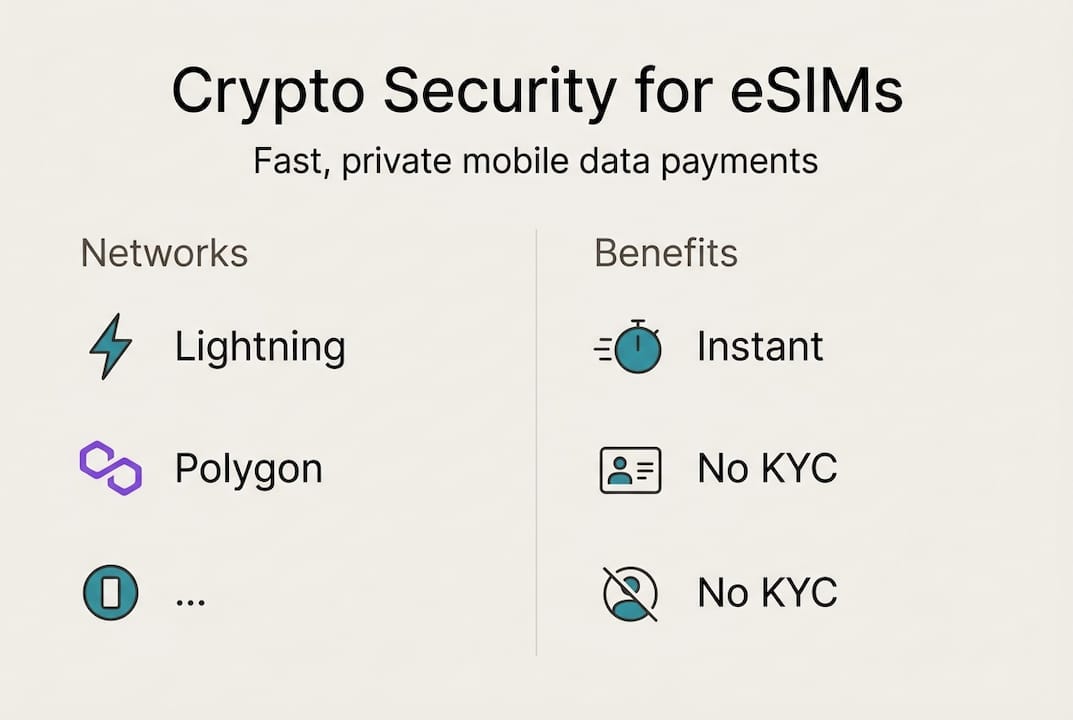
The absence of KYC checks represents a major security win for travelers. Traditional payment processors require identity verification that links your purchases to personal data. Crypto payments for mobile data plans bypass this entirely, protecting your travel privacy and reducing identity theft risk. You control your funds through non-custodial wallets without trusting third-party processors with sensitive information.
Pro Tip: Test your Lightning wallet with a small payment before traveling to ensure smooth operation. Verify your node has sufficient channel liquidity to avoid payment failures when you need connectivity most.
Privacy advantages and risks in crypto-based mobile data payments
Privacy stands out as crypto’s most compelling advantage for mobile data purchases. Lightning Network payments do not link identities, use onion routing, and avoid public ledger exposure, unlike account-based stablecoins which leak transaction history. Each payment hop appears independent, preventing observers from reconstructing your full payment path or linking it to your identity.

Onion routing wraps payment data in multiple encryption layers, similar to how Tor protects web browsing. Intermediate nodes can only see the previous and next hop, never the full route from sender to receiver. This architectural choice outperforms transparent blockchains where anyone can trace funds between addresses. For travelers concerned about surveillance or data breaches, this privacy model offers substantial protection.
Key privacy benefits include:
- Zero personal information required at purchase
- Payment routes hidden through onion encryption
- No public transaction history linking purchases
- Protection from corporate data harvesting
- Reduced exposure to identity theft
Yet crypto payments carry real security risks you must understand. Despite privacy strengths, risks include liquidity issues, address poisoning, front-running, and significant monetary losses from attacks have been documented. Liquidity shortages occur when payment channels lack sufficient funds to route your transaction, causing failures at critical moments. Address poisoning tricks users into sending funds to attacker-controlled addresses that look similar to legitimate ones.
Front-running attacks exploit the brief window between transaction broadcast and confirmation. Attackers monitor pending transactions and submit competing ones with higher fees to capture value. While less common on Lightning than on transparent chains, the risk persists when converting between cryptocurrencies or moving funds on-chain.
“Address verification failures and liquidity mismanagement account for over 60% of documented Lightning payment losses, highlighting the importance of operational security.”
These vulnerabilities don’t negate crypto’s advantages but demand careful operational practices. Protocol upgrades like PTLCs aim to reduce privacy leaks and attack surfaces. Wallet developers continuously improve user interfaces to prevent address errors. As the ecosystem matures, many risks decrease through better tooling and user education.
The privacy benefits of crypto eSIMs remain substantial for travelers willing to follow security best practices. Understanding both advantages and risks lets you make informed decisions about payment methods. For those prioritizing privacy over convenience, Lightning payments offer unmatched protection. For users seeking stability with moderate privacy, stablecoins on fast chains provide a middle ground. Learn more about specific address poisoning and front-running risks to protect your transactions.
Empirical performance and cost benefits of crypto eSIMs
Real-world data demonstrates that crypto-based eSIM plans deliver tangible economic and performance advantages. Crypto eSIMs are 20-30% cheaper due to no processor fees and activate instantly; coverage reliability ranges 84-99% in non-urban Southeast Asia and Europe with border handover delays. Traditional payment processors charge 2-3% fees that get passed to consumers, while crypto transactions eliminate these intermediaries entirely.
Activation speed represents another major advantage. Crypto payments confirm in seconds, triggering immediate eSIM provisioning. You can purchase a data plan at the airport and have connectivity before boarding. Traditional methods require credit card authorization, fraud checks, and manual processing that often take 15-30 minutes. For travelers facing tight connections or urgent communication needs, this speed difference matters enormously.
Network performance metrics show crypto eSIMs compete favorably with traditional plans:
| Metric | Urban Areas | Non-Urban Areas | Notes |
|---|---|---|---|
| Download Speed | 42-88 Mbps | 15-35 Mbps | Sufficient for streaming and video calls |
| Coverage Reliability | 95-99% | 84-92% | Minor gaps at remote borders |
| Activation Time | 5-15 seconds | 10-30 seconds | Instant after payment confirmation |
| Cost Savings | 20-30% | 20-30% | No processor or currency conversion fees |
Empirical network tests show high urban speeds (42-88 Mbps) but some rural handover gaps; users save 2-3% fees normally charged by traditional payment processing. These speeds exceed typical user needs for email, messaging, web browsing, and even video streaming. Only bandwidth-intensive activities like 4K video uploads might strain connections in non-urban areas.
Regional coverage patterns reveal where crypto eSIMs excel:
- Europe: 95%+ reliability in major cities, 88-92% in rural areas
- Southeast Asia: 90-95% urban coverage, 84-88% rural with border delays
- North America: 96-99% coverage across urban and suburban zones
- Latin America: 85-93% reliability varying by infrastructure quality
Border crossings present the main challenge. Network handovers between countries can take 2-5 minutes as your device registers with new towers. This delay affects all eSIM types, not just crypto-based plans. Pre-purchasing data for your destination countries minimizes disruption since the eSIM profile already contains necessary credentials.
Cost savings compound for frequent travelers. A typical month of international data through traditional carriers costs $80-120 with roaming fees. Equivalent crypto eSIM coverage runs $55-85, saving $300-400 annually for regular travelers. These savings increase further when avoiding currency conversion fees that traditional cards charge.
Pro Tip: Compare crypto eSIM versus regular eSIM plans for your specific travel routes. Some regions offer better pricing through crypto providers, while others show minimal difference. Route-specific research maximizes your savings.
Practical tips for securing your crypto transactions with eSIM purchases
Maximizing security and convenience when buying mobile data with crypto requires following proven operational practices. These steps protect against common attack vectors while ensuring smooth transactions.
-
Verify payment addresses meticulously before sending funds. Address poisoning attacks rely on user inattention. Copy addresses directly from official sources, never from emails or messages. Many wallets now highlight address changes or show visual checksums to catch errors. Take an extra 10 seconds to confirm the first and last four characters match exactly.
-
Use non-custodial wallets that give you full control. Custodial services hold your private keys, creating a single point of failure. Non-custodial wallets like Phoenix, Breez, or Muun let you control funds directly. If the provider experiences issues, your crypto remains accessible. This independence proves critical when traveling through areas with limited internet access.
-
Enable IMEI checks on your devices to reduce fraud risk. Some eSIM providers verify device IMEI numbers to prevent account sharing or fraud. While this adds a privacy tradeoff, it protects against unauthorized use if someone gains access to your eSIM credentials. Evaluate whether this security layer fits your threat model.
-
Hedge volatility by holding stablecoins on fast blockchains. Bitcoin and Ethereum prices fluctuate significantly. If you plan to purchase data plans regularly, convert some holdings to USDC or USDT on Solana or Polygon. This locks in predictable costs while maintaining crypto payment benefits. You avoid the frustration of price swings affecting your travel budget.
-
Purchase eSIM credit ahead over secure WiFi connections. Buying eSIM credit ahead on reliable WiFi prevents activation issues and ensures smooth connectivity abroad. Airport and hotel networks often block crypto wallet connections or have unreliable bandwidth. Complete transactions before traveling to avoid last-minute complications.
-
Test small transactions before making large purchases. Send a minimal amount first to verify the payment flow works correctly. This practice catches configuration errors, liquidity problems, or address mistakes before committing significant funds. The small fee for a test transaction provides valuable peace of mind.
-
Keep wallet software updated to latest security patches. Developers continuously fix vulnerabilities and improve protection mechanisms. Enable automatic updates if your wallet supports them, or check monthly for new versions. Outdated software exposes you to known exploits that attackers actively scan for.
Pro Tip: Learn to buy eSIM with Bitcoin using Lightning Network for the fastest, most private transactions. The learning curve pays dividends in reduced fees and enhanced security. Consult the ultimate crypto eSIM guide for comprehensive setup instructions.
These practices balance security, privacy, and convenience. No single measure provides complete protection, but layering multiple safeguards significantly reduces risk. As you gain experience with crypto payments, these steps become second nature rather than burdensome checklists.
Explore secure crypto eSIM options with CryptoeSIM.io
Now that you understand how crypto secures mobile data transactions and the practical steps to protect yourself, it’s time to experience these benefits firsthand. CryptoeSIM.io offers instant eSIM activation across 190+ countries with privacy-first crypto payments that require no account creation or identity verification.
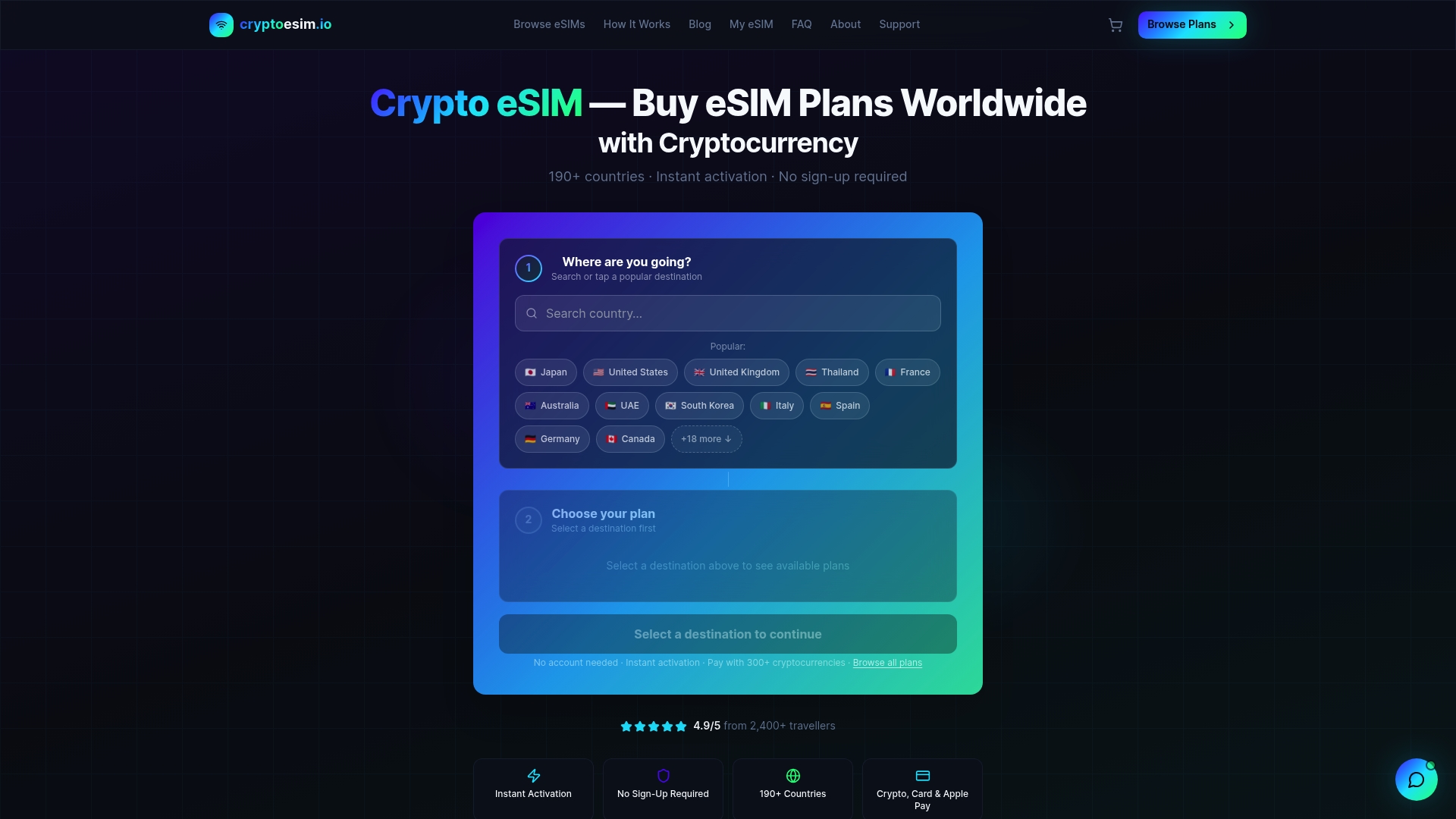
The platform accepts Bitcoin, Ethereum, and 300+ other cryptocurrencies through Lightning Network and fast blockchain integrations. You get the security and privacy advantages discussed throughout this guide, backed by responsive support and comprehensive documentation. Whether you’re a digital nomad needing reliable connectivity or a traveler prioritizing transaction privacy, CryptoeSIM.io delivers the seamless experience you expect.
Explore the ultimate crypto eSIM guide to understand setup procedures and best practices. Learn more about crypto eSIM privacy without KYC to see how the platform protects your personal information. Take control of your mobile connectivity with payment methods that respect your privacy and security needs.
Frequently asked questions
How does Lightning Network protect my privacy when buying mobile data?
Lightning Network uses onion routing to hide payment paths, ensuring intermediate nodes cannot see the full transaction route. Your payment data gets encrypted in multiple layers, with each hop only revealing the previous and next node. This prevents observers from linking payments to your identity or reconstructing your purchase history. Unlike transparent blockchains, Lightning transactions never appear on a public ledger where anyone can analyze them.
What risks should I watch for when using crypto for mobile data payments?
Address poisoning and front-running attacks represent the primary threats, along with liquidity shortages in payment channels. Always verify payment addresses carefully by checking the first and last four characters against official sources. Use non-custodial wallets to maintain control of your funds and avoid trusting third parties. Test small transactions first to catch configuration errors before committing larger amounts. Stay informed about emerging attack vectors through security-focused crypto communities.
Are crypto-based eSIM plans reliable for international travel?
Crypto eSIMs provide 95-99% coverage reliability in urban areas and 84-92% in non-urban regions across major travel destinations. Network speeds of 42-88 Mbps in cities support streaming, video calls, and all typical mobile activities. Minor delays of 2-5 minutes may occur when crossing borders as your device registers with new network towers. Pre-purchasing data plans for your destination countries minimizes these handover interruptions. Overall reliability matches or exceeds traditional eSIM options.
How can I best secure my crypto transactions when purchasing data plans?
Verify all payment information carefully, use trusted non-custodial wallets, and enable device IMEI fraud protection if available. Consider holding stablecoins to hedge against price volatility when planning regular purchases. Complete transactions over secure WiFi connections before traveling rather than relying on airport or hotel networks. Keep wallet software updated to the latest security patches and test small transactions first to verify everything works correctly. Layer multiple security practices rather than relying on any single measure.