Find the best eSIM data plan: local, regional, or global?

TL;DR:
- Choose local, regional, or global eSIM plans based on travel destinations and route complexity.
- Data plan structures include fixed, unlimited, pay-as-you-go, and monthly, each suited to different usage patterns.
- Flexible, crypto-friendly eSIM providers like CryptoeSIM.io offer instant activation with no KYC, ideal for modern travelers.
Picking the wrong eSIM plan before a trip is one of those mistakes you only make once. You either overpay for data you never use, or you hit a coverage wall the moment you cross a border. With three main plan types now available across hundreds of providers, local, regional, and global, the options feel endless. But the right plan isn’t the cheapest or the most popular. It’s the one that matches your actual travel pattern, data habits, and payment preferences. This guide cuts through the noise so you can connect instantly, wherever you land.
Table of Contents
- Types of eSIM data coverage: Local, regional, and global
- How data allotments and structures work: Fixed, unlimited, or pay-as-you-go
- Benefits and trade-offs of each eSIM plan type for travelers
- Making the right eSIM choice: A decision guide for 2026
- Our take: Why plan flexibility and crypto-friendliness matter most
- Find your plan and get connected instantly with CryptoeSIM.io
- Frequently asked questions
Key Takeaways
| Point | Details |
|---|---|
| Three main plan types | eSIM data plans come in local, regional, and global options tailored to specific travel needs. |
| Plan structure impacts cost | Fixed, unlimited, or pay-as-you-go eSIMs each suit different usage patterns and budgets. |
| Regional best for nomads | Multi-country regional eSIM plans often offer the best value and flexibility for frequent travelers. |
| Crypto-friendly providers | Choosing an eSIM provider that accepts cryptocurrency enables instant, private, and borderless access. |
Types of eSIM data coverage: Local, regional, and global
Not all eSIM plans are built the same. The main types of eSIM data plans break down into three categories: local (single country), regional (multi-country groups like Europe or Asia), and global (100+ countries). Each serves a different kind of traveler, and mixing them up costs you money.
Local plans are tied to one country. They’re usually the cheapest per gigabyte and offer the best network partnerships in that specific market. If you’re spending two weeks in Japan and going nowhere else, a local plan is your best bet. The downside is obvious: cross the border and you’re offline unless you buy another plan.
Regional plans cover a predefined group of countries, often grouped by geography. A Europe plan might cover 30+ countries. An Asia plan might cover 15. These are ideal for anyone doing a multi-stop circuit, think backpackers, conference travelers, or digital nomads rotating through a region every few weeks.
Global plans are the broadest option, covering 100 or more countries under one plan. They’re convenient but typically cost more per gigabyte. For travelers who jump between continents regularly, the simplicity alone is worth it. Understanding the difference between an eSIM vs physical SIM also helps you see why eSIMs make switching between these plan types so frictionless.

Here’s a quick comparison:
| Plan type | Coverage | Best for | Avg. cost per GB |
|---|---|---|---|
| Local | 1 country | Single-destination trips | Lowest |
| Regional | 5-40 countries | Multi-country circuits | Moderate |
| Global | 100+ countries | Frequent cross-continent travel | Higher |
Key things to consider when choosing a coverage type:
- Single destination? Go local for the best value.
- Multi-country in one region? Regional plans save you the hassle of buying multiple plans.
- Constant continent-hopping? A global plan keeps things simple.
- Unsure of your route? Regional plans offer a useful middle ground.
Pro Tip: If you’re doing a circuit through Southeast Asia or the Balkans, a regional plan often costs less than buying two or three local plans separately. Do the math before you buy.
How data allotments and structures work: Fixed, unlimited, or pay-as-you-go
Once you’ve chosen a coverage type, it’s time to explore how data is actually delivered. The structure of your data plan affects your daily experience just as much as the coverage area.
Data structures vary widely: fixed or capped data (ranging from 1GB to 50GB+), unlimited plans with fair-use throttling after a daily threshold (typically 2 to 10GB per day), pay-as-you-go with non-expiring credit, and monthly subscriptions that auto-renew. Each model suits a different usage pattern.
Fixed or capped plans give you a set amount of data for a set price. Once you hit the cap, you’re done unless you top up. These plans are predictable and affordable, but they require you to monitor your usage. Great for travelers who rely heavily on WiFi and only need mobile data for maps, messaging, and occasional browsing.
Unlimited plans sound ideal, but the fine print matters. Most throttle your speeds after a daily cap, sometimes down to 1 Mbps or less. That’s fine for texting but painful for video calls. Providers like Holafly and Ubigi use this model. For remote workers who need consistent performance, throttling can be a real problem during peak hours.
Pay-as-you-go plans don’t expire. You load credit and use it when you need it. This is perfect for infrequent travelers who don’t want to waste a 30-day plan on a 5-day trip. It’s also a smart backup option. Understanding eSIM security risks and how crypto eSIMs compare to regular ones helps you make a more informed choice about which structure fits your privacy needs too.
Monthly subscriptions auto-renew and work well for long-term remote workers who need reliable data in one region month after month.
| Structure | Data limit | Flexibility | Best for |
|---|---|---|---|
| Fixed/capped | 1-50GB+ | Low | Budget travelers, WiFi-heavy users |
| Unlimited | Throttled after daily cap | Medium | Heavy users, remote workers |
| Pay-as-you-go | Credit-based, no expiry | High | Infrequent or backup users |
| Monthly subscription | Resets monthly | Medium | Long-term remote workers |
Pro Tip: If you spend most of your time in cafes or coworking spaces with WiFi, a fixed plan with 5-10GB is usually enough. Pair it with a pay-as-you-go backup and you’ll rarely overspend.
Benefits and trade-offs of each eSIM plan type for travelers
Knowing what each data structure offers, it’s key to decide which eSIM plan really meets your needs. The best plan on paper isn’t always the best plan for your life on the road.
Fixed data plans:
- Pros: Lower cost per GB, predictable spending, easy to budget
- Cons: Runs out mid-trip if you’re not careful, top-ups can be inconvenient
Unlimited plans:
- Pros: No data anxiety, good for heavy streaming or video calls
- Cons: Throttling after the daily cap can make them frustrating for work tasks
Pay-as-you-go:
- Pros: No expiry, only pay for what you use, great for short or sporadic trips
- Cons: Can get expensive if you use a lot of data regularly
Monthly subscriptions:
- Pros: Consistent access, often includes better support
- Cons: Wasteful if you’re only traveling part of the month
As noted by travel connectivity experts, fixed data is cheaper per GB for light to moderate use when supplemented with WiFi, while unlimited plans offer peace of mind for heavy remote work despite throttling. Nomads doing multi-country circuits consistently prefer regional plans for their flexibility.
“The best eSIM plan isn’t the one with the most data. It’s the one you never have to think about while you’re working.”
Here’s a simple process to match plan to trip:
- List every country you’ll visit.
- Estimate your daily data use (light = under 1GB, moderate = 1-3GB, heavy = 3GB+).
- Decide if WiFi will be reliably available at your destinations.
- Check if your payment method of choice is accepted.
- Match your usage to the plan structure that fits.
For privacy-focused travelers, crypto payments for eSIM plans remove the need to share financial data with telecom providers. And no-KYC purchasing means you can activate a plan without handing over personal identification, a real advantage for those who value anonymity on the road.
Making the right eSIM choice: A decision guide for 2026
Let’s turn these options into action. Here’s how to pick the right plan based on your situation.
- Map your destinations. Are you staying in one country, looping through a region, or jumping continents? This single factor narrows your plan type immediately.
- Estimate your data needs honestly. Think about your typical day. Video calls, streaming, and hotspot use eat through data fast. Browsing and maps don’t.
- Check the validity period. A 30-day plan sounds great until you realize your trip is 10 days. Match plan length to trip length.
- Look at top-up options. Can you add data mid-trip without buying a whole new plan? This matters more than most people realize.
- Verify payment flexibility. If you prefer using crypto for eSIMs, confirm the provider accepts your preferred token before committing.
- Read recent reviews. Coverage maps don’t tell the whole story. User reviews from the last 90 days reveal real-world reliability.
For matching plan type to actual user scenarios, the most cost-efficient approach combines regional coverage with a fixed or pay-as-you-go data structure. You get multi-country access without paying for a global plan you don’t fully use.
Pro Tip: Before buying, search “[provider name] + [country] + 2026 review” to find recent user feedback. Providers change network partners regularly, and a plan that worked well last year may underperform today.
For frequent multi-country travelers, a regional pay-as-you-go plan is often the smartest starting point. It keeps your options open, your costs predictable, and your data available without locking you into a structure that doesn’t fit your rhythm.
Our take: Why plan flexibility and crypto-friendliness matter most
After exploring the practicalities, here’s our view on what really matters for today’s digital travelers. Most traditional telecom providers still operate on the assumption that you live in one place, travel occasionally, and don’t mind waiting three days for a SIM card to arrive in the mail. That model is broken for modern nomads.
Flexibility isn’t just a nice feature anymore. It’s the baseline requirement. The ability to switch countries, adjust your data tier, and pay with whatever method you prefer, including Bitcoin or Ethereum, is what separates a genuinely useful eSIM provider from one that’s just riding the trend.
We’ve seen too many travelers locked into plans that don’t match their actual route because they chose based on brand recognition rather than flexibility. The providers worth your attention are the ones offering instant activation, no account creation, and seamless crypto payments that don’t require you to hand over personal data.
Our challenge to you: stop choosing eSIM plans based on which brand you’ve heard of. Choose based on flexibility, payment freedom, and how fast you can get connected after landing.
Find your plan and get connected instantly with CryptoeSIM.io
Ready to get started with a flexible, crypto-friendly eSIM plan? CryptoeSIM.io makes it simple to find and activate the right plan for your trip, whether that’s a local plan for a single country, a regional plan for a multi-stop circuit, or a global plan for continent-hopping.
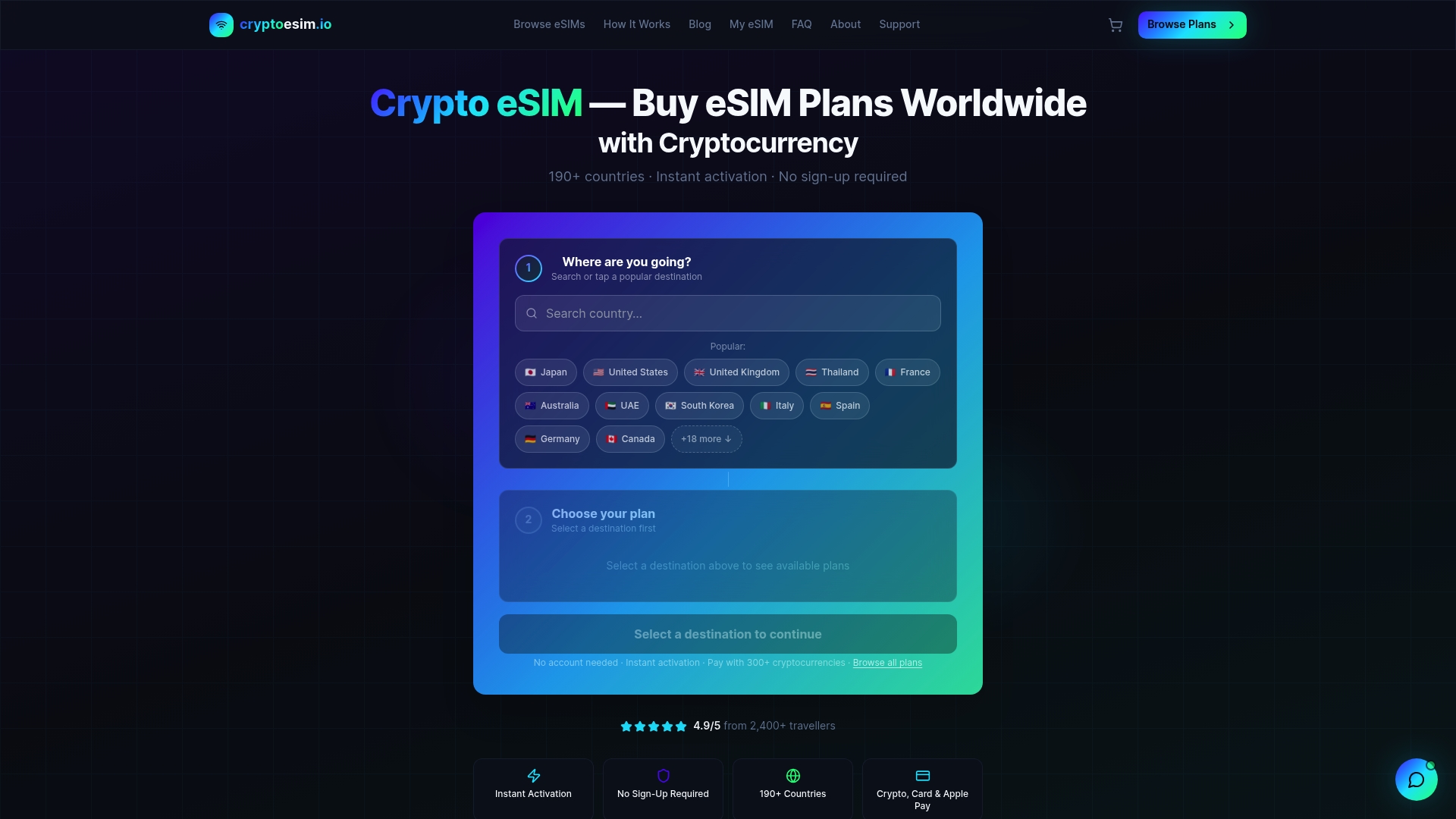
You can find your eSIM plan in minutes, with no account required and no KYC. Pay with Bitcoin, Ethereum, or 300+ other tokens, or use a card or Apple Pay if you prefer. Instant activation means you’re connected before you leave the airport. Coverage spans 190+ countries, so wherever your next destination is, there’s a plan ready for you.
Frequently asked questions
What is the difference between local, regional, and global eSIM data plans?
Local plans work in one country, regional plans cover multiple nearby countries, and global plans provide data access in over 100 countries worldwide. The right choice depends entirely on how many countries you’ll visit.
How do unlimited eSIM data plans actually work?
Unlimited eSIM plans provide high-speed data up to a daily fair-use cap (typically 2 to 10GB per day), after which speeds are reduced but data access continues. You won’t get cut off, but heavy users will notice the slowdown.
What eSIM plan structure is best for frequent country-hopping?
Regional or global plans with pay-as-you-go or monthly recurring data are the most convenient for multi-country trips, since nomads prefer regional plans for their flexibility across borders without buying multiple local plans.
Can I pay for eSIM data plans with cryptocurrency?
Yes, several eSIM providers including CryptoeSIM.io accept cryptocurrencies for instant, private purchase with no KYC required. Bitcoin, Ethereum, and over 300 other tokens are supported.