Top crypto payment methods for global data on the go

TL;DR:
- Crypto payments offer borderless, fast, and private options for international mobile data.
- Stablecoins on quick chains like Solana and Tron provide low-cost, near-instant settlements.
- Using multiple crypto methods, including cards and direct eSIM payments, ensures flexible connectivity worldwide.
Your card gets declined at a Bangkok convenience store. Your bank flags a foreign transaction and freezes your account. Meanwhile, your local SIM just ran out of data and you need connectivity right now. Sound familiar? For digital nomads and frequent travelers, unreliable payment methods are not just annoying, they are genuinely costly. Crypto payments are increasingly the go-to fix, offering borderless settlement, privacy, and speed that traditional banking simply cannot match. This guide breaks down every major crypto payment method for mobile data, ranked by real-world usability, cost, and security so you can stay connected anywhere without the friction.
Table of Contents
- How to evaluate crypto payment methods for travel
- Crypto debit and prepaid cards: Use anywhere, earn rewards
- Stablecoins on fast chains: The real cross-border champions
- Direct crypto payments to eSIM/mobile data providers
- Crypto payment gateways: Indirect routes for buying top-ups
- Our perspective: Why flexibility, not just low fees, matters most
- Get started with secure, global crypto eSIM payments
- Frequently asked questions
Key Takeaways
| Point | Details |
|---|---|
| Low-fee stablecoins | USDT/USDC on fast chains like Tron or Solana are the cheapest, fastest way to fund eSIMs abroad. |
| Global card acceptance | Crypto debit cards enable borderless spending and cashback, but check provider coverage before travel. |
| Direct eSIM purchases | Buying data directly with crypto removes middlemen and can maximize privacy, requiring no KYC. |
| Mix payment methods | Using more than one crypto payment type ensures flexibility and resilience while traveling. |
How to evaluate crypto payment methods for travel
Not all crypto payment methods are created equal, especially when you are moving between countries and need data fast. Before committing to any single approach, you need a clear framework for evaluating your options.
What actually matters when paying with crypto abroad:
- Global acceptance: Can you use this method in the country you are visiting, or does it only work in select markets?
- Transaction speed: Will your payment confirm in seconds or make you wait 30 minutes while your Uber idles outside?
- Real fees: Network fees, conversion spreads, and withdrawal costs all add up. USDT/USDC on low-fee chains dominate because of speed, liquidity, and ultra-low fees.
- Privacy and KYC: Some methods require full identity verification. Others let you pay with zero personal data. Understanding privacy with no-KYC options is critical if anonymity matters to you.
- eSIM and data provider compatibility: Not every crypto wallet or card integrates with telecom merchants. Check before you travel.
- Custodial vs. non-custodial: Custodial wallets are easier but someone else holds your keys. Non-custodial wallets give you full control but require more responsibility.
The crypto adoption trends in 2026 show a clear shift toward stablecoins and multi-chain wallets for everyday spending, not just speculation. This matters for travelers because it means more merchants, more eSIM providers, and more flexibility.
When evaluating multi-currency payments for data abroad, prioritize methods that combine low fees with broad merchant support. A payment option that saves you $0.50 per transaction but is only accepted in two countries is not actually useful on a world trip.
Pro Tip: Always test your chosen crypto payment method with a small transaction before you leave home. Confirming it works with your target eSIM provider in advance saves serious headaches at the airport.
Crypto debit and prepaid cards: Use anywhere, earn rewards
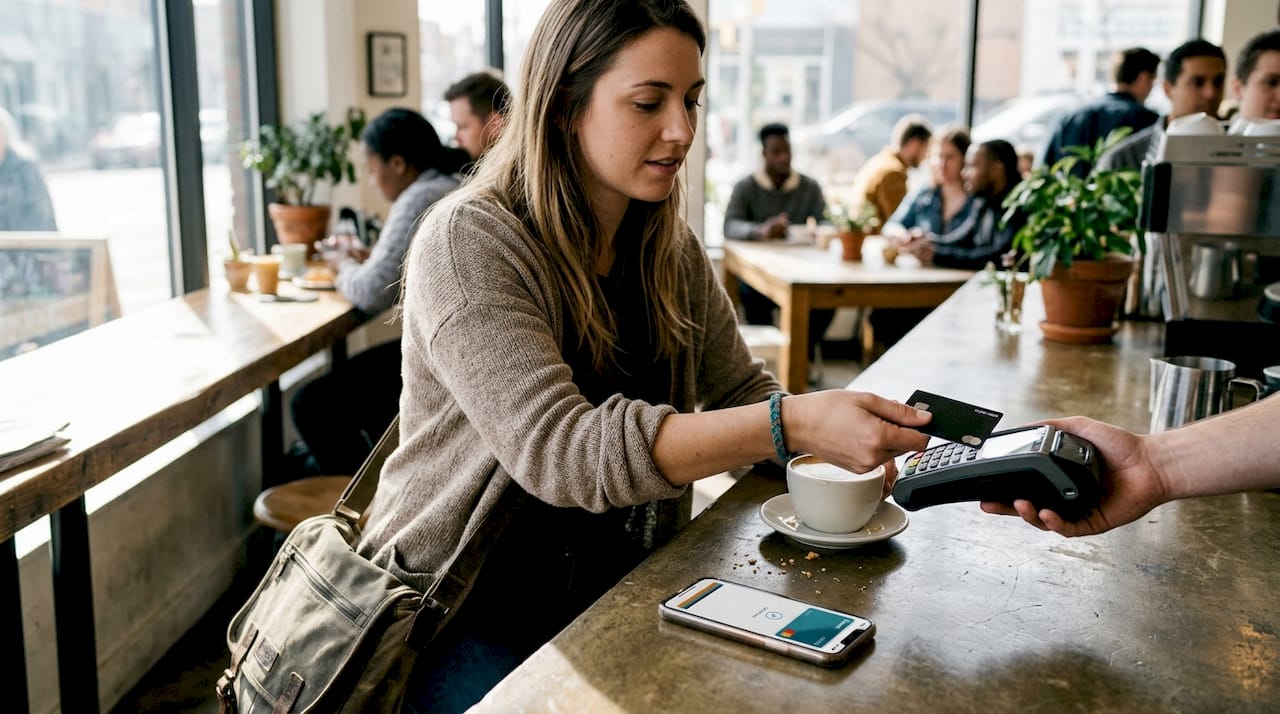
Crypto debit cards bridge the gap between your digital assets and the physical world. They work wherever Visa or Mastercard is accepted, which covers well over 130 countries, and they automatically convert your crypto to local fiat at the point of sale.
Top crypto card providers for travelers in 2026:
- Crypto.com Visa: Up to 8% cashback in CRO, free airport lounge access on higher tiers, and near-zero FX fees
- Wirex: Supports 150+ currencies, offers Cryptoback rewards, and works for both online and in-store purchases
- Nexo Card: Borrow against your crypto holdings instead of selling, earn up to 2% back in NEXO tokens
- Coinbase Card: Simple setup, direct Coinbase account integration, 4% back in XLM or 1% in BTC
Crypto debit cards from providers like Crypto.com, Wirex, Nexo, and Coinbase offer worldwide Visa/Mastercard access, low or no FX fees, and cashback rewards that add up fast for frequent travelers.
| Card | FX Fee | Max Cashback | ATM Access | KYC Required |
|---|---|---|---|---|
| Crypto.com | 0% | 8% | Yes | Yes |
| Wirex | 0% | 2% | Yes | Yes |
| Nexo | 0% | 2% | Yes | Yes |
| Coinbase | 0.2% | 4% | Yes | Yes |
The main drawback is that all major card providers require KYC verification. You will need to submit ID documents and wait for approval. Some cards also have geographic restrictions, so always confirm your destination country is supported before relying on a card as your only payment method.
For buying crypto payments for mobile data specifically, crypto cards work well for eSIM providers that accept standard card payments. They also make secure travel spending easier since you are not exposing a traditional bank account to foreign merchants.
Pro Tip: Stack your crypto card rewards by paying for eSIM plans on your card while keeping your main crypto holdings in a non-custodial wallet. You get the cashback without exposing your full portfolio.
Stablecoins on fast chains: The real cross-border champions
Cards are great for universal acceptance, but when you want maximum speed and minimal fees, stablecoins on modern chains are the clear winner for cross-border payments.
Here is how the numbers actually compare:
| Payment Method | Fee | Settlement Time |
|---|---|---|
| USDT on Tron | $0.50 to $1.00 | 1 to 3 minutes |
| USDC on Polygon | Under $0.01 | Under 30 seconds |
| USDC on Solana | Under $0.01 | Under 5 seconds |
| XRP/Stellar | Under $0.0002 | Under 5 seconds |
| Bank wire transfer | $25 to $45 | 1 to 5 business days |
Stablecoins on Tron, Polygon, and Solana offer fees under $1 and near-instant settlement, completely outperforming traditional bank transfers on both cost and speed.
Why stablecoins work so well for mobile data payments:
- No volatility risk. You pay exactly what you expect to pay.
- Wallet-to-wallet transfers work directly with many eSIM providers.
- USDT and USDC are widely supported across telecom-adjacent merchants.
- You can fund eSIM with stablecoins without converting to fiat at any point.
XRP and Stellar are even cheaper per transaction but have less merchant support in the eSIM and telecom space right now. If your provider accepts them, great. If not, USDC on Solana is the best balance of speed, cost, and acceptance.
One underrated advantage: stablecoin payments are programmable. You can set up a wallet on your phone, fund it before a trip, and pay for data top-ups in seconds from anywhere with a signal. No bank approval needed.
Direct crypto payments to eSIM/mobile data providers
Prefer hands-off, fast, and private payments? Here is how to cut out the middleman and pay mobile data providers with crypto directly.
How direct crypto payments work:
- Browse available eSIM data plans by country or region on the provider’s website
- Select your plan and choose crypto as your payment method
- Send the exact amount in BTC, USDT, USDC, SOL, or your preferred token
- Receive a QR code or activation code instantly after payment confirmation
- Scan the QR code on your device and activate your eSIM in minutes
Providers like eSIMX, Cryptorefills, Uquid, and Silent.link accept BTC, USDT, USDC, and SOL for data plans covering 190+ countries with instant QR activation. Plans start as low as €2.50, making this one of the most accessible options for budget-conscious travelers.
Why direct payments are worth considering:
- No KYC required with most providers, your identity stays private
- No bank or card network involved, zero risk of transaction blocks
- Instant activation means you are online within minutes of landing
- Access to crypto payments for telecom services is expanding rapidly in 2026
For travelers visiting specific destinations, direct crypto eSIM purchases are especially practical. For example, buying eSIM in Germany with crypto is now a seamless process with multiple providers competing on price and coverage.
The main risk is provider reputation. Since there is no bank or card network acting as an intermediary, you need to trust the provider. Stick to established platforms with clear refund policies and verifiable user reviews.
Pro Tip: Screenshot your QR code and activation details immediately after purchase. If you lose connectivity before activation, you will still have everything you need stored locally on your device.
Crypto payment gateways: Indirect routes for buying top-ups
If the provider does not accept your token or you want more flexibility, trusted payment processors give you another reliable path.
Payment gateways sit between you and the merchant. You send crypto to the gateway, the gateway processes the payment, and the merchant receives confirmation. You typically get a voucher code or direct account credit in return.
Leading gateways for data top-ups:
- BTCPay Server: 0% fees, fully non-custodial, you retain full control of your keys throughout the transaction
- NOWPayments: 0.5% fee, supports 300+ tokens, widely integrated with telecom merchants
- BitPay: 1% fee, well-established reputation, strong merchant network
Gateways like BTCPay, NOWPayments, and BitPay enable merchants to accept crypto as payment for data refills and vouchers, with varying fees and custody tradeoffs depending on the setup.
The non-custodial vs. custodial distinction matters more than most travelers realize. With BTCPay, no third party ever touches your funds. With BitPay or NOWPayments, the gateway briefly holds your payment during processing. For small data top-up purchases, the convenience of a custodial gateway usually outweighs the sovereignty argument.
Gateways are particularly useful when you want to use a less common token, like a newer altcoin, to pay for data. The gateway converts it on the backend, and the merchant never needs to support that specific token directly.
For travelers planning trips to multiple regions, gateways also make it easy to buy best plans for Europe or Asia from aggregator platforms that use these processors for crypto checkout.
Our perspective: Why flexibility, not just low fees, matters most
With all these options in hand, here is what we have truly learned from years of living and working abroad: the travelers who run into the most trouble are not the ones with high fees. They are the ones with only one payment method.
Chasing the absolute lowest fee is a reasonable goal, but it can box you into a single chain or wallet that a specific provider does not support. We have seen travelers stuck without data because their ultra-low-fee Solana wallet was not accepted by the only provider with coverage in their region.
The smarter move is building a payment stack. Use a crypto card for everyday spending and convenience. Keep USDC on Solana for fast, cheap direct payments. Have a gateway account as backup. And always know your eSIM vs. physical SIM options before you land somewhere new.
Crypto is about borderless convenience, not perfection. No single method wins every scenario. The travelers who stay connected no matter what are the ones who treat payment flexibility as a core part of their travel setup, not an afterthought.
Get started with secure, global crypto eSIM payments
Ready to try these strategies in real life? Start here.
CryptoEsim.io lets you buy eSIM data plans for 190+ countries using Bitcoin, Ethereum, USDT, USDC, and over 300 other tokens, with no account creation and no KYC required. Plans start at just a few dollars, activation is instant, and the whole process takes under two minutes.
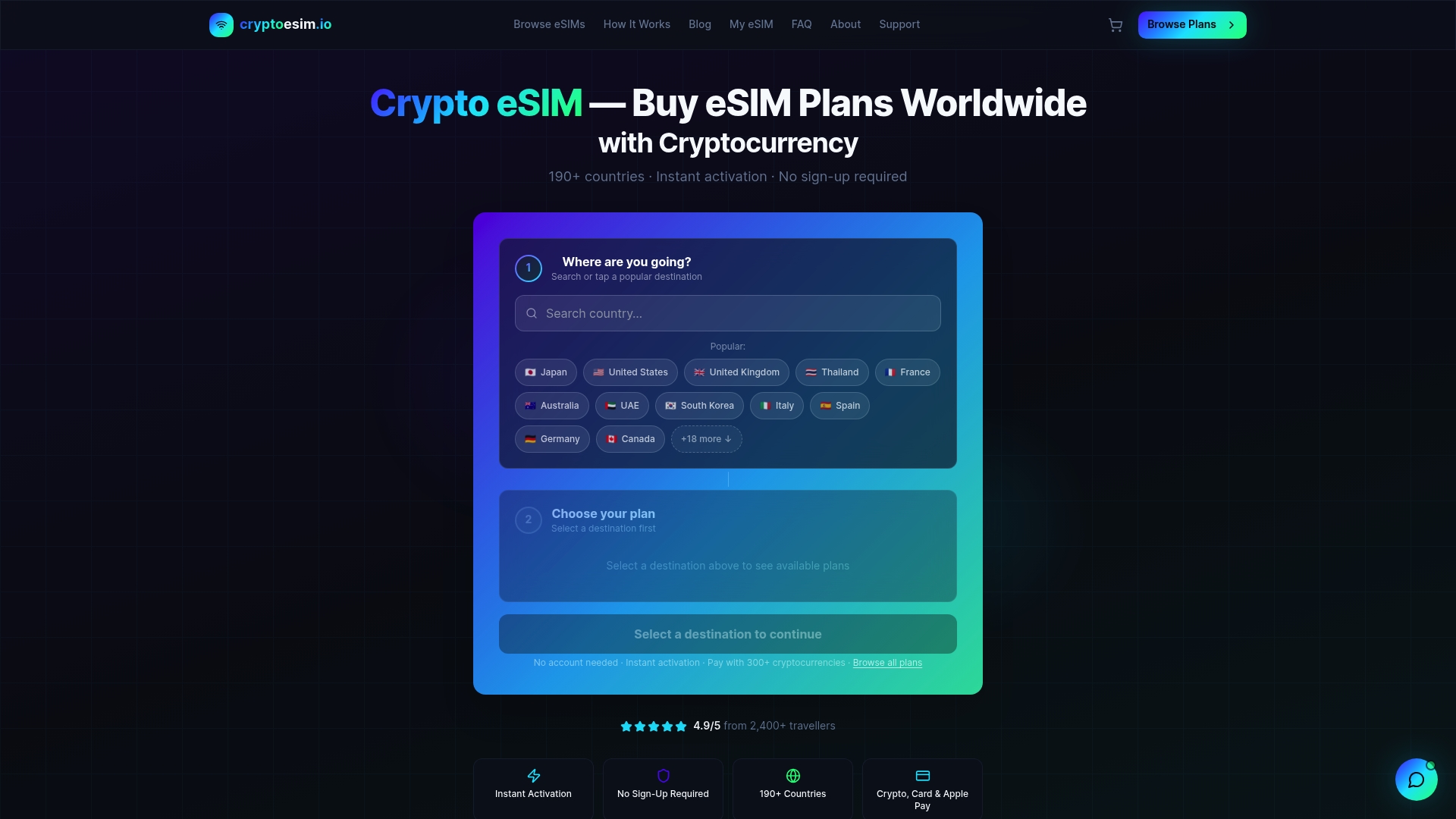
Whether you prefer paying with stablecoins directly from your wallet or using a card, the mobile crypto payment guide on the site walks you through every option step by step. Join thousands of crypto travelers who have already gone borderless in 2026 and never worry about blocked cards or data gaps again.
Frequently asked questions
What is the cheapest way to buy mobile data with crypto in 2026?
Using USDC or USDT on fast, low-fee chains like Solana or Tron is the most cost-effective option, with fees under $1 per transfer and settlement in seconds.
Which crypto cards work best for international mobile data top-ups?
Cards like Crypto.com, Wirex, and Nexo are ideal for travelers because they combine low FX fees with global Visa/Mastercard acceptance and meaningful cashback rewards.
Can I buy mobile data eSIMs without KYC using crypto?
Yes, providers like Cryptorefills, eSIMX, Uquid, and Silent.link allow no-KYC crypto payments for instant eSIM activation across 190+ countries.
Are there any risks with crypto payments for travel data?
The main risks include network congestion causing delays, potential loss from sending to the wrong address or network, and the need to trust lesser-known providers when no intermediary is involved. Always double-check wallet addresses and use established platforms.